Is Spending On Roof Repairs a Smart Investment, or Just Delaying the Inevitable?
If your roof is starting to show signs of wear, or you've spotted a leak, you might be wondering: Will a repair solve this problem? Will I be throwing money at a fix that won’t last?
Roof repairs can be a solid solution to some roofing issues, but they’re not always a wise investment. On the other hand, jumping straight to a full replacement might be unnecessary (and more expensive) if your roof still has life left in it.
At Happy Roofing, we've worked with hundreds of homeowners across the greater Naperville area who were facing issues like leaks and missing shingles. We've seen situations with minor damage that just needed an isolated repair, and others where repeated patchwork ended up costing more than if the homeowner had just invested in a full replacement sooner.
In this article, we'll help you understand:
- When a roof repair makes financial sense
- The signs that repairs may not be worth the cost
- How to weigh short-term fixes against long-term solutions
- What to ask your contractor to avoid wasted spending or short-term thinking
By the end, you'll have a clear sense of whether repairing your roof is a smart investment for your situation.
Table of Contents
- What You Should Know Before Paying for a Roof Repair
- When a Roof Repair is a Good Solution
- When a Roof Repair May Not Make Sense
- Is a Roof Repair the Right Solution for You?
- The Average Cost of a Roof Repair
- Steps to Follow to Help You Decide Whether a Roof Repair is Right for You
- How to Decide Between a Roof Repair and a Roof Replacement
What Should You Know Before Paying for a Roof Repair?
Before you pay for a roof repair, you should understand whether the repair will actually solve the problem, or if it's just a short-term fix that's essentially delaying a necessary roof replacement.
Not all roof repairs are created equal. Some are quick, relatively inexpensive, and most importantly, effective. Others may only cover up deeper issues, like in situations where the source of the problem wasn't addressed (patching a leak may temporarily stop water from entering the home, but if the source of the leak isn't addressed, water will build up elsewhere again and lead to more repairs).
Here are some key factors to consider when you're thinking about a roof repair:
- The age of your roof: Repairs typically make sense for newer roofs (under 10-15 years old) that still have plenty of serviceable life left. For older roofs nearing the end of their life (after the 20-year mark for asphalt shingle roofs), a repair could fix the immediate problem that you're facing, but that money may be better spent on the upcoming replacement.
- The extent of the issue: Is the damage isolated (like a few missing shingles or minor flashing damage), or more widespread? Localized issues are usually repairable at a cost that makes sense. However, the cost of repairing widespread issues can quickly add up. If the problem is widespread, like excessive granule loss (the protective, sand-like coating on asphalt shingles that shields them from UV damage and weather), it may be a better investment to plan a roof replacement in the near future.
- Your roof's repair history: If you've needed roof repairs multiple times within the past year or two, it's worth questioning whether another fix is really the best use of your budget. Frequent repairs could be an indicator that your roof is nearing the end of its serviceable life, and a repair could make more financial sense in the long run.
- The scope of the repair: A quality contractor will look beyond surface damage and consider underlayment, decking, ventilation, and flashing. Cheap repairs often skip these critical checks and don't address the root cause of the issue to begin with. If you're facing lifting, curling, or missing shingles due to poor roof ventilation (the lack of proper airflow can cause heat and moisture to build up in the attic, prematurely degrading shingles), a quick patch job that only replaces the shingles may not be a durable solution. The proper fix would be to assess the ventilation and correct any issues there before replacing any damaged components.
- The long-term value: There is no one-size-fits-all solution to roofing problems, but weighing the long-term value of whatever options you're presented with could help you decide what's best for you. Ask your contractor what caused the issue in the first place, and, realistically, how long a roof repair could last in your situation. A good roofer will help walk you through your options and give you their professional opinion on which solution is most in line with your goals.
When is a Roof Repair a Good Solution?
A roof repair is a smart solution when the damage is minor, isolated, and your roof is still in overall good condition. In the right scenario, a well-done repair can even extend the life of your roof, without the cost of full replacement.
Here are some scenarios when a roof repair could be a good solution to a roofing concern:
- Your roof is under 15 years old and has no signs of widespread wear or material failure. Most asphalt shingle roofs are designed to last 20–30 years, so if yours is still in its first half of life and has no curling, cracking, soft spots, or widespread granule loss, it likely still has solid structural integrity. In this case, a localized repair can be a cost-effective way to restore protection without overinvesting.
- The issue is localized, such as a few missing or lifted shingles or a small isolated leak caught early. These types of problems are often caused by wind, falling debris, or installation errors rather than overall roof failure. If the rest of the roof is intact, these repairs can usually be handled quickly and affordably without risk of recurring issues. Just be sure your contractor inspects the surrounding area to confirm the damage hasn't spread beneath the surface or is caused by any larger underlying issues.
- You've had a recent inspection confirming that the damage hasn't spread or compromised deeper layers like the underlayment or decking. Regardless of the type of issue you've noticed, the root cause of the problem must be corrected. Without a thorough assessment of why a certain component failed or was damaged, you could be facing repeated repairs and wasted money.
- You need to buy time to prepare for larger repairs or a full replacement. Temporary repairs aren't always a bad thing. Sometimes, like in the middle of a Northern Illinois winter, emergencies happen, and a full roof replacement just isn't feasible. In cases like these, a roofing contractor can temporarily address emergency concerns, like leaks, to prevent further damage while waiting for the weather to permit a long-term solution. We don't view necessary temporary repairs as a waste of money, as the alternative would be ignoring the issue altogether, leaving your home susceptible to further leaks or interior damage.
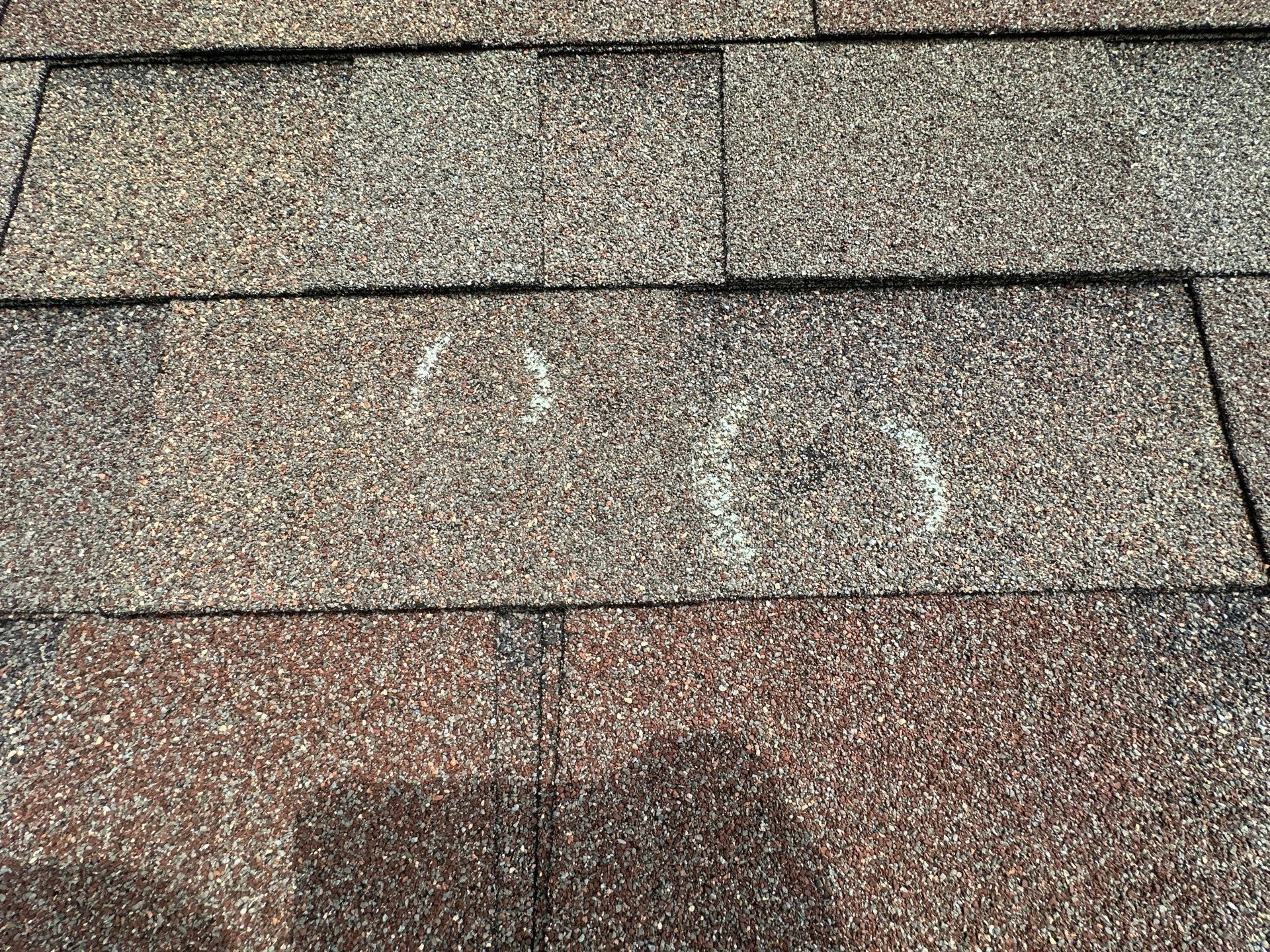
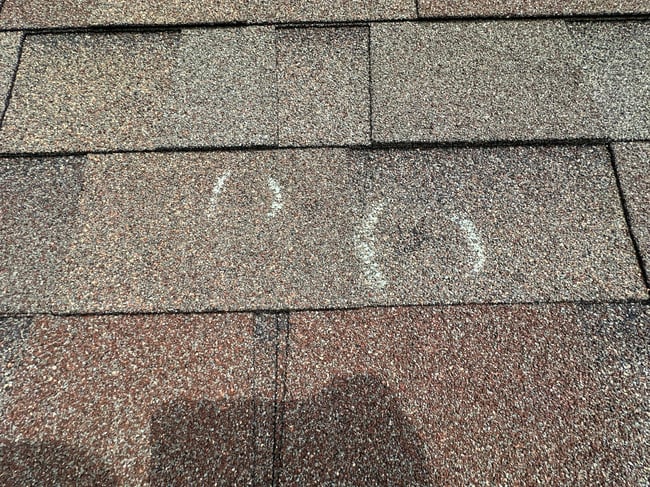
Below is an example of localized shingle damage (caused by a hailstorm) that could be effectively corrected with a repair:
When Does a Roof Repair Not Make Sense?
A roof repair is usually not worth the money if your roof is nearing the end of its lifespan, has widespread issues, or if past repairs haven't held up, because you're likely just delaying an inevitable (and more expensive) replacement.
Here's when a repair likely isn't the best use of your budget:
- Your roof is nearing 20 years old and showing signs of age. Even if damage seems minor, older roofs tend to have underlying wear that makes repairs less effective or short-lived. Repairs on aging roofs often lead to recurring issues and diminishing returns. While isolated repairs could fix the current concern, other areas of an aged roof could start to break down and fail. With the repeated repair costs, it could make more financial sense to plan a roof replacement.
- The damage is widespread, like consistent granule loss, multiple soft spots, or leaks in more than one area. These issues often signal that the roofing system as a whole is failing, not just one component.
- You've had multiple repairs in recent years. If you've patched leaks, replaced shingles, or sealed flashing more than once, it's a sign the roof may be beyond repair. At a certain point, continued fixes cost more over time than a one-time replacement that is meant to last decades.
- Your contractor finds underlying problems, like rotted decking, poor ventilation, or saturated underlayment. These hidden issues weaken the entire system and usually require more than a surface-level repair to fix properly. Depending on the issue, the labor costs could position a full replacement as a better financial investment.
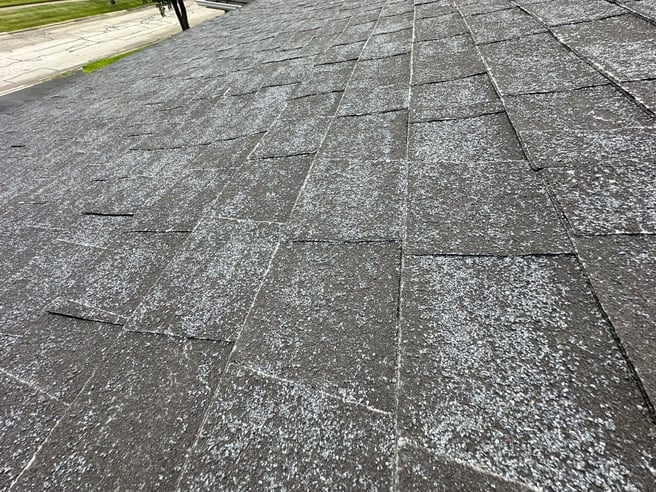
Here is an example of a situation where repairs wouldn't be enough to safely solve the issue (excessive granule loss), as there is widespread damage to the shingles across a large area of the roof:
Is a Roof Repair the Right Solution for Me?
Whether a roof repair is a good solution for your situation depends on the condition of your roof, the type of damage, and how long the fix can realistically last.
The table below will help you quickly compare when a repair makes sense, and when it may be time to consider replacement instead. Before making your final decision, we always recommend reaching out to a roofing professional to assess your specific situation and help provide solutions that align with your goals.
| A Repair Is Worth It When… | A Repair May Not Be Worth It When… |
|---|---|
| Your roof is under 15 years old and in good condition, with no widespread wear (like curling, cracking, or granule loss). | Your roof is nearing 20 years old and showing signs of age, even if the current damage seems minor. |
| The damage is localized (missing shingles, minor flashing issues, or a small leak). | The damage is widespread, like multiple leaks, soft decking spots, or consistent granule loss across large areas. |
| A recent inspection confirmed the issue is isolated and hasn't spread to deeper layers like underlayment or decking. | Your contractor finds underlying problems, like rotted decking, saturated underlayment, or poor ventilation, that compromise the entire system. |
| You need a temporary fix in an emergency to buy time before a replacement is possible or financially feasible. | You've had multiple repairs in recent years, and costs are adding up with no long-term resolution in sight. |
How Much Do Roof Repairs Cost?
Typically, roof repairs are significantly more affordable than a full replacement, but the price depends on the type of damage, the materials involved, and whether any underlying issues need to be addressed.
For homeowners in the greater Naperville area, here's what you can generally expect:
- Minor repairs like addressing an isolated leak or replacing a few missing shingles can range from $450 to $1,000.
- More complex repairs that involve underlying components like underlayment or flashing (where we typically have to remove shingles and some siding for a proper installation) could cost up to $2,500 in some cases, but are still often the right move when the rest of the roof is in good condition.
To put these repair costs into perspective, most full roof replacements we complete at Happy Roofing fall in the $18,000 to $25,000 range, depending on the size, slope, and materials used.
What Steps Should You Follow To Decide If a Roof Repair is Right for Me?
The best way to decide if a roof repair is right for you is to combine a professional inspection with a clear understanding of your roof's age, condition, and your long-term goals. The more informed you are, the better you can protect your home and your budget.
While no article can fully replace an on-site inspection, here's how to approach the decision:
- Start with a thorough assessment: Get a thorough inspection from a reputable local roofer who will check surface damage and what's happening underneath (like decking, ventilation, or flashing issues). Many roof problems aren't obvious from the outside. A leak or missing shingle could be a symptom of a deeper issue, and without a full assessment, you risk making a repair that doesn't address the real cause, leading to repeated costs or hidden water damage later on.
- Know your goals. If you plan to stay in your home long-term, a full replacement should be considered in some cases. If you're facing an emergency and need time, or are planning to move, a repair may be more appropriate budget-wise.
- Ask the right questions. Don't just ask "Can it be repaired?" Ask: What caused the issue? How long will this repair last? What's the risk of future issues? Will this affect my roof's overall health? Asking the right questions gives you clarity. Being informed helps you avoid short-term patch jobs that don't last, reveals whether there's a bigger issue at play, and ensures you're making a decision that protects both your home and your budget.
How to Decide Between a Roof Repair and Roof Replacement
Ultimately, deciding if a repair is right for you comes down to timing, long-term value, and the condition of your current roof. A well-timed repair can save you thousands and add years of protection to your home. But in other cases, continuing to patch a failing system only delays the inevitable and leads to more unexpected expenses down the road.
If you're not sure what your roof truly needs, read our next article: Roof Repair vs. Replacement: What Naperville Homeowners Need to Know. In it, we go into more detail regarding when a roof replacement may be the better option and how you can decide which is best for you.
If you'd rather speak to a professional directly, we offer no-commitment roof consultations to help you get a clear assessment of your roof's health and provide you with options without the obligation to move forward.


.jpg?width=700&name=Copy%20of%20Untitled%20Design%20(4).jpg)