Can You Really Trust a Roofing Warranty from a Company That’s Less Than 10 Years Old?
When you hear a roofing company offer a 10-year or longer workmanship warranty, your first thought might be, "How long have you even been around?" or "Will you be in business that long?"
These are fair concerns to have, and we get similar questions from time to time when homeowners learn about our workmanship warranty. We’d be asking the same thing if it were us in your shoes.
At Happy Roofing, we’ve only been in business for 6 years, but we understand that trust is something you earn. When it comes to warranties, especially in an industry where promises are easy to make and follow-through is rare, earning that trust takes more than attractive words that look good on paper.
In this article, you'll learn:
- Why a roofing company's age doesn't automatically tell you whether their warranty is valuable
- Where the true value of a workmanship warranty comes from
- How we uphold our workmanship warranty as a relatively newer roofing company
By the end, you'll have a clear understanding of what actually makes a workmanship warranty trustworthy, and why a company's track record of quality and accountability matters far more than its age.
Table of Contents
- Why Workmanship Warranties Are Important
- Does Company Age Affect the Quality of a Workmanship Warranty?
- What Makes a Workmanship Warranty Valuable?
- How Happy Roofing Backs Its Workmanship Warranty
- Choosing the Right Roofer for You
Why Are Workmanship Warranties Important?
A workmanship warranty protects homeowners from the costly consequences of improper installation. These warranties serve as a bit of a safety net if something fails, not because of the materials or environmental factors, but because of the installation workmanship.
At Happy Roofing, we've repaired and replaced hundreds of roofs in the greater Naperville area, and we've seen firsthand how often leaks, shingle failures, and premature roof problems stem from installation errors rather than the shingles themselves. However, workmanship warranties are typically created by the contractor themselves, and an untrustworthy contractor likely delivers untrustworthy warranties or may not honor them fully.
Here's why good workmanship warranties matter:
- Workmanship errors are hard to catch immediately. For example, if a roofer misses the manufacturer's nailing zone or uses too few nails altogether, the shingles may look fine at first. But over time, especially after a few heavy storms or freeze-thaw cycles, those weak points can lead to shingle blow-offs, water intrusion, and leaks that don't appear right away. Most homeowners have no way of knowing something was done incorrectly until it turns into a leak or visible damage.
- Without a solid workmanship warranty, you're on the hook for repair costs. Roofing issues caused by installation mistakes can lead to costly repairs. If there isn't any workmanship warranty coverage, or the original contractor is unreachable, unresponsive, or simply denies responsibility, you're left hiring (and paying) someone else to fix what should've been done right the first time.
- A good workmanship warranty signals a company's confidence in its crew, process, and long-term accountability. Contractors who offer meaningful workmanship warranties are usually doing so because they've built systems to reduce installation errors, from consistent crew training to standardized quality checks. These warranties (specifically how a company honors them) can also reflect a company's willingness to be held accountable for its work.
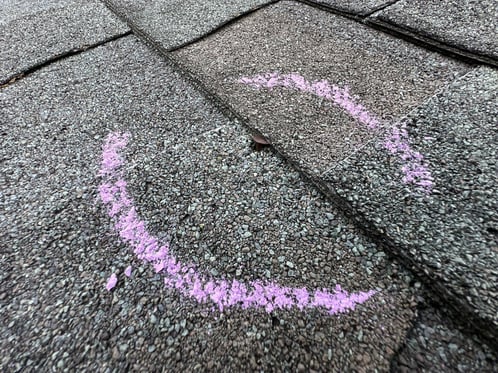
Below is an example of improper nailing that we found during one of our roof inspections:
Does It Matter How Long a Roofing Company Has Been in Business When It Comes to Workmanship Warranties?
A company’s age doesn’t determine the quality of its workmanship or the integrity of its warranty. It’s understandable to feel hesitant about trusting a newer roofing company’s warranty, but the number of years in business doesn’t always reflect the quality of their work or their willingness to stand behind it.
Some long-standing companies offer strong warranties but quietly avoid honoring them when issues arise. Meanwhile, some newer companies put extra focus on doing the job right and maintaining a reputation, because they can’t afford not to.
Still, on both sides of the coin, there are contractors (whether new or established) that use workmanship warranty language as an enticing marketing gimmick to draw in customers. It’s important to do some research on the contractor themselves before trusting their claims.
In the next section, we’ll break down how to tell if a workmanship warranty is truly trustworthy, regardless of how long the company has been around.
What Makes a Workmanship Warranty Legitimate? What Should Be Included.
The real value of a workmanship warranty comes down to what's actually covered, how clearly it's defined, and whether it's realistic to expect it'll be honored if something goes wrong.
Not all workmanship warranties are created equal. Just because a contractor offers a workmanship warranty doesn't mean it's going to cover you, especially if it's vague, full of exclusions, or tied to a company with no clear process for honoring it.
Here are the key factors that determine whether a workmanship warranty is genuinely valuable, or just marketing language:
A Clear Definition of Coverage
A good workmanship warranty clearly explains what kinds of issues are covered (such as leaks from improper flashing or shingles blown off due to incorrect fastening). It also spells out what isn't covered, like storm damage or material defects, which would fall under insurance coverage or a manufacturer's warranty.
If your contractor's warranty doesn't clearly lay out what is and isn't covered, don't hesitate to ask for help understanding. A reputable contractor will take the time to explain how their policy works without talking in circles or confusing you further.
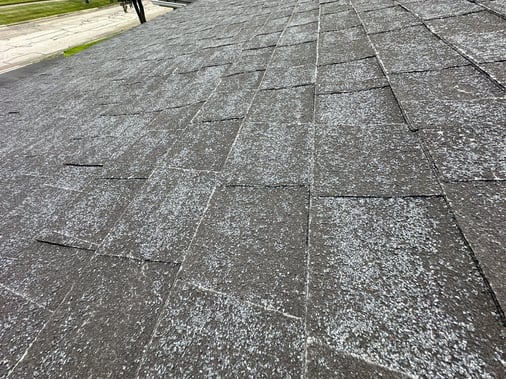
Below is an example of a roof with excessive granule loss, an issue that wouldn't be covered under a workmanship warranty:
Coverage Provided for a Reasonable Timeframe
While some companies advertise long warranties, the reality is that asphalt shingle roofs don't last forever (typically lasting 20-30 years). Any issues that were due to installation errors would have most likely appeared within the first few months or years of the roof's lifespan, so excessive warranties aren't typically honored.
After 10-15 years, environmental factors and general roof aging are more likely to be blamed for leaks and other issues, and contractors won't cover roof issues that were caused by normal wear. A well-structured warranty with a reasonable length (like 10-15 years) is more realistic than a claim that a contractor is offering a 35-year or even lifetime workmanship warranty.
A
Transferable
Warranty
Some workmanship warranties end when you sell your home, even if the warranty period isn’t over. Others can transfer to the new homeowner upon selling your home within your coverage period. If you're planning to move in the next few years, it’s important to find out whether your coverage stays with the house or ends with you.
While it may not be important for you that your warranty be transferable to someone who is buying your home, transferable coverage is a good indicator that the contractor is actually interested in providing quality installations and takes pride in their workmanship. They're choosing to cover their installation, regardless of who owns the home. Even if that detail doesn’t matter to you personally, transferable warranties are worth paying attention to.
They Honor Their Warranties
This is harder to assess upfront, but a warranty is only valuable if the company stands behind it. Look for clues in customer reviews or ask specific questions during your estimate, like how many times they’ve had to return to fix something under warranty, and what their process looks like when that happens.
If you notice reviews claiming there were installation errors and no remedies were provided, that’s a sign that the contractor is hiding behind the language of a “workmanship warranty” but isn’t interested in upholding their end of the promise.
So, Can I Trust a Newer Roofing Company's Warranty?
A newer roofing company can absolutely offer a trustworthy workmanship warranty if they have clear standards, a consistent install process, and a track record of standing behind their work.
The company's age alone doesn't determine whether the warranty is reliable; what matters is how the roof was installed, how problems are handled when they come up, and whether the warranty's terms are transparent and realistic. Newer companies still building their reputation often have more to prove, and that can lead to higher accountability and more careful work - but it can also be viewed as a stronger incentive to hide behind unrealistic marketing jargon like a "lifetime workmanship warranty."
The key to evaluating the strength of a workmanship warranty is to ask the right questions, read the fine print, and look for signs that they're not just offering a warranty, but backing it with process, people, and follow-through.
How Does Happy Roofing Back Their Workmanship Warranty, Despite Their Age?
We back our workmanship warranty by following a consistent installation process, training our crews to meet manufacturer specs, and thoroughly documenting every job with photos and inspections. If a problem ever comes up, we respond quickly, own the issue, and handle the fix ourselves so homeowners aren't left chasing us down.
At Happy Roofing, we offer a 10-year workmanship warranty, which means if any problem arises due to how your roof was installed, not the materials themselves, we'll come back and make it right. That includes things like incorrect flashing, missed nails, or any other installation-related error that causes a leak or system failure within that timeframe.
Why Doesn't Happy Roofing Offer a Lifetime Workmanship Warranty?
We chose a 10-year warranty on purpose because it reflects how most workmanship issues actually behave. Based on what we've seen:
- Most true installation errors show up within the first few years
- "Lifetime warranties" often come with conditions or fine print that make them less useful than they seem, often denying coverage due to normal wear and general roof aging.
- Terms like "lifetime workmanship warranty" are widely used as a marketing gimmick to gain homeowner attention, rather than provide a lifetime of free repairs.
Yes, it wouldn't necessarily hurt for us to offer a longer workmanship warranty, but we don't see it as transparent to do so. A 10-year warranty gives you real protection during the years when you're most likely to need it, without any fluff or overpromises.
How to Choose the Right Roofing Partner
When it comes to choosing the right roofing contractor for you, what truly matters isn't how long a roofing company has been around; it's whether they have the systems, standards, and track record to stand behind the work they do. While you're comparing warranty coverage, take some time to research the company through real customer testimonials and reviews.
If you're wondering whether Happy Roofing is the right fit for your project, check out our next article: Is Happy Roofing the Right Roofer for Me? It breaks down what types of homeowners our process works well with, and more importantly, which homeowners could benefit more from another roofing contractor instead.
If you're ready for an in-person professional assessment of your roof's health, schedule a no-commitment roof consultation. We're happy to thoroughly inspect your roof, answer your questions, and help you make the best decision for your home and long-term goals - whether that's with us or another reputable contractor.