What Are The Dark Streaks on My Roof Shingles?
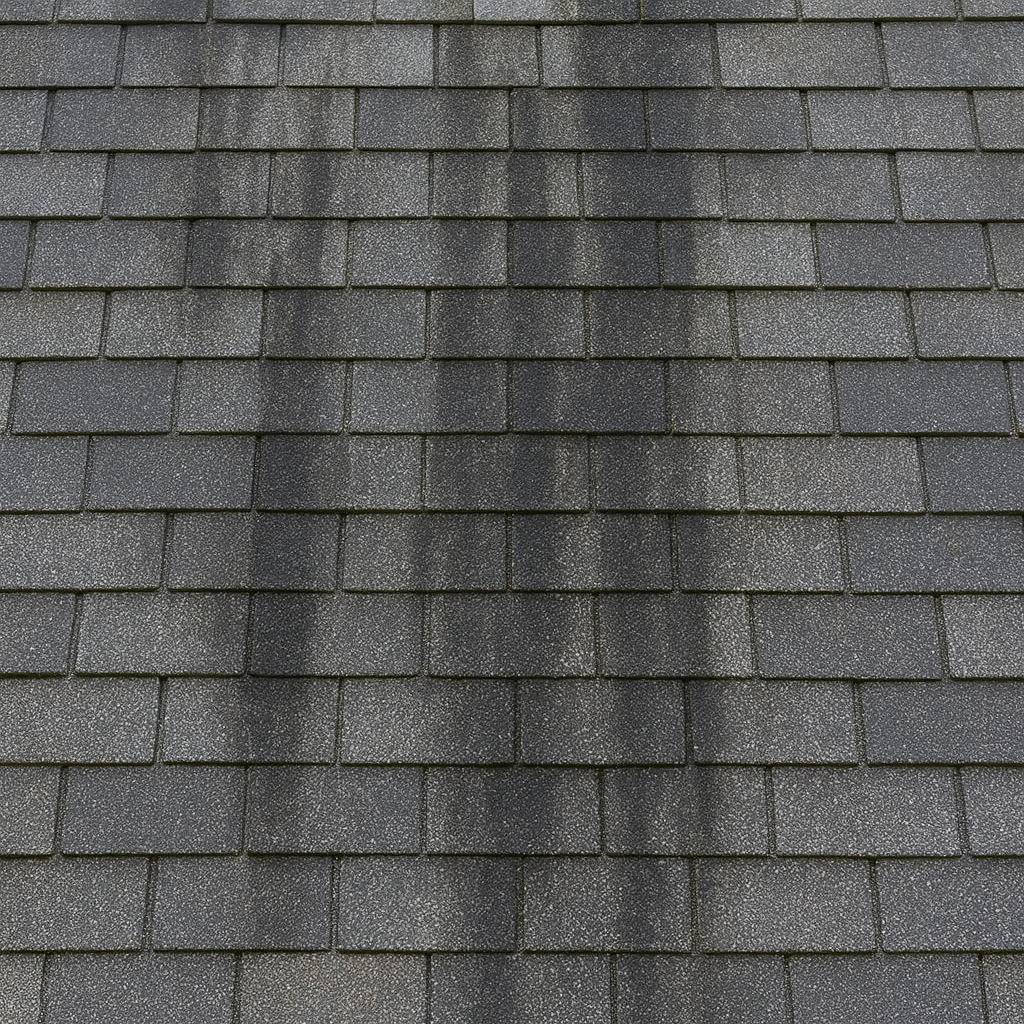
If you’ve looked up at your roof recently and noticed long black streaks running down the shingles, you’re probably wondering if something is wrong. Is the roof aging? Will it eventually cause leaks? Or is it simply cosmetic?
At Happy Roofing, we’ve inspected hundreds of roofs throughout Naperville and the surrounding communities, and we find black streaks on asphalt shingles to be a fairly common occurrence in the area. While they often don’t mean your roof is failing, they can sometimes point to conditions that deserve a closer look.
In this article, we’ll explain what causes black streaks on roof shingles, whether they mean for your roof’s health, how you can remove them, and what you can do to prevent them from returning. By the end, you’ll know whether dark streaking is simply a cosmetic issue or something that requires professional attention.
Key Takeaways
- Most black streaks on roof shingles are caused by algae that thrives in warm, damp conditions and typically affects the appearance of your roof more than its performance.
- Moisture is the biggest factor behind algae growth. Shade, humidity, house location, certain shingle types, and nearby algae-covered roofs can all make black streaks more likely to develop.
- Black streaks are usually cosmetic, but they can sometimes indicate it's time for a closer look. If they're accompanied by curled shingles, significant granule loss, moss, lichen, or signs of leaks, a professional roof inspection is recommended.
- Soft washing is the safest way to remove algae from asphalt shingles. Avoid high-pressure washing, as it can damage the shingles and shorten the life of your roof.
- While you can't completely prevent algae growth, proper roof maintenance can help slow it down. Trimming overhanging trees, keeping gutters clear, removing debris, and choosing algae-resistant shingles during a roof replacement can all reduce future staining.
Table of Contents
- What Are the Dark Streaks on Some Roofs?
- What Causes Algae Growth on Shingles?
- Are Dark Roof Streaks a Sign of Damage?
- Can Dark Roof Streaks Be Cleaned?
- Can You Prevent Algae From Staining Your Shingles?
- What to Do If Your Roof Has Dark Streaks
What Are the Dark Streaks on Some Roofs?
Most dark streaks that appear on roofs are caused by algae, which grows on the surface of shingles where moisture tends to linger.
The culprit is usually a type of airborne algae called Gloeocapsa magma. Although it appears black from the ground, it’s actually a blue-green algae that thrives in warm, humid environments. The algae lands on your roof through the air and begins growing anywhere moisture tends to linger. Over time, it forms the dark streaks that gradually spread across the shingles.
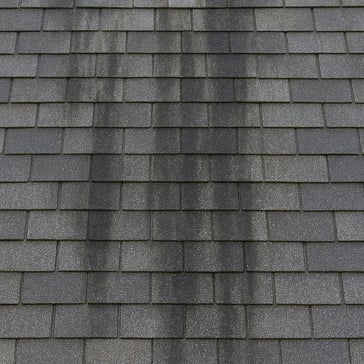
Many homeowners assume the roof is dirty or beginning to deteriorate, but in most cases, the streaks are simply algae growth on the surface of the shingles, like in the example below:
How Can You Tell the Difference Between Algae and Other Roof Stains?
The appearance and growth pattern of the discoloration usually provides the biggest clue as to what’s causing the dark streaks on your roof.
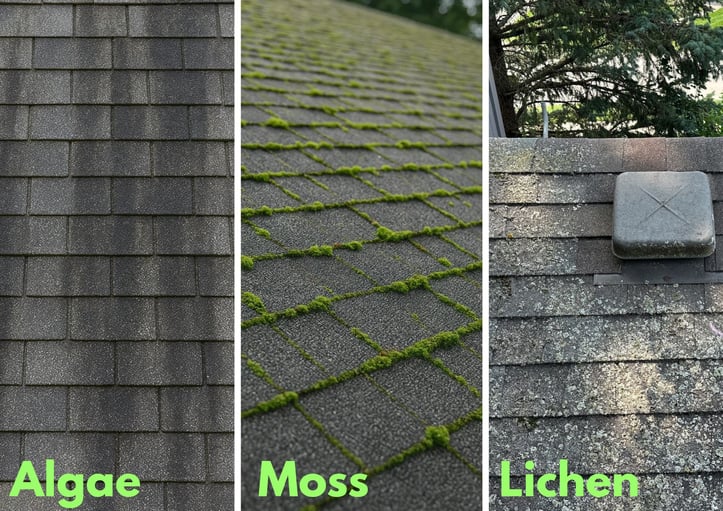
While algae is the most common cause of black streaks on asphalt shingles, it’s not the only thing that can discolor a roof. Knowing what each type of growth looks like can help you better understand what you’re seeing before scheduling an inspection.
Here’s a quick comparison:
- Algae: Appears as long, dark streaks that gradually spread downward as rainwater carries algae across the shingles. This is the most common cause of black streaks on asphalt roofs.
- Moss: Forms thick, green clumps that grow between or on top of shingles. Unlike algae, moss can trap moisture and even lift shingles over time if left untreated.
- Lichen: Looks like flat, crusty patches that firmly attach to the shingle surface. Lichen is more difficult to remove because it bonds tightly to the roof.
- Dirt or debris: Usually collects in isolated areas or around roof valleys rather than creating long, consistent streaks. Dirt can often be washed away, while algae continues to spread if left untreated.
If you’re unsure what you’re seeing, a professional roof inspection can usually identify the cause and give you insight into the health of your roof as a whole.
What Causes Algae to Grow on Asphalt Shingles?
Algae can grow on asphalt shingles when moisture remains on the roof long enough for it to thrive. When moisture lingers on a roof, it creates an ideal environment for algae to grow.
Not every roof will develop algae (or black streaks) at the same rate. Several factors make certain homes more prone to algae growth than others.
Some of the biggest contributors to dark streaking on roofs include:
- Shade from trees: Roof sections that are consistently covered by shade or receive less sunlight tend to stay damp longer, creating ideal conditions for algae.
- Humidity: Homes in areas with frequent humidity or heavy morning dew often experience faster algae growth.
- Roof orientation: North-facing roof slopes typically receive less direct sunlight, allowing moisture to remain longer.
- Shingle type: Some asphalt shingles include algae-resistant technology, while others don’t. Roofs without those protective granules (the tiny protective particles that cover the shingle’s surface) are generally more likely to develop black streaks over time.
- Nearby algae growth: If neighboring homes have algae-covered roofs, airborne spores can spread more easily.
Are Black Streaks on a Roof a Sign of Damage?
Usually, black streaks on a roof are a cosmetic issue, but they shouldn’t always be ignored or left to spread.
In most situations, algae growth itself doesn’t immediately damage asphalt shingles. However, excessive algae growth can contribute to long-term issues if left untreated for years.
Potential concerns include:
- Moisture retention: Heavy algae growth can hold moisture against the roof surface longer, which may contribute to faster aging over time in more severe cases.
- Hidden roof issues: Dark staining can sometimes make it harder to notice damaged shingles or other roofing problems at a glance, meaning small issues could go unnoticed until they become larger concerns.
- Home value: If you’re planning to sell your home, a heavily stained roof may create the impression that the roof has been poorly maintained, even if it’s structurally sound. This could impact the final sale price, depending on the buyer.
Dark streaks appearing on your roof don’t automatically mean you need a new roof. The overall condition of the shingles, and roof as a whole, is much more important than their surface appearance.
Can Algae Streaks Be Cleaned Off Roof Shingles?
Algae streaks can usually be cleaned using a low-pressure soft washing process that removes algae without damaging the shingles.
If you’re considering having your roof cleaned, here are a few things to keep in mind:
- Choose a soft washing method: Professional roof cleaners typically use low-pressure water and specialized cleaning solutions to kill algae and remove stains without damaging asphalt shingles.
- Avoid high-pressure washing: While it may seem like a quick fix, pressure washing can shorten the life of your roof if done incorrectly or too aggressively, and may even void certain warranties if your roof still qualifies for any of those.
- Know that results aren’t permanent: Cleaning removes existing algae, but it doesn’t prevent new algae from growing. Depending on your roof’s conditions and the area you live, black streaks may eventually return, and soft washing may need to be an occasional maintenance item to keep the roof clear of organic growth.
- Make sure the roof is still in good condition: If your roof is aging (over 15 years old) or already showing signs of wear, it’s a good idea to have it inspected before cleaning. In some cases, cleaning a roof that’s nearing the end of its lifespan may not be the best investment if it’s going to be replaced in the near future.
Can You Prevent Algae From Growing on Your Roof?
Algae and other organic growth can often be reduced, but no roof is completely immune to it. With a little upkeep however, you can minimize the amount of streaking or stains that organic growth can leave behind.
Several steps may slow future algae growth:
- Trim overhanging tree branches to allow more sunlight onto the roof.
- Keep gutters clean of any blockages so water drains properly from the roof.
- Remove leaves and debris that trap moisture if they’re accumulating anywhere on the roof line.
- Install algae-resistant shingles when it’s time for a roof replacement if you’re in an area where algae growth is hard to keep up with.
Many modern asphalt shingles include copper-infused or algae-resistant granules that help slow algae growth for years after installation, like the technology that Malarkey uses in their shingle lines.
When Do Dark Roof Streaks Mean Your Roof Needs Attention?
Dark roof streaks usually need attention when they’re accompanied by other signs of roof damage.
Call a roofing professional if you notice any of the following accompanying warning signs:
- Shingle Aging and Failure: Check if the streaks are accompanied by curling, cupping, or lifting shingles. As algae retains moisture, it accelerates the breakdown of old shingles.
- Massive Granule Loss: Check your gutters. If you see large piles of sand-like shingle granules washing away with the algae, your shingles are losing their UV protection and structural integrity.
- Moss or Lichen Growth: If the flat black algae streaks have evolved into thick, green moss cushions or crusty lichen patches, take immediate action. Unlike algae, moss and lichen root into the shingles and physically destroy them.
- Internal Moisture or Rot: If you see dark stains on your indoor ceiling or mold in your attic alongside external roof streaks, you likely have an active leak or a severe ventilation failure.
What Should You Do If Your Roof Has Black Streaks?
Start by finding out whether the streaks are simply algae or a sign of a larger roofing problem. For many homeowners, dark streaks are often nothing more than algae growth that affects the appearance of the roof rather than its performance.
If the roof is otherwise in good condition, scheduling a soft wash cleaning may be all that’s needed. If the roof is older or showing additional signs of wear, or you’re concerned about other areas, an inspection can help determine whether repairs or replacement should be on your radar.
If you’re looking for a professional evaluation of your roof, we offer no-commitment roof inspections throughout Naperville and the surrounding communities. We’ll assess your entire roofing system and go over your options without the obligation to move forward with us.