Do You Need a Permit to Replace Your Roof in Illinois?
If you're planning to replace your roof, you probably have questions about how much it will cost, how long the project will take, and what materials you should choose. But there's another detail you might not have considered: whether you need a building permit before the work begins.
You might assume every roof replacement requires a permit, or that your roofing contractor will automatically take care of it. But permit requirements can vary depending on where you live, the materials being installed, and the work being performed.
At Happy Roofing, we've helped hundreds of homeowners throughout the greater Naperville area navigate roof repairs and replacements. We understand how confusing the process can feel, especially when different areas have different requirements.
In this article, we'll explain when roof replacement permits are required in Illinois, how to find out what applies to your home, and what you should expect from your roofing contractor so your next roofing project can move as smoothly as possible.
Key Takeaways
- Not every roof replacement in Illinois requires a building permit. Requirements vary by municipality, roofing material, and the scope of the project.
- Your roofing contractor may handle the permit application, but you should confirm who's responsible. Ask whether a permit is required, who will obtain it, and whether any inspections are necessary.
- There isn't one standard permit fee throughout Illinois, as roofing permit costs vary by municipality and project scope.
- Even when a permit isn't required, your roof must still meet applicable building codes. Hiring a properly licensed contractor and understanding the proposed work remain important.
Table of Contents
- Do You Need a Permit to Replace Your Roof in Illinois?
- When Does a Roof Replacement Require a Permit?
- Who Is Responsible for Getting a Roofing Permit?
- How Can You Verify That Your Roofing Contractor Obtained a Permit?
- What Happens If You Replace Your Roof Without a Required Permit?
- Does a Roofing Permit Mean the Work Is Guaranteed to Be Done Correctly?
- How Can You Make Sure Your Roof Replacement Meets Local Requirements?
Do You Need a Permit to Replace Your Roof in Illinois?
You may need a building permit to replace your roof in Illinois, but the requirement depends on your local municipality, the roofing materials being installed, and whether the project involves structural work or replacing roof sheathing.
Illinois has statewide building and contractor requirements, but local governments also establish and enforce permitting rules for residential construction projects within their jurisdiction.
That means the permit requirements for a homeowner in Naperville may be different from those for someone living just a few miles away in Aurora. Before scheduling your project, you or your contractor should confirm the requirements with the building department responsible for your property.
When Does a Roof Replacement Require a Permit?
A roof replacement is likely to require a permit when local regulations require one for roofing work, when you're changing roofing materials, or when the project involves replacing roof sheathing or making structural modifications.
While the exact rules depend on where you live, there are several situations worth discussing with your contractor. Below, we’ll cover some common roofing project scopes and how they generally affect whether a permit is needed.
Replacing Your Roof With the Same Type of Shingles
If you're removing old asphalt shingles and installing new asphalt shingles without changing the roof's underlying structure, your project may qualify for a permit exemption in some communities. However, this isn't a universal rule.
Some municipalities require a permit for every roofing project, even when you're installing the same type of shingles.
Switching to a Different Roofing Material
Changing from asphalt shingles to metal, slate, wood, or another roofing material can affect whether a building permit is required.
For example, Naperville generally doesn't require a permit for a standard asphalt shingle replacement when the existing roof sheathing remains in place. However, the city does require permits for roofing materials such as metal, wood, slate, and sealed membranes.
Different roofing materials can also have different installation and structural requirements, so it's important to confirm what applies to your project with your local building department before work begins.
Replacing Damaged Roof Decking
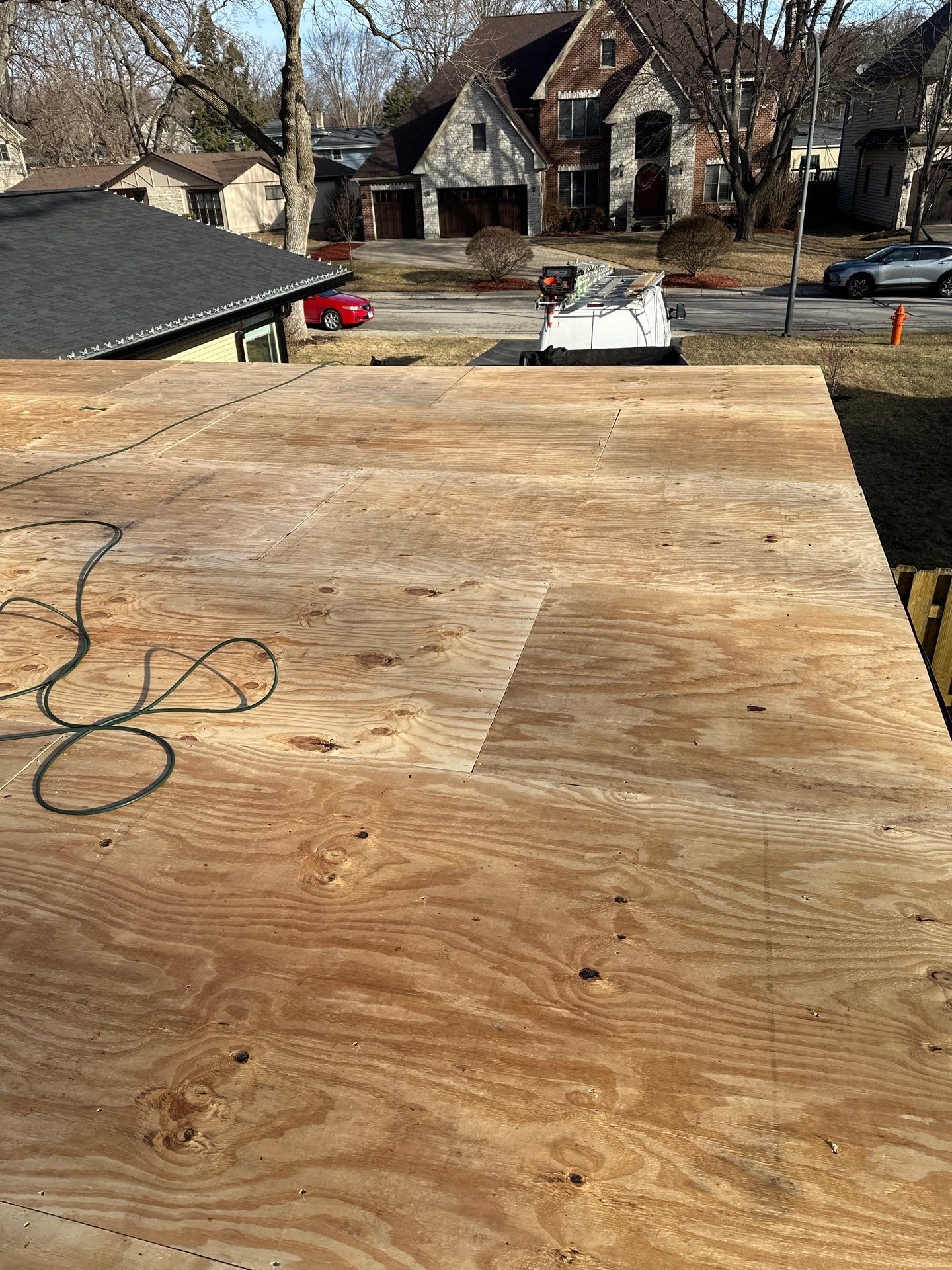
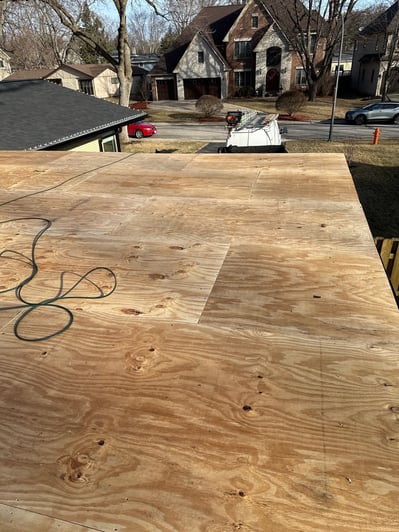
Roof decking (or sheathing) is the layer of plywood or oriented strand board (OSB) underneath your roofing materials. If a contractor removes your old shingles and discovers damaged or deteriorating sheathing, some of those sheets may need to be replaced.
Depending on your municipality and the extent of the work, replacing sheathing may require a permit even if the original project scope didn’t require one.
This is worth discussing before your project begins, especially because hidden damage isn't always visible during the initial roof inspection. Many contractors will be upfront about the possibility of additional work before you commit to partnering with them, but not every company operates the same way.
The photo below shows what the roof deck looks like:
Making Structural Changes to Your Roof
If your project involves modifying roof framing, changing the roof's shape, or making other structural alterations, additional permits and documentation are typically necessary.
For example, raising the roofline, changing the roof's pitch, or modifying the framing to accommodate a home addition involves more than simply replacing existing roofing materials. These changes can affect how the roof supports weight and transfers loads to the rest of your home.
Because structural modifications can affect your home's safety, your local building department may require detailed construction plans, structural calculations, or drawings prepared by a licensed architect or structural engineer. Depending on the project, those plans may need to be reviewed and approved before construction begins, and additional inspections may be required as the work progresses.
If you're planning anything beyond a straightforward roof replacement, ask your contractor what permits, engineering evaluations, and inspections may be necessary before moving forward.
What Are the Roofing Permit Requirements Around Naperville?
Roofing permit requirements vary throughout the greater Naperville area. Some communities require permits for all roof replacements, while others exempt certain projects.
Here's a quick look at the requirements in five nearby communities.
| Municipality | Permit Required? | What Homeowners Should Know |
|---|---|---|
| Naperville | Sometimes | Standard asphalt shingle replacements generally don't require a permit if the existing roof sheathing remains in place. Other roofing materials and sheathing replacement require permits. |
| Aurora | Yes | Roofing projects require permits, including standard roof replacements. A ventilation calculation worksheet is also required. |
| Downers Grove | Sometimes | Standard residential shingle-only replacements don't require a permit, but projects involving structural changes or additional work may require one. |
| Woodridge | Yes | Permits are required for roofing projects, including standard shingle replacements. |
| Lisle | Yes | Permits are required for residential roof repairs and replacements. |
Who Is Responsible for Getting a Roofing Permit?
A roofing contractor will often handle the permit application when one is required, but homeowners should confirm that responsibility before signing a contract.
A reputable roofing company should be familiar with the requirements in the communities where it regularly provides services. However, you shouldn't assume the contractor is obtaining a permit unless you've discussed it.
Before agreeing to the project, ask:
- Does my roof replacement require a building permit?
- Will your company apply for the permit?
- Is the permit fee included in my estimate?
- Are any inspections required during or after installation?
Ideally, the estimate or contract should explain who is responsible for obtaining any required permits so you have an agreement in writing to serve as a failsafe.
Even when your contractor handles the paperwork, it's still your property. Understanding what's required helps you avoid confusion if a question or problem comes up later.
How Much Does a Roofing Permit Cost?
Roofing permits in Illinois can cost anywhere from around $75 to several hundred dollars, depending on your municipality, building type, and project scope.
Some municipalities calculate fees differently or charge extra for plan reviews, additional inspections, or more complex projects. Before moving forward with a roof replacement, ask your contractor whether a permit is required, what it will cost, and whether that expense is included in your estimate.
How Can You Verify That Your Roofing Contractor Obtained a Permit?
You can verify a roofing permit by asking your contractor for the permit number and checking its status with the municipality responsible for your property. You don't need to rely solely on a contractor telling you that the paperwork has been handled. If a permit is required, there are a few steps you can take to confirm it.
Ask for the Permit Number
Once the permit has been issued, ask your contractor for the permit number or a copy of the approved permit.
This gives you a record of the authorization for your project and a way to verify whether it’s valid.
Check With Your Local Building Department
Many municipalities provide online permitting systems where applicants and property owners can review permit information.
For example, Naperville uses its Permitting, Plans and Licensing portal, while Aurora provides an online permit system for applications and status updates.
If you can't find the information online, you can contact the local building department directly. Provide your property address or permit number and ask whether the permit has been issued.
Confirm Whether Inspections Are Required
Some permitted roofing projects require an inspection during or after the work being performed.
Ask your contractor whether an inspection is necessary, who will schedule it, and how you'll know when the project has received any required approval.
What Happens If You Replace Your Roof Without a Required Permit?
Replacing your roof without a required permit can lead to code enforcement issues, project delays, additional fees, or complications if the work needs to be inspected or corrected afterward.
The consequences depend on your municipality and the circumstances. If work begins without a required permit, the local building department may require the contractor or homeowner to stop work and complete the permitting process before continuing.
In some situations, additional inspections or corrective work may be necessary to demonstrate that the installation meets applicable requirements. Unresolved permit issues can also create questions later, such as when you're preparing to sell your home and a buyer asks about previous improvements.
That doesn't mean every unpermitted roof replacement will cause a problem during a home sale. But it can create an avoidable complication, especially if the work was supposed to have been reviewed or inspected.
Does a Roofing Permit Mean the Work Is Guaranteed to Be Done Correctly?
A roofing permit helps ensure that required construction work goes through the appropriate local review process, but it doesn't guarantee perfect workmanship or eliminate the need to hire a qualified contractor.
Even when a municipality reviews a project or conducts an inspection, that doesn't mean every part of the installation has been examined or that problems can never develop. Likewise, when a project is exempt from permitting requirements, it doesn't mean the contractor can ignore applicable building codes.
For example, Naperville specifically states that homeowners remain responsible for ensuring roofing work meets required building codes, even when a permit isn't necessary.
So even though you might assume that the contractor will be handling the entire process for you, you as the homeowner still assume responsibility for the work being done on your property, and you should be informed throughout the process in order to protect yourself. Before hiring someone, make sure they have an active Illinois roofing license, appropriate insurance, and experience with the type of roof being installed.
How Can You Make Sure Your Roof Replacement Meets Local Requirements?
The best way to avoid permit-related problems is to confirm your municipality's requirements before work begins and choose a roofing contractor who understands the local building codes.
Not every roof replacement in Illinois requires a building permit, but requirements can change based on your location, roofing materials, and the extent of the work. Rather than assuming every project follows the same rules, ask your contractor to explain what applies to your home and verify that information with your local building department if you have questions.
If you're considering replacing your roof and want to understand what the project might involve, schedule a no-commitment roof consultation with our team. We'll evaluate your existing roofing system, explain our findings, and walk you through the recommended work and any permitting questions that need to be addressed so you can make an informed decision, whether you decide to partner with us or not.