Fall Roof Checklist: 6 Things Illinois Homeowners Should Check Before Winter
Fall in Illinois means leaves are coming down, temperatures are starting to drop, and winter isn't all that far away. It also marks a good time to take a look at your roof.
At Happy Roofing, we’ve helped hundreds of homeowners throughout Naperville and the surrounding suburbs evaluate their roofs as the seasons change. Fall is often when questions come up about whether a leak, damaged shingle, clogged gutter, or other issue is something to take care of now or simply keep an eye on.
The good news is that not everything you find means you need to call a roofer. In this article, we’ll walk through some things worth checking this fall, what you can look for yourself, and when something may deserve a closer look before winter.
Table of Contents
- What Should You Check on Your Roof This Fall?
- Does Everything on This Fall Roof Checklist Require a Roofing Contractor?
- What Should You Do If You Find a Roof Problem This Fall?
Key Takeaways
- Clear your gutters and downspouts before winter: Leaves and debris can prevent water from draining properly, leading to overflow, leaks, and drainage problems around your home.
- Look for visible signs of shingle damage: Missing, lifted, cracked, or broken shingles can leave parts of the roofing system more vulnerable to water intrusion.
- Pay attention to less-obvious warning signs: Interior stains, damp attic areas, unusual granule loss, and roof debris can all be signs that your roof deserves a closer look.
- Consider whether summer storms may have caused damage: Significant wind or hail can leave behind roofing damage that isn't always obvious from the ground.
- Not everything you find requires an immediate repair: Homeowners can handle or monitor some basic maintenance themselves, but leaks, significant damage, or anything you can't confidently evaluate should be inspected by a roofing professional.
What Should You Check on Your Roof This Fall?
A good fall roof check should focus on anything that could affect how well your roof sheds water and protects your home as the cold, wet winter weather moves in.
You don’t need to know how to inspect a roofing system like a contractor to spot some of the more common warning signs. Many of them can be seen from the ground, in your gutters, or noticed from inside your home.
As you look around your property this fall, here are six things worth paying attention to:
1. Are Your Gutters and Downspouts Full of Leaves or Debris?
If leaves and debris are preventing water from moving through your gutters, cleaning them is worth putting on your fall maintenance list.
Your gutters are meant to collect water coming off your roof and move it away from your home’s foundation. Leaves, twigs, shingle granules (the small, rough particles that cover the surface of asphalt shingles and help protect them from UV rays and weather), and other debris can collect in your gutters and downspouts over time. If enough material builds up, water may not drain the way it should, back up, and lead to leaks.
Look for:
- Leaves or debris sticking out of the gutters: This is an obvious sign they're due for cleaning. Debris in the gutters can create blockages that prevent water from properly draining, and could cause leaks or other damage if left alone.
- Water spilling over the sides: Consistent overflow during rainfall can mean water isn't moving through the gutter or downspout properly, and instead is being forced over the side of the gutters. This could lead to water accumulation near the foundation of your home and could eventually contribute to drainage problems, foundation issues, or water finding its way into your basement.
- Sagging or loose gutters: Gutters that are pulling away from your home may be weighed down by leaves, standing water, or other debris, or the fasteners holding them in place may be failing. Once a gutter starts sagging, water may collect in low spots instead of flowing toward the downspout, which can lead to more overflow and put additional strain on the gutter system.
- Water collecting near the foundation: Check where your downspouts discharge to make sure they're directing water away from the house.
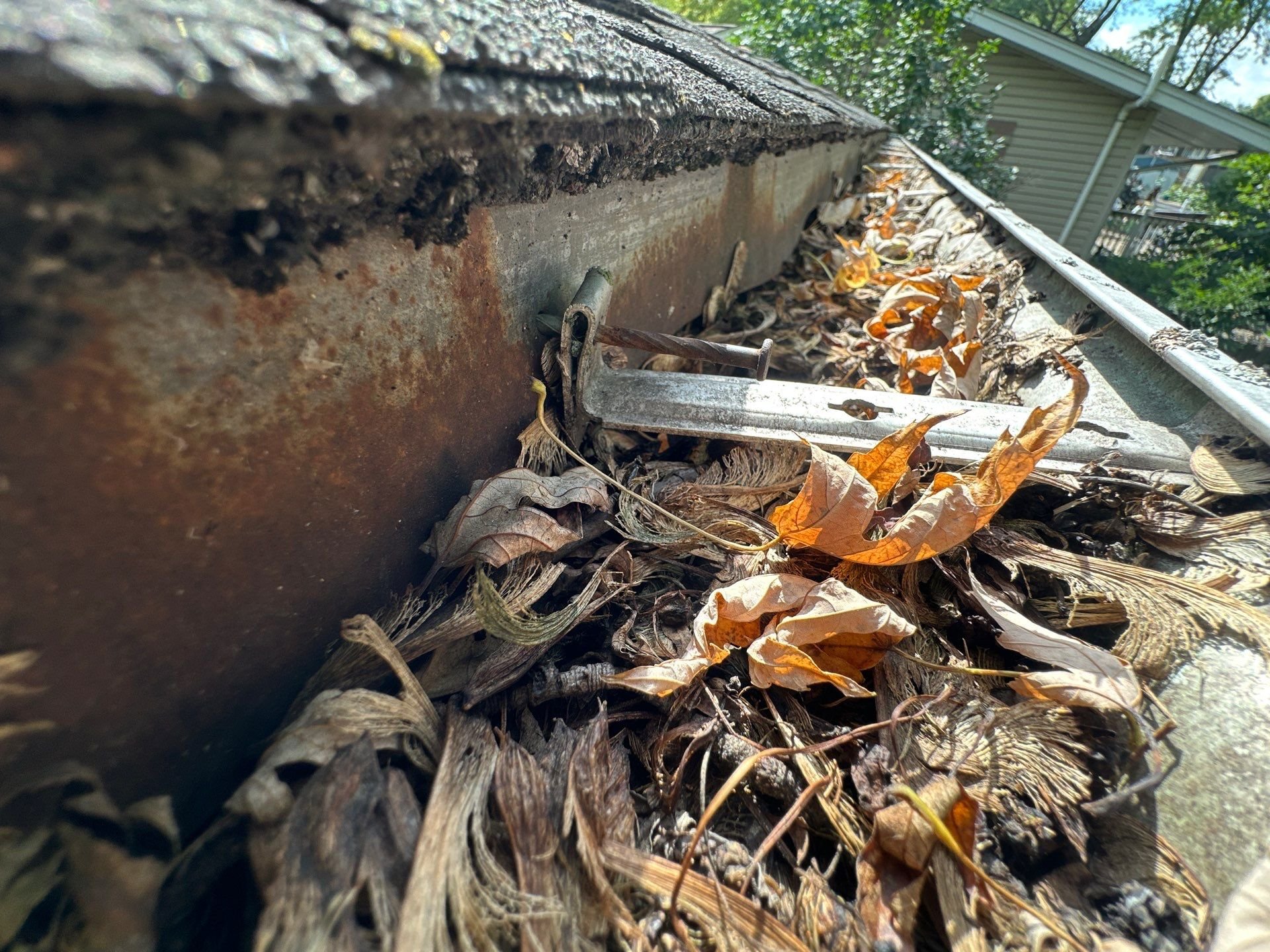
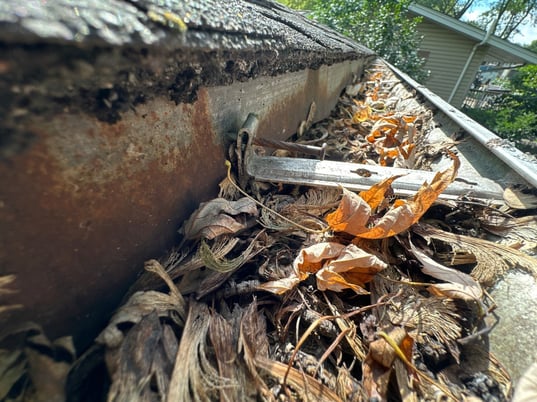
Below is an example of gutters that should be cleared of leaf debris, as water would have a hard time flowing freely through this blockage:
If you're comfortable and can clean your gutters safely, this may be something you can handle yourself. If reaching them requires getting onto the roof or using a ladder you're not comfortable with, calling a roofing contractor for a gutter cleaning is the safest route, especially for homes with gutters that aren’t easily accessible.
2. Do You Have Missing, Lifted, Cracked, or Damaged Shingles?
Damaged or missing shingles are worth checking before winter because they can leave portions of your roofing system more vulnerable to water intrusion.
You don't need to climb onto your roof to look for them. Walk around your property and look at the roof from the ground. If you have binoculars, or even a phone camera with zoom, they can help you get a closer look without getting on a ladder.
Pay attention to:
- Missing shingles: Look for obvious gaps where a shingle used to be, or any shingles lying around the perimeter of your home.
- Lifted shingles: A shingle that isn't lying flat may have been affected by wind or another type of damage, or the adhesive meant to help secure the shingle may be failing.
- Cracked or broken shingles: Physical damage can affect how well the shingle protects the materials underneath it. This isn’t always easy to see from the ground, but a routine roof inspection will catch any signs of deterioration.
3. Are There Signs of a Roof Leak Inside Your Home?
Water stains, moisture, or other signs of a leak are worth investigating rather than waiting to see what happens over the winter.
Typically, an interior leak is something homeowners take note of right away, but not every roof leak starts with water actively dripping into the living space, and sometimes the first signs are much less obvious.
Inside your home, look for:
- Ceiling or wall stains: Brown, yellow, or discolored spots can indicate moisture has gotten into the home. Even if the stain feels dry or hasn't changed recently, it can be worth investigating where the moisture came from rather than assuming the leak has stopped.
- Peeling or bubbling paint: Moisture behind drywall can sometimes cause paint to peel, bubble, or blister. If this is happening near an exterior wall or ceiling, especially after rainfall, it could be a sign that water is getting into an area you can't easily see.
- Damp areas in the attic: If you can safely access your attic, look for damp insulation, wet roof decking, or areas that show signs of water damage. Catching moisture here can help you identify a potential roof leak before the water travels far enough to become visible on the ceilings or walls below.
- Musty odors: An unusual damp or musty smell can sometimes point to moisture in an attic, ceiling, or wall even when you can't see any water. If the smell persists or becomes more noticeable after it rains, it's worth looking for the source rather than trying to cover up the odor.
The place where you see water inside isn't always directly underneath the place where it's getting through the roof. Water can travel along decking, rafters, and other parts of the home before it becomes visible, so it’s a good idea to have any signs of a leak assessed as soon as possible.
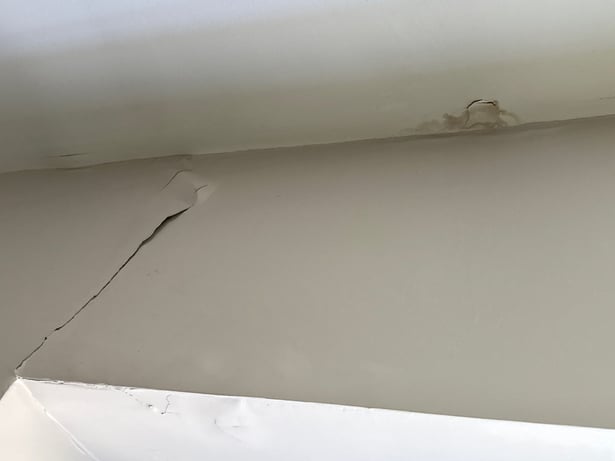
Here is an example of drywall damage caused by a roof leak, and what it can look like inside the home:
4. Are You Finding a Lot of Shingle Granules in Your Gutters?
Some granules in your gutters are normal, but an unusual amount can be worth paying attention to.
Granules are the small, rough particles covering the surface of asphalt shingles. They help protect the shingle underneath from UV exposure and weather. Over time, some of those granules naturally loosen and wash into your gutters.
Excessive granule loss can become a problem because as shingles lose more of this protective layer, the asphalt underneath is left more exposed to sunlight and weather, which can accelerate the deterioration of the shingles.
You may want to take a closer look if:
- You're suddenly seeing more granules than usual: A noticeable change can be more meaningful than simply finding a small amount accumulating in the gutters or near downspouts.
- Parts of your shingles look bare: Areas where a significant number of granules are missing may appear darker or smoother than the surrounding shingles, or another part of the roof.
- The roof is already older: Granule loss can become more common as the roof ages, and seeing larger amounts may indicate that the shingles are wearing down and losing some of the protective surface they had when they were newer.
- You recently had a storm: Hail and other impacts can sometimes loosen granules. If you’re noticing a large amount of granule loss after a storm, it could indicate that your shingles took hail damage and may be exposed.
Seeing granules does not automatically mean your shingles are failing. What matters is how much granule loss you have, the age of the roof, and whether you're noticing other changes at the same time.
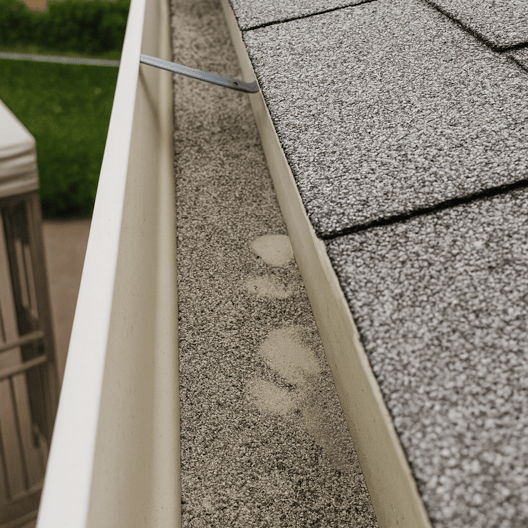
Here is a photo of what would be considered excessive granule loss found in gutters, indicating that the shingles are aged or facing another issue:
5. Are Branches, Leaves, or Other Debris Sitting on Your Roof?
Debris sitting on your roof should generally be removed before the winter season.
If your home is in an area with a lot of tree coverage, or if any tree branches overhang your roof, leaves, branches, pine needles, and other material can collect in roof valleys, behind chimneys, near skylights, or in other areas where they may not easily blow away.
That can interfere with how water moves off the roof and may keep portions of the roof damp longer than they otherwise would be. Large branches near the roof also create a risk of damage if they come into contact with the roof. With winter snowstorms, the added weight of the snow on those overhanging branches can cause them to fall, damaging the roof underneath.
If you can see debris from the ground, don't assume you need to climb onto the roof to remove it yourself. Steep slopes, wet leaves, and fall weather can make roofs especially slippery, and a professional roofing contractor can help clear the roof of any debris. For overhanging tree limbs, an arborist can help safely trim back any branches that could be a risk if they're too difficult to access yourself.
6. Did Summer Storms Leave Damage You Haven't Had Checked?
If your home went through significant wind or hail this spring or summer, fall can be a good time to make sure there isn't damage you missed.
Storm damage isn't always obvious from your driveway. You might notice a missing shingle after a windstorm, but other problems can be harder to identify without getting closer to the roof.
Were there storms that:
- Knocked down large branches around your property?
- Produced quarter-sized or larger hail in your neighborhood?
- Caused shingles or roofing material to end up in your yard?
- Led to leaks or water stains you hadn't seen before?
- Caused visible damage to gutters, siding, or other exterior surfaces?
None of those automatically prove your roof is damaged, but if you answered yes to some of those questions, scheduling a roof inspection before winter hits can give you a clear understanding of your roof’s health before heading into the cold, wet weather.
Does Everything on This Fall Roof Checklist Require a Roofing Contractor?
While some fall roof maintenance can absolutely be handled by homeowners, other problems are safer or more practical to have a professional evaluate.
Cleaning accessible gutters, checking your attic, walking around your property, and visually monitoring the roof can tell you quite a bit without needing to call a roofer.
A professional inspection becomes more useful when you find something you can't confidently evaluate yourself, such as:
- A leak with an unknown source
- Missing or visibly damaged shingles
- Possible storm damage that you can’t confirm from the ground
- Significant or unusual granule loss
It’s also important to stay within your comfort zone when it comes to anything roof-related. If your home is especially tall, the roof is hard to access, or you simply aren’t comfortable with things like cleaning the gutters yourself, a reputable contractor would be more than willing to help.
What Should You Do If You Find a Roof Problem This Fall?
If you’re going through this checklist and notice something concerning, the next step is to have it looked at by a roofing professional who can determine what’s causing the problem and whether it actually needs to be addressed.
Not everything you find will require an immediate repair, and finding damage doesn’t automatically mean you need a new roof. A professional inspection can help you understand what’s happening, how serious it is, and whether it makes sense to take care of it this fall or continue monitoring it.
If you have a roofing issue you’re concerned about and want a professional assessment of your roof’s health, schedule a no-commitment roof consultation with us. We'll inspect the entire roofing system, walk you through what we find, and help you understand your options so you can decide what, if anything, needs to be done, whether you decide to move forward with us or not.