Why Are My Gutters Overflowing When It Rains?

Seeing water pour over the edge of your gutters during a rainstorm can be alarming. Your gutters are supposed to carry water away from your home, so when the water starts spilling over the sides instead, it’s natural to wonder whether you’re dealing with a simple clog or a bigger problem with your gutter system.
In some cases, overflowing gutters are caused by a simple maintenance issue. Other times, the problem has more to do with how well your gutter system directs the water coming off your roof. Understanding the difference can help you figure out how serious the problem is and what, if anything, needs to be done.
At Happy Roofing, we’ve repaired and replaced hundreds of roofs throughout the greater Naperville area, and we know how concerning it can be when something around your roof isn’t working the way you expect. In this article, we’ll explain:
- What causes gutters to overflow when it rains
- How to find the cause of your overflowing gutters
- What you can do to correct overflowing gutters and prevent it from happening again
By the end, you’ll understand what your gutter system is telling you and what you can do to ensure it’s working as intended.
Key Takeaways
- Overflow happens when water can’t drain fast enough: Clogs, improper pitch, undersized gutters, and restricted gutter guards can all cause water to spill over the sides.
- Start by checking for clogs: Leaves, debris, and other buildup are among the most common causes of overflow and should be ruled out before looking for other drainage issues.
- Clean gutters can still overflow: If the problem continues after cleaning, improper pitch, insufficient capacity, roof design, or gutter guards may be contributing to the problem.
- Repeated overflow can damage more than your gutters: Water that isn’t directed away from your home can eventually contribute to fascia deterioration, siding damage, landscape erosion, and foundation or basement issues.
Table of Contents
- Is It Normal for Gutters to Overflow?
- What Causes Gutters to Overflow?
- Can Overflowing Gutters Damage My Home?
- What Should You Do If Your Gutters Overflow When It Rains?
Is It Normal for Gutters to Overflow During Really Heavy Rain?
An unusually intense storm can temporarily overwhelm a gutter system, but gutters should not overflow every time you get a decent rain.
If you've noticed overflow once during an unusually severe storm and everything otherwise drains normally, monitoring the system may be reasonable. If it happens repeatedly, there's probably something that needs to be addressed to restore proper drainage.
Pay close attention to whether the overflow:
- Always happens in exactly the same location
- Begins during relatively normal rainfall, or only occurs during very severe storms
- Continues after you've cleaned the gutters of any debris or blockages
- Causes water to pool beside the house, around the foundation
- Is accompanied by sagging, leaking, or visible gutter damage
What Causes Gutters to Overflow During a Rainfall?
Gutters can overflow due to clogs, drainage problems, improper pitch, sagging sections, or simply because more water enters the gutter than the system can handle.
While a clog is one of the most common causes of overflowing gutters, it isn’t the only one. Where the water overflows, how often it happens, and whether it only occurs during heavy rain can all help narrow down what’s causing the problem.
How Do Clogged Gutters Cause Water to Overflow?
Clogged gutters cause water to overflow by blocking the path rainwater needs to take toward your downspouts. Your gutters only have so much room to carry water. When leaves, twigs, shingle debris, or other buildup blocks that path, water begins to back up and can spill over the edge.
During a light rain, you may not notice anything unusual because there isn't enough water entering the gutter to expose the problem. When a stronger storm rolls through and water suddenly pours over the side, it becomes easier to spot the issue.
Common signs of a clogged gutter include:
- Visible debris: Leaves, twigs, seed pods, and other material are collecting inside the gutter.
- Overflow along a section of gutter: Water repeatedly spills over the side of the gutters, rather than the downspouts.
- Standing water after the rain stops: Water remains in the gutter instead of draining.
- Sagging gutters: Wet debris or standing water adds weight and can eventually cause sections of the gutter to pull away or sag.
How Can I Clear Gutter Blockages?
If clogging is a recurring problem, you may have to adjust how often you clean your gutters based on the number of trees around your home. For most homes, we recommend cleaning gutters at least twice a year, typically once in the spring and once in the fall. Homes surrounded by mature trees may need more frequent attention.
To learn more about how often your gutters should be cleaned, what affects your cleaning schedule, and how to safely maintain them, read our article How Often Should I Clean My Gutters? Gutter Maintenance 101.
How Can Improper Gutter Pitch Cause Overflow?
If your gutters aren’t sloped properly toward the downspouts, rainwater can collect in low or flat areas until it eventually spills over the edge.
If improper pitch is contributing to the overflow, you may notice:
- Visible low spots: Looking from the ground, a section of gutter may appear to be sagging or uneven, creating a pocket that traps water.
- Water marks in one section: Dirt lines, staining, or residue inside or around one area can indicate that water regularly sits there instead of draining.
- Overflow in the same area: Water consistently spills over one section even after the gutters and downspouts have been cleaned.
- A problem that returns after cleaning: If clearing out the gutter doesn’t change where the overflow happens, the issue may be related to pitch rather than debris.
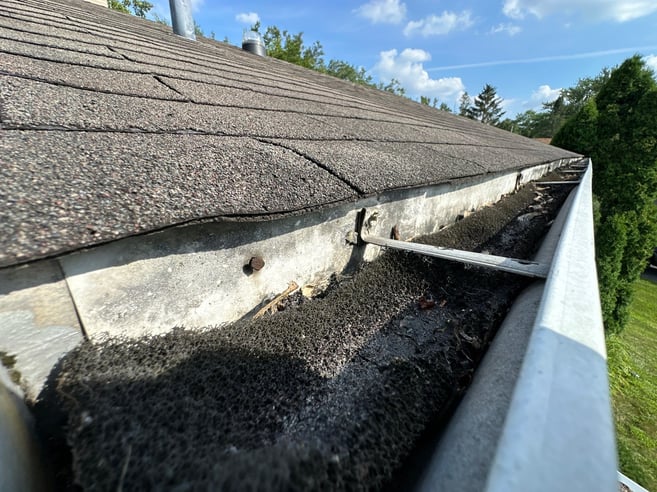
Pitch can change over time if gutter hangers loosen, the fascia deteriorates, or sections of gutter begin shifting. The photo below gives you a closer look at how gutter hangers are meant to help keep the gutter secured to the fascia:
How Can I Correct the Pitch of My Gutters?
To correct improper gutter pitch, the affected section typically needs to be repositioned so it has the proper slope toward the downspout. Depending on what caused the problem, this may involve adjusting the gutter, resecuring loose hangers, or addressing damaged components that are preventing it from sitting correctly.
A reputable roofing contractor can help you determine the cause of the uneven slope and go over your options to correct any drainage issues
Can Gutters Be Too Small for Heavy Rain?
Different roofs require different gutter sizes to properly shed water. Undersized gutters can fill faster than they can drain during heavy rain, causing water to spill over the sides. This becomes especially noticeable during sudden, heavy downpours like those that we often get around the Naperville area.
Gutter capacity isn’t determined by the size of your home alone. Several factors can increase the amount or speed of water entering the gutters:
- Large roof areas: More roofing surface means more rainwater needs somewhere to go.
- Steep roof slopes: Water can reach the gutter faster on steeper sections of roofing, even if the area is relatively small.
- Long gutter runs: Water may have farther to travel before reaching a downspout, which could cause backups in undersized gutter systems.
- Too few downspouts: The gutters may collect water faster than the existing outlets can remove it. This could cause overflows even if the gutters are appropriately sized.
- Roof valleys: Multiple roof sections can direct a concentrated stream of water toward one small portion of gutter, creating a zone of standing water waiting to drain.
How Can I Tell If My Gutters Are Undersized?
Undersized gutters will typically overflow during heavier rainfall even when the gutters and downspouts are clean and draining properly. If your gutters are clear of debris and you’re still experiencing water overflow during heavy rainfall, a roofing contractor can assess whether your current gutter system is properly sized for your roof or if it needs to be upsized to handle the amount of water coming off of your home.
Can Gutter Guards Cause Water to Overflow?
Gutter guards can contribute to overflow if their surface becomes blocked or if water cannot pass through them quickly enough.
Gutter guards are designed to keep leaves, twigs, and other debris out of your gutters while still allowing rainwater to pass through. However, not all gutter guards work the same way. Mesh and micro-mesh systems filter water through small openings, while surface-tension systems direct water around a curved cover and into the gutter.
Below is an example of a micro-mesh gutter guard that prevented debris from entering the actual gutter system:
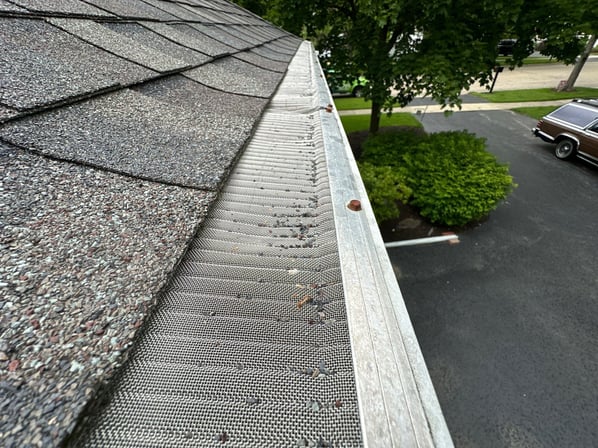
Because different gutter guard designs handle water and debris differently, their performance can vary, especially during heavy rainfall. Debris can collect on top of some systems and restrict water flow, particularly around roof valleys where larger amounts of water and debris may be concentrated.
This doesn’t necessarily mean the gutter guard itself is the problem. It may simply need to be cleaned, or the overflow could be related to another part of the gutter system entirely.
If you have gutter guards and notice overflow, look for:
- Debris sitting on top of the guard: Leaves, twigs, or fine debris covering the guard may prevent water from passing through as intended.
- Water flowing over the guard: If water runs over the surface instead of entering the gutter, the guard may be blocked or struggling to handle the amount of water coming off the roof.
- Overflow near roof valleys: Overflow concentrated below a valley may indicate that too much water is reaching one section of the gutter at once rather than a problem with the entire guard system.
- Debris collecting in gutter corners: Leaves and other debris can build up where gutters change direction, restricting water flow and contributing to overflow in that area.
- Little water exiting the downspout: If water is getting through the guard but not draining from the downspout, the blockage may be farther down in the gutter system.
These signs can help you narrow down whether the gutter guards are restricting water flow or if the overflow is being caused by another issue within the gutter system.
Can Overflowing Gutters Damage My Home?
Repeated gutter overflow can eventually cause damage because the water is being deposited in places your gutter system was specifically designed to protect. One strong storm that caused your gutters to overflow doesn’t automatically mean your house has suffered major damage. The concern is repeated exposure over time.
Overflowing gutters can contribute to:
- Fascia damage: Water can repeatedly soak the boards behind your gutters, causing the wood to soften, rot, or deteriorate over time. Because your gutters are typically attached to the fascia, enough damage can also weaken the gutter’s support and cause sections to sag or pull away from the home.
- Siding problems: Water spilling over the gutters can run down your home’s exterior, leaving stains and discoloration on the siding. If water repeatedly reaches gaps, seams, or other vulnerable areas, it can also work its way behind the siding and contribute to moisture damage underneath.
- Foundation and basement issues: When gutters repeatedly overflow, water can collect around the base of your home instead of being directed away from it. Over time, that excess moisture can saturate the soil around your foundation and increase the risk of basement leaks, foundation cracks, or other moisture-related problems.
- Landscape erosion: Over time, repeated erosion can also change how the ground slopes around your home, allowing more water to collect near the foundation instead of draining away from it.
What Should You Do If Your Gutters Overflow When It Rains?
If your gutters overflow when it rains, start by identifying what’s causing the water to back up or spill over.
In many cases, the cause may be something straightforward, like a clog or buildup that needs to be cleared. If the overflow continues after your gutters are clean, that’s a good sign that something else within the system may need to be evaluated.
Knowing the cause will help you understand whether you’re dealing with routine maintenance or an issue that may require a professional repair. If you’re unsure, a roofing contractor can inspect the system, explain what’s contributing to the overflow, and walk you through your options.
If you'd like to have someone take a look at the problem directly, you can schedule a no-commitment roof consultation with our team. We'll evaluate your gutters and the roof system as a whole, explain what we find, and help you understand your options without any obligation to move forward with us.