Has Happy Roofing Ever Messed Up a Roofing Project?
Most roofing companies only talk about their wins. The clean installs, the perfect projects, and the five-star reviews all go far when earning trust. What rarely gets discussed are the moments when something didn't go as planned. While we'd love to claim that we've always been perfect and don't have any of those moments to share, this is one of those stories.
At Happy Roofing, we've repaired and replaced hundreds of roofs across the greater Naperville area. And while the vast majority of those projects go exactly as they should, we're not immune to mistakes. Once, despite our processes and experience, we messed up a roof.
Rather than hide from it, we preferred to use it as a learning experience. In this article, you'll learn:
- What went wrong on this project
- How we handled it after we discovered our mistake
- How we changed our process afterward to avoid making the same mistake again.
Table of Contents:
- Has Happy Roofing Ever Messed Up a Roofing Project?
- How the Mistake Was Corrected
- How the Experience Changed Happy Roofing's Process
- Why We Chose to Highlight This Mistake
- Choosing the Right Roofing Contractor for You
Has Happy Roofing Ever Messed Up a Roofing Project?
The unfortunate answer is, yes, we've made mistakes before, and we think it's important to be upfront about that. Roofing is physical, detail-driven work done on real homes, often under tight timelines and changing weather conditions. Even with strong processes in place, mistakes can happen.
What defines a company is how it responds when a mistake does happen. In this case, we recognized the issue, took responsibility for it, and focused on making things right for the homeowner rather than worrying about lost profits or anything else.
Why Was the Roof Being Replaced, and What Went Wrong?
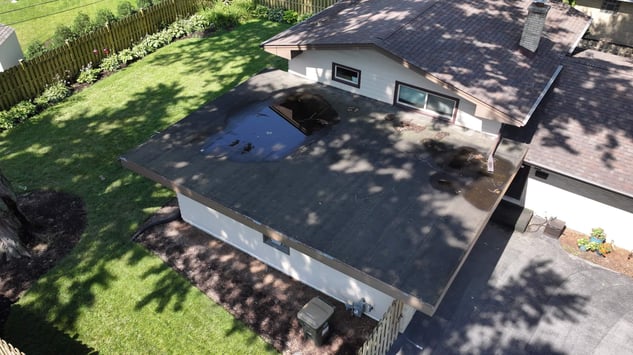
In late fall of 2024, we were called out to a home in the Naperville area to perform a flat roof replacement. The surface of this flat roof wasn't perfectly level, and the uneven pitch caused water to pool in certain areas after rainfall. Standing water anywhere on a roof can quickly lead to leaks, and the homeowner was understandably concerned about these areas.
Below is a photo of water collecting in uneven areas of the flat roof:
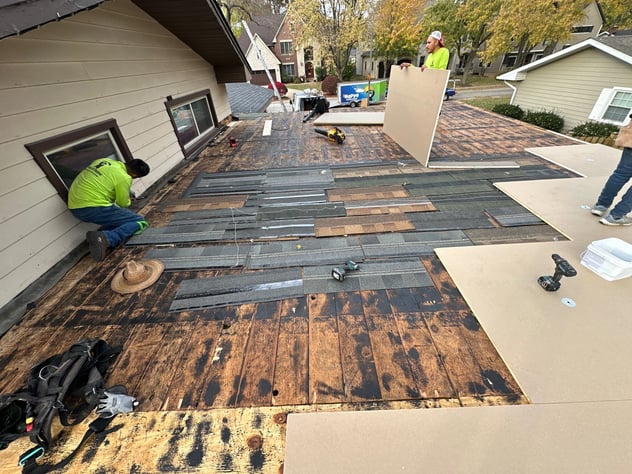
Based on what was visible at the time, we addressed those specific areas by raising the settled sections of the flat roof to create a flatter pitch and help water shed consistently before installing the new roofing materials. To do this, we laid asphalt shingles down on top of the roof deck to act as shims, then installed the insulation boards. The shingles are meant to raise the dips where water was collecting:
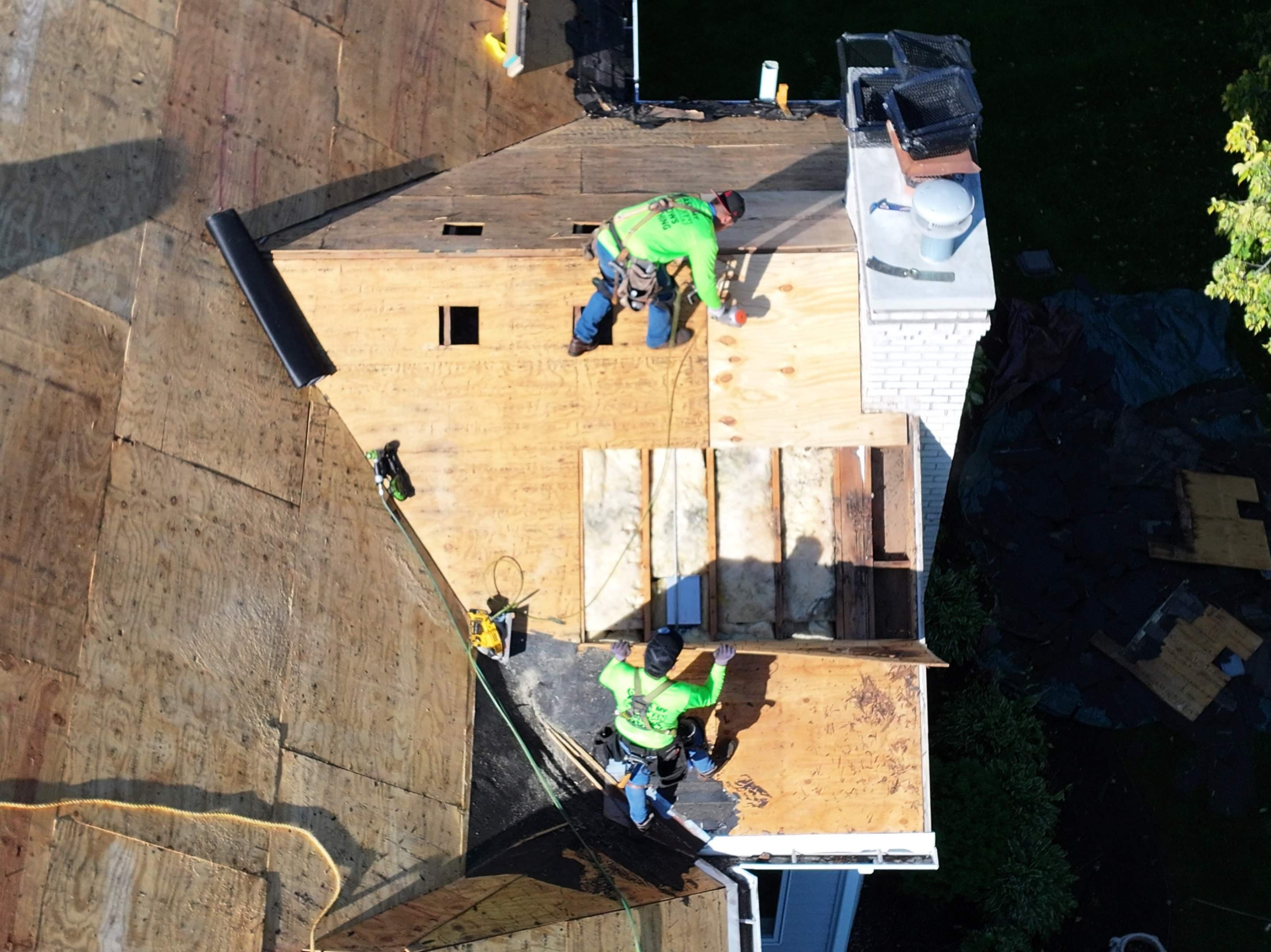
With the dips corrected and the insulation boards in place, we thought the roof was ready for our base sheet, the foundational and waterproofing layer of the flat roof system we were going to be installing. Here is a photo of the same flat roof after the base sheet was installed:
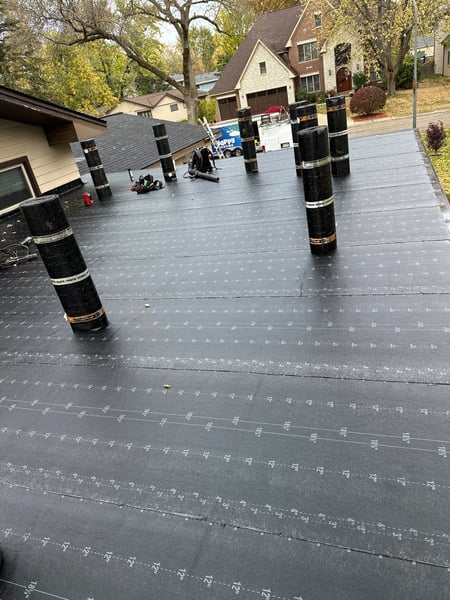
When the full installation was completed, our approach improved drainage in the areas that the homeowner was concerned about. However, our corrections were based on the assumption that the areas we saw during our inspection were the only uneven spots on the roof.
As it turned out, the roof had additional uneven areas that weren't immediately apparent. These areas weren't accounted for during the initial installation, only the ones that were collecting water originally. This meant that while water was no longer pooling in the original locations, it was just being redirected to other low points once it rained and the homeowner called us back.
How Did Happy Roofing Remedy Their Roofing Mistake?
After discovering the mistake, we made the decision to redo the work and properly address the entire roof surface (at no cost to the homeowner) because it was something that we should have caught earlier. This meant adjusting the pitch across the roof so water would drain consistently toward the intended outlets rather than being redirected to new low spots.
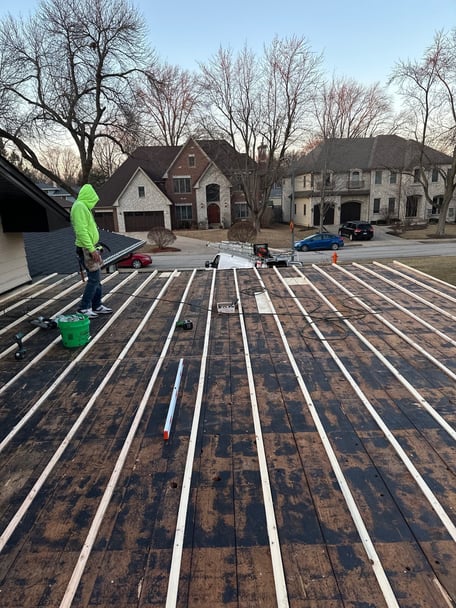
We removed and rebuilt the affected areas to create a uniform, intentional slope, ensuring water movement was predictable and controlled across the whole roof. To do this, we added tapered wooden strips on top of the existing deck, gradually adjusting the height so the roof surface naturally directed water toward the proper drainage points. This allowed us to "custom make" a consistent slope (verified with a level), as seen below:
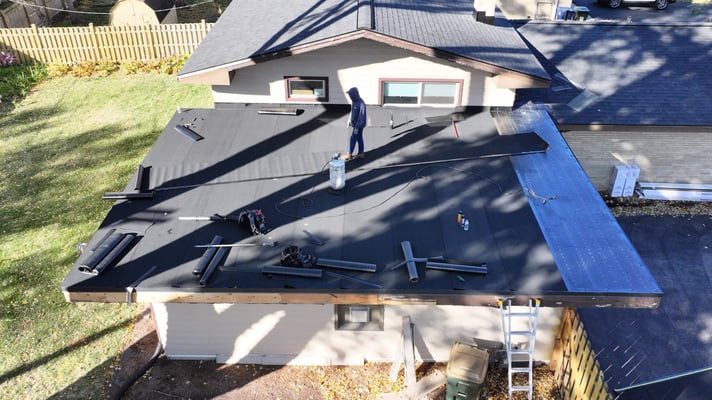
We then installed a new roof deck on top of the newly sloped frame, followed by the rest of the roofing materials. After this correction, the flat roof was shedding water as it should, and the issue was officially resolved.
How Did the Experience Change Happy Roofing's Process?
Since this project, we no longer assume pooling problems are isolated to what's immediately visible. Now, when we evaluate a flat roof, we assess the entire roof surface. That means paying closer attention to subtle slopes, transitions, and any inconsistent dips in the roof surface before replacement. This project changed the way we approach flat roofs (and our projects in general) moving forward.
Flat roofs don't always reveal their problems at a glance, and this experience reinforced the importance of slowing down, questioning assumptions, and evaluating the roof as a complete system before deciding on a solution. To help verify slope consistency, tools like lasers or string lines can be used so subtle dips don't get overlooked.
Why Would a Roofing Company Highlight a Mistake?
We're sharing this story because we believe homeowners deserve transparency and not just highlight reels of perfect outcomes. Too often, companies present themselves as flawless, which can make it hard for homeowners to know what really matters when choosing a contractor. Mistakes aren't the real risk in construction. Silence, deflection, and lack of accountability are.
By being open about a project that didn't go as planned, we want to show how we think about responsibility, problem-solving, and follow-through. We believe trust is built not by pretending problems never happen, but by showing exactly how those problems are handled when they do.
Our hope is that this transparency helps you ask better questions, set realistic expectations, and feel more confident in choosing a roofing contractor, whether that ends up being us or not.
How to Confidently Choose the Right Roofing Contractor for Your Home
Choosing the right roofing contractor is about finding a company that's honest, accountable, and willing to take responsibility when things don't go as planned. Roofing is complex work, and even experienced contractors can run into unexpected challenges. What matters most is how those challenges are handled, and if they're looking out for your best interests.
If you're in the process of choosing a roofer, it's worth asking questions beyond price and timelines. Do they have good, consistent reviews that call out their workmanship? Do they explain their process? Are they willing to own the outcome of their work?
If you're considering Happy Roofing for your next roofing project, and you want to learn more about how we approach our roofing projects, we've written an article that could help with exactly that: What Is Happy Roofing’s 100% Money-Back Guarantee - and What It Really Means for Homeowners. In it, we explain how the guarantee works, who it’s designed for, and the situations where it applies, so you can decide whether that level of commitment gives you the peace of mind you’re looking for.
If you'd like a thorough assessment of your roof's health, we offer no-commitment consultations to give you clarity and outline your options without the obligation to move forward with us.