How Disruptive Is the Roof Replacement Process?
Replacing your roof is one of the biggest home improvement projects you’ll ever take on, and for many homeowners, it can come with a lot of uncertainty.
Will my home be torn apart for days?
Will there be constant noise, debris, or damage to my property?
Will my daily routine be disrupted?
At Happy Roofing, we’ve guided hundreds of homeowners around the greater Naperville area through the roof replacement process. We’ve seen firsthand what causes stress, what catches people off guard, and what helps make the experience smoother and more manageable.
In this article, you’ll learn exactly how disruptive a roof replacement can be, what factors can impact the level of disruption, and how you can plan for your future roof replacement. By the end, you’ll know what to expect and be better prepared to avoid unnecessary stress.
Key Takeaways
- Most residential roof replacements take 1–3 days, depending on roof size, weather, material type, accessibility, and any underlying repairs.
- You can usually stay home during a roof replacement, but noise, crew activity, pets, children, and work-from-home needs may make it easier to leave during work hours.
- Some disruption is unavoidable, including noise, limited driveway access, debris removal, and outdoor work zones, but can be manageable when you know what to expect and plan ahead.
- Preparing ahead of time can make the process smoother by moving vehicles, clearing outdoor areas, securing fragile indoor items, mowing the lawn, and planning for pets or children.
Table of Contents
- How Long Roof Replacements Take
- Can You Stay at Home During a Roof Replacement?
- How Your Property Is Protected During a Roof Replacement
- How to Prepare For a Roof Replacement
- Finding the Right Roofer For You and Your Home
How Long Does a Roof Replacement Take?
Most residential roof replacements take 1-3 days to complete, but the exact timeline depends on the size of your roof, weather conditions, and the complexity of the project.
Here are the main factors that can impact your timeline:
- Size of your roof: Larger homes or more complex rooflines (multiple peaks, valleys, etc.) will take longer than a simple, single-family home due to the increased surface area and the added precision required to properly install materials around angles, intersections, and structural features.
- Weather conditions: Rain, high winds, or extreme temperatures can delay or pause work to ensure safety and quality. Roofing contractors typically keep a close eye on expected weather as the date of your project approaches, but in places like Northern Illinois, weather conditions can quickly change.
- Type of roofing materials: Asphalt shingles are usually the fastest to install, while materials like metal or cedar shake can take longer due to the more detailed installation process or specialized tools required for a proper installation.
- Roof accessibility: If your home is difficult to access or has limited space for equipment and materials, it may slow down the process, as crews may need more time to move materials in and out, and cleanup can take longer when trucks, dumpsters, or equipment can’t be easily positioned around the home.
- Underlying repairs: If damage is discovered after removing the old roof (such as rotted decking or structural issues), additional repairs may be needed, which can extend the timeline. It’s not always possible to verify the condition of the roof deck until the shingles are removed, but a trustworthy contractor will communicate any possibility of additional work upfront.
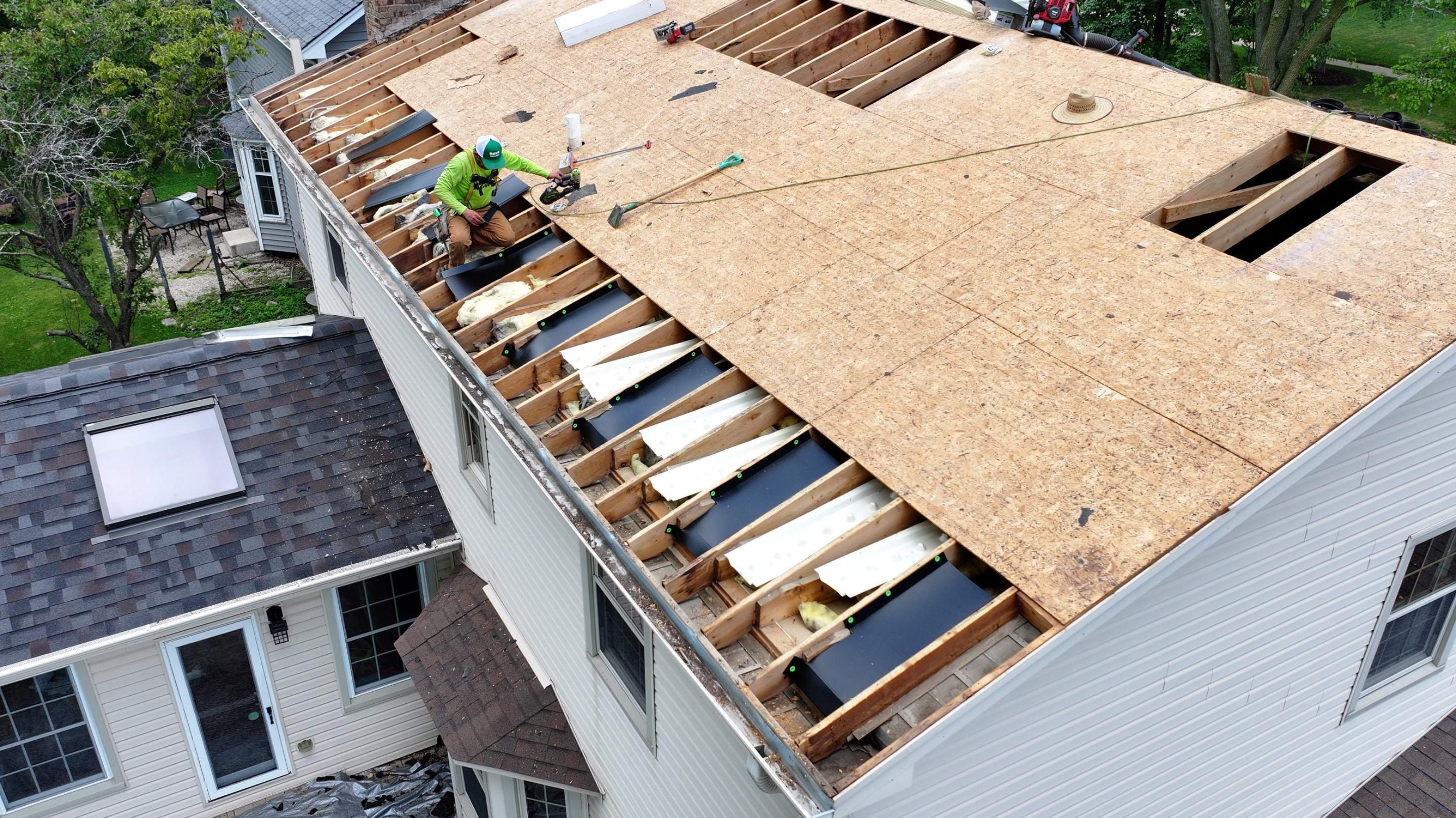
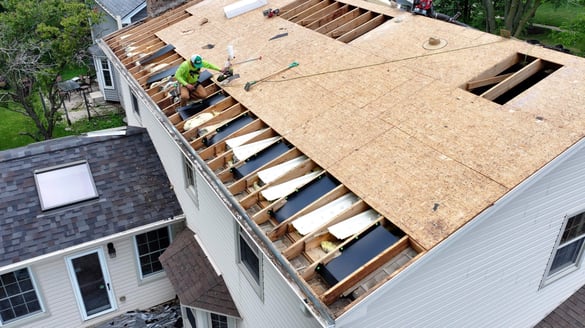
We've included a photo of exposed roof decking below to demonstrate how shingles and underlayment need to be removed to fully verify the condition of the wood underneath:
Can You Stay in Your Home During a Roof Replacement?
Most homeowners can stay in their home during a roof replacement, but some may choose to leave during peak work hours due to noise and activity.
While there’s no requirement to leave your home while your roof is being replaced, the work can be a bit disruptive to those who work from home, have children, or have pets that are sensitive to loud noises.
Here’s what to consider:
- Noise levels inside the home: Roofing work can be loud. Hammering, tearing off shingles, and crew movement overhead can make it difficult to work, relax, or take calls from within the home while the crew is working.
- Pets and young children: Loud, sudden noises can be stressful for pets and disruptive for naps or daily routines with small children. If you have anyone in the home who may be sensitive to the activity, it’s best to plan an alternative location during work hours.
- Work-from-home situations: If you’re in meetings or need a quiet environment during the day, staying home during installation hours may not be ideal.
- Safety precautions outside: While contractors take steps to protect you and your property, it’s best to avoid being outside around active work zones for safety reasons. If you know you’ll need to exit and reenter the home during the day, coordinate with the project manager on site to ensure safe passage in and out of the home.
How Will My Property Be Protected During a Roof Replacement?
During a roof replacement, reputable contractors take multiple steps to protect your property, including using tarps, magnetic tools, and controlled debris removal, so that any disruption to your yard, driveway, or landscaping is minimized throughout the project.
Here’s how your property should be protected during a roofing project:
- Property protection: Contractors place tarps around the perimeter of your house in areas where they are working in order to protect it from falling shingles, nails, and debris during the tear-off process. Windows and siding are the most obvious areas of concern, but steps are also taken to protect your landscaping and other outdoor features.
- Magnetic nail sweeps: After the job is complete, crews use large magnetic rollers to pick up stray nails from your yard, driveway, and surrounding areas. These rollers are designed to catch even the hardest-to-see nails that could otherwise pose a safety risk.
- Dumpsters and controlled debris disposal: Materials are usually directed into a dumpster or trailer placed near your home to limit how far debris travels. This setup allows crews to quickly and safely dispose of old shingles as they’re removed, keeping the work area more organized and reducing the risk of debris spreading across your property.
Below is an example (from a project we recently completed) of the steps taken to protect the home and surrounding property from debris:
What Should You Do to Prepare for a Roof Replacement?
To prepare for a roof replacement, homeowners should clear areas around the home, ensure their driveway is accessible, and plan for noise and limited access during the project.
A little preparation ahead of time can make a big difference in how smooth your roof replacement feels. While your contractor will handle the installation, there are a few simple steps you can take to protect your home and minimize disruption.
Your contractor should communicate how to best prepare before they show up to begin the project, but in general, here’s how to get ready for your roof replacement:
- Move vehicles out of the driveway: This allows space for dumpsters, material deliveries, and crew movement. Having the driveway clear before the crew arrives can help the process go more quickly.
- Clear outdoor areas surrounding the home: Move patio furniture, grills, potted plants, and decorations away from the house to prevent damage and give the crew room to work. A reputable contractor will take the necessary steps to protect landscaping and other items around the house, but moving any important items in advance can help speed up the process.
- Protect items inside your home: Vibrations from roofing work can travel through the structure, so it’s a good idea to secure wall hangings, fragile items, or anything in the attic that could be affected by repeated vibration.
- Mow your lawn beforehand: Shorter grass makes it easier for crews to clean up nails and debris after the job is complete. Most contractors use magnets to ensure no nails are left behind in your lawn, but shorter grass can help lessen the risk of any missed debris.
- Make arrangements for pets and children: Loud noise and unfamiliar activity can be stressful, so consider keeping pets in a safe, quiet area or off-site if needed. If you work from home or have young children, your contractor should be able to give you an estimate of how long the project will take so you can plan accordingly if you need to leave the home during work hours.
Finding the Right Roofing Contractor For You
While there’s no way to completely eliminate disruption during a construction project, most homeowners find that the experience is far less overwhelming than they initially expected when they know what’s coming and work with a contractor who communicates clearly throughout the process.
By understanding the timeline, setting realistic expectations, and preparing your home ahead of time, you can avoid surprises and feel much more in control from start to finish. A well-organized, communicative team can turn what feels like a stressful project into a smooth, predictable experience.
If you’re wondering what that actually looks like in real life, the next step is to see how the process works with a specific contractor. While we can’t speak to the process of every other roofing contractor out there, you can learn more about what to expect when working with our team in this guide: What It’s Like to Work with Happy Roofing.
This will give you a clear picture of how we communicate, what our roofing process looks like, and how we help homeowners feel confident every step of the way, so you can better understand what to look for and what matters most to you when choosing a roofing partner.
If you’d prefer to talk through your situation directly, you can schedule a no-obligation roof inspection with one of our roofing consultants. We’ll assess your roof and provide personalized recommendations so you can make the best decision for your home, without the pressure to move forward with us.