How Much Does it Cost to Tarp a Roof?
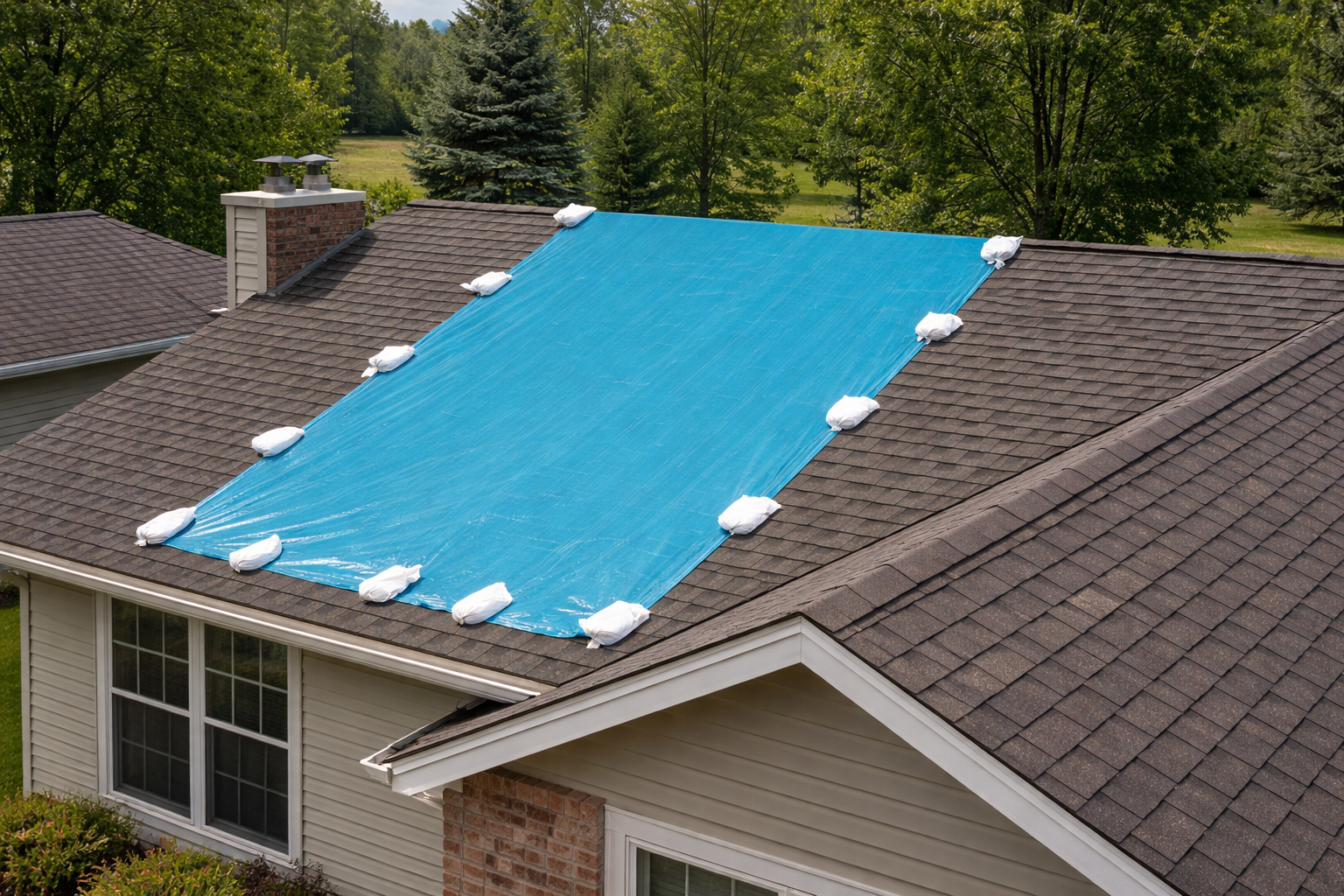
Most homeowners don't think much about roof tarping until they're facing damage where a temporary fix is needed. At that point, the first question is usually simple: How much does roof tarping cost?
At Happy Roofing, we've repaired and replaced hundreds of roofs across the greater Naperville area. In that time, there have been situations where we needed to temporarily tarp a roof until a long-term solution could be performed. That experience has shown us firsthand not only how much roof tarping costs, but what factors can affect that cost.
Whether you're facing a roofing issue where temporary tarping was recommended or you just want to be proactive, understanding what roof tarping could cost can help you prepare for the possibility that you'll need one.
In this article, we'll talk about:
- When roof tarping could be needed
- How much does tarping a roof usually cost?
- What factors can influence the cost
By the end, you'll have a clear understanding of what goes into the costs of roof tarping, so you can be prepared whether roof tarping becomes necessary for your home or not.
Table of Contents
- When You May Need to Tarp a Roof
- What it Costs to Tarp a Roof
- What Impacts the Cost of Tarping a Roof?
- Will Insurance Cover Emergency Roof Tarping?
- Can You Tarp a Roof Yourself?
- What to Do if You Need a Roof Repair
When Would You Need to Tarp a Roof?
You typically would need to tarp a roof when damage is actively occurring (or likely to continue) before permanent repairs can be safely completed.
Roof tarping is a temporary protection measure, not a repair. It's used to stop further damage, not to fix the underlying issue. Understanding that distinction helps homeowners know when tarping is appropriate and when it's unnecessary.
The table below outlines some situations where roof tarping could be necessary, and some where tarping may not be needed:
| Situations That May Require Roof Tarping | Situations That Often Don't Require Roof Tarping |
|---|---|
| Water is actively entering the living space of the home (ceilings, walls, insulation, or flooring) and repairs can't be completed immediately | The leak is limited to a garage or unfinished space where additional damage is unlikely |
| Permanent repairs must be delayed due to weather, material availability, or contractor scheduling | The issue is stable and not actively worsening, and the weather forecast is clear until the scheduled repair date |
| Rain, snowmelt, or storms are expected, increasing the risk of continued damage | Repairs can be scheduled promptly without increased risk to the home |
| Severe or sudden damage (such as a tree impact or storm-related opening) requires immediate temporary protection | There is minor storm damage, like cosmetic hail impacts, that does not pose a risk of ongoing damage |
What Does It Cost to Tarp a Roof?
Roof tarping typically costs anywhere from $300 to $1,500, depending on the size of the damaged area, roof complexity, access, and urgency. A small, easily accessible section of roof that can be secured during normal working hours will naturally cost less than a large or complex area that requires immediate attention, specialized safety measures, or difficult access.
Typical Roof Tarping Cost Ranges
While every situation is different, most homeowners can expect pricing to fall into these general ranges:
-
$300-$600 range: Smaller tarping jobs on easily accessible roofs with minimal damage. This typically applies when a small section of the roof is exposed, such as a few missing or damaged shingles. These roofs are usually single-story or low-slope, with safe access and no immediate weather hazards, allowing the tarp to be installed quickly and securely without extensive labor or equipment.
-
$600-$1,000 range: Moderate tarping jobs that involve larger exposed areas or more challenging roof conditions. This often includes damage affecting a wider section of the roof or multiple problem areas. Roofs in this range are frequently steeper, multi-story, or more complex in design, which increases labor time and safety considerations. Limited access or the need to secure the tarp against ongoing weather can also push costs into this range.
-
$1,000-$1,500+ range: Larger, more complex, or urgent tarping situations that require significant temporary protection. This typically applies to severe storm damage, such as tree impacts, large sections of missing roofing, or situations where the roof is unsafe to access without additional precautions. Emergency response, after-hours work, difficult weather conditions, or the need to tarp large sections of the roof at once can all contribute to higher costs.
Why Do Roof Tarping Costs Vary So Much?
The price range is relatively wide because roof tarping isn't a flat-fee service. Factors like roof design, accessibility, timing, and safety all influence how involved the job is, even when the end result looks similar from the ground. The price reflects the risk, labor, materials, and conditions involved - not just the tarp itself.
In other words, two homeowners might both "need a tarp," but the work required to do it properly can be very different. That's why pricing is based on the scope and conditions of the job rather than a one-size-fits-all number.
In the next section, we'll walk through the specific factors that affect roof tarping costs so you can better understand what's driving an estimate.
What Impacts the Cost of Tarping a Roof?
Most of the cost is tied to how the tarp is installed, the conditions involved, and how well it needs to hold until permanent repairs can be made. Several factors influence the cost of roof tarping, which is why pricing can vary so widely from one home to another. While homeowners often focus on the tarp itself, some variables contribute to situational price differences.
The primary factors that impact roof tarping cost include:
-
Size of the area being tarped: The larger the exposed or damaged area, the more materials and labor are required. Tarping a small, isolated section of roof is very different from securing a wide opening or multiple damaged areas, which also require more careful fastening to prevent wind lift.
-
Roof pitch, height, and complexity: Steeper roofs, multi-story homes, and complex roof designs increase both time and safety requirements. A low-slope, single-story roof is faster and safer to tarp than a steep roof with multiple angles, dormers, or valleys.
-
Accessibility and safety conditions: Limited access around the home (such as tight lot lines, landscaping, fencing, or overhead obstructions) can make roof tarping more difficult. In some cases, additional equipment or setup time is required just to safely reach the damaged area before tarping can begin, adding to labor costs.
-
Weather conditions and timing: Rain, snow, ice, or high winds slow the process and increase risk. Emergency or after-hours roof tarping typically increases the cost by about 30%-40% compared to standard pricing. In some cases, contractors may charge a separate after-hours or same-day dispatch fee to mobilize a crew outside normal working hours or during poor weather conditions.
Is Emergency Tarping Covered by Insurance?
In some cases, emergency roof tarping can be covered by insurance, as long as it's done to prevent further damage from an event that is covered by the policy (like storm damage).
Insurance companies generally view roof tarping as mitigation, meaning a reasonable step taken to protect the home from additional damage. When tarping is necessary and tied to a valid claim, it's commonly reimbursable.
When Insurance Typically Covers Emergency Tarping
Emergency roof tarping is more likely to be covered when it's necessary to prevent more extensive damage, and the damage was caused by a covered event.
Homeowners insurance may cover roof tarping if:
- The damage was caused by a covered event, such as a storm, wind, or a falling tree
- Tarping was necessary to prevent ongoing or worsening interior damage
- The tarp was installed as a temporary measure, not a permanent repair
- The homeowner can provide documentation, such as invoices, photos, and the date the work was performed
In these situations, insurance companies often expect homeowners to act quickly and secure the property so that damage is as limited as possible.
Important Insurance Limitations to Understand
Coverage isn't guaranteed in every scenario. Insurance may not cover roof tarping if:
- The damage is due to wear and tear, poor maintenance, or long-term issues
- Tarping wasn't necessary to prevent further damage
- The issue that led to the tarping existed before the covered event occurred
Can You Install a Roof Tarp Yourself?
It's possible to install a roof tarp yourself, but it can be riskier and less effective than homeowners expect, especially if it's not done correctly.
Roof tarping involves working at height, often in poor weather conditions, and securing materials in a way that must withstand wind and rain. While DIY tarping may seem like a quick fix, it can introduce safety risks and lead to improper installation that fails when it matters most.
What Is the Proper Way to Tarp a Roof?
The proper way to tarp a roof is to secure the tarp so it stays in place and directs water away from the damaged area. The purpose of a tarp is to prevent any water or debris from entering the home and causing more damage. If it's not secured and sealed properly, it won't do much in terms of protection.
A roof tarp should be:
-
Anchored in a way that resists wind lift: A tarp needs to be secured so wind can't get underneath it and pull it loose. This is typically done by wrapping the tarp edges around wood boards or battens and fastening those boards securely, rather than relying solely on loose fasteners or weights. Proper anchoring is what keeps the tarp in place during storms and prevents it from flapping, tearing, or blowing off entirely.
-
Positioned to direct water away from damaged areas: Placement matters just as much as fastening. A tarp should be installed so that it allows water to shed naturally down the roof surface instead of running underneath the tarp. If tarps aren't tucked under the upper shingles, water can be funneled into the roof from small gaps.
-
Installed without creating new penetrations or weak points in undamaged roofing materials: Improper fastening can cause additional damage by puncturing shingles or decking that weren't previously compromised. A good installation should minimize the amount of unnecessary penetrations and avoid turning a temporary solution into a bigger repair later.
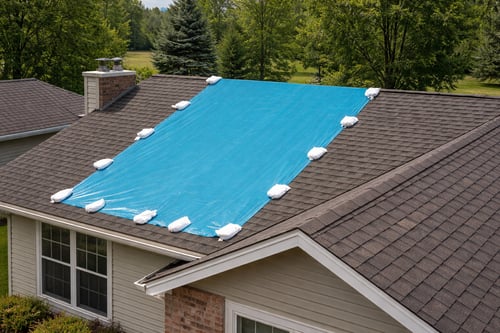
Below is an example of a tarp covering a damaged area on a roof, properly secured:
What to Do if You Need a Roof Repair
Understanding when tarping is actually necessary, what it should cost, and how it should be done helps homeowners avoid unnecessary expenses while still protecting their home. Roof tarping is a temporary solution, but it plays an important role when a roof needs protection before permanent repairs can be made.
Not every roof issue requires immediate action, and not every situation calls for tarping. But when the home is at risk of water intrusion, or damage is expected to worsen, a properly installed tarp can prevent significantly more costly repairs down the line. The key is making the decision based on facts, and that starts with a roof inspection.
If you're unsure whether roof tarping is necessary for your home, or you want an honest assessment of your options, we offer no-commitment roof consultations to evaluate your situation, explain your options, and recommend solutions that make sense for your home.