Is a Roof Overlay Really Worth the Money You Save Upfront?
.jpg?width=1200&height=900&name=Title%20Cover%20Template%20(9).jpg)
When you're told you can save thousands by choosing a roof overlay instead of a full roof replacement, the decision can seem pretty straightforward. After all, if the roof looks fine from the outside and the new shingles will protect your home, why pay more to remove the old roof first?
The reality is that a roof overlay often comes with meaningful upfront savings, but those savings don't always translate into lower long-term costs. Understanding the tradeoffs can help you decide whether you're truly saving money or simply postponing future expenses.
At Happy Roofing, we've helped hundreds of homeowners throughout the greater Naperville area with roof repairs and replacements. While we don't offer roof overlays, we've worked on homes that have had them, and are familiar with how they perform and the long-term considerations homeowners should understand before choosing one.
In this article, you'll learn:
- Why overlays cost less than full roof replacements
- Whether an overlay can save you money long-term
- Questions to ask if you’re considering a roof overlay
By the end, you'll understand whether the money you save with a roof overlay is worth the potential long-term tradeoffs.
Key Takeaways
- A roof overlay can save homeowners thousands upfront compared to a full tear-off roof replacement due to lower labor and material costs.
- Lower upfront cost doesn't always mean lower long-term cost. Premature or frequent repairs, hidden damage, and future replacement expenses can reduce or eliminate those initial savings.
- Choosing between an overlay and a full replacement comes down to balancing today's savings against your long-term roofing goals.
- Understanding the tradeoffs will help you decide whether a roof overlay is the right investment for your specific situation.
Table of Contents
- How Much Does a Roof Overlay Save Upfront?
- Will an Overlay Save Money Long-term?
- Questions to Ask If You're Considering an Overlay
- Is an Overlay or Full Replacement Better for You?
How Much Money Can a Roof Overlay Save Upfront?
Depending on your roof's size, complexity, and materials, a roof overlay can save homeowners thousands of dollars compared to a full tear-off roof replacement.
For example, on a typical 2,000-square-foot roof in the Naperville area, a roof overlay generally costs between $8,000 and $12,000, while a full tear-off roof replacement typically ranges from $12,000 to $18,000. That means homeowners may save $4,000 to $6,000 upfront by choosing an overlay.
For many homeowners, that's enough to make an overlay an attractive option, and it’s easy to see why if you’re only focused on the numbers.
The amount you save upfront is only one part of the equation. The question homeowners should be asking next is whether those savings make financial sense over the life of the roof, especially if they plan on keeping the home long-term.
Why Is a Roof Overlay Less Expensive?
A roof overlay typically costs less than a full roof replacement because it eliminates the labor and disposal costs of removing the existing shingles and other roofing components. Specifically:
-
When a contractor performs a full roof replacement, they remove the existing shingles, dispose of the debris, inspect the roof decking, make any necessary repairs, and then install the new roofing system.
-
With an overlay, several of those steps are eliminated. Because there's no tear-off of old shingles or any other materials, contractors spend less time on labor, use fewer disposal containers, and complete the project more quickly.
Here is a quick comparison of a full tear-off roof replacement and a roof overlay:
| Full Tear-Off Includes | Roof Overlay Includes |
|---|---|
| Removes existing shingles | Leaves existing shingles in place |
| Cleans up and hauls away old roofing materials | Less roofing debris to dispose of |
| Inspects the roof decking and other underlying roofing components | No insight into the underlying material condition |
| Repairs or replaces necessary materials like worn roof decking and underlayment | Limited ability to identify or correct any hidden damage |
| More labor and longer installation | Less labor and faster installation |
While less overall labor and material costs are a legitimate reason an overlay costs less, it's also important to understand what you're giving up in exchange for those savings and determine whether the trade-off makes sense for you.
Does a Roof Overlay Actually Save You Money Long-term?
Whether a roof overlay saves money depends on your home's condition, how long you plan to stay there, and whether hidden issues are present beneath the existing roof.
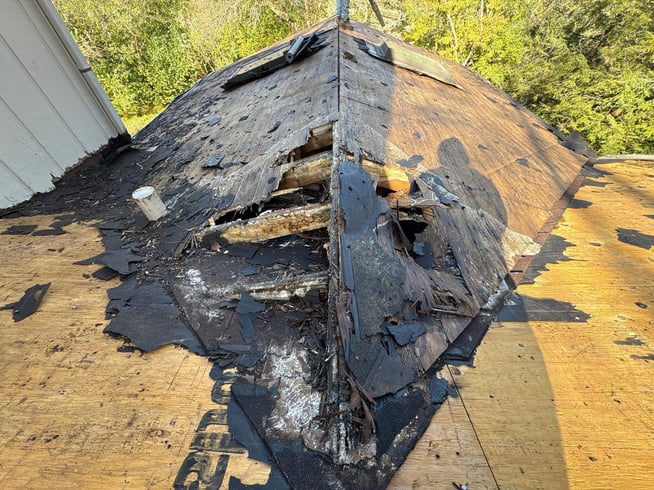
While a roof overlay can reduce your upfront investment by thousands of dollars, it doesn't eliminate many of the costs associated with owning a roof. In some cases, it simply delays them. For example, if the existing roof has hidden decking damage that can't be seen without removing the shingles, those issues may continue to worsen. At that point, the repairs may be more extensive than if they had been addressed during a full roof replacement.
Other potential long-term costs to consider include:
- A potentially shorter roof lifespan, as the new shingles are installed over an existing roof rather than a completely new roofing system. Installing new shingles over old ones doesn't reset the age of your roof, meaning you may need repairs or a full replacement sooner than if you had chosen a tear-off.
- More expensive future repairs, as accessing the original roof may require removing the overlay first. If a problem develops beneath the new shingles, contractors may need to remove additional roofing materials before they can make repairs, increasing labor costs.
- Potentially higher replacement costs later, because when the overlay reaches the end of its life, both layers of shingles typically need to be removed before a new roof can be installed. Since most building codes don't allow more than two layers of asphalt shingles, contractors will have to remove both sets of shingles to replace the entire roof.
- Hidden roof damage that goes unnoticed, because the roof decking isn't fully exposed during an overlay. If problems exist beneath the shingles, they may not be discovered until they cause more significant damage and become more extensive to correct.
- Potential warranty limitations, as some manufacturers place restrictions on warranties for roofs installed over existing shingles.
Below is an example of decking damage that couldn't possibly be addressed or corrected without tearing off and replacing all of the components of the roofing layers, including shingles, underlayment, and the rotted wood itself:
How Do the Upfront Savings Compare to Potential Repairs?
We’ve established that roof overlay can save homeowners $4,000 to $6,000 upfront for the average home in the Naperville area, but whether those savings hold up over time depends on whether you encounter repair or other roof-related costs before it's time for a full roof replacement.
Most roof repairs cost anywhere from a few hundred dollars to several thousand dollars, depending on the cause and extent of the damage:
-
Minor repairs, such as replacing a few shingles or resealing flashing, are relatively inexpensive and could cost $400 or less to correct.
-
Repairing structural damage, replacing sections of roof decking, or addressing leaks that have spread into the attic or interior of the home can cost significantly more and climb into the $2000+ range.
That doesn't mean homeowners who choose an overlay should automatically expect expensive repairs, but expecting the existing materials to hold up as long as a true roof replacement is a little unrealistic.
If your overlay performs well until the end of its service life (or at least until you plan on selling the home), the $4,000 to $6,000 you saved upfront may outweigh any repair costs along the way. But if hidden damage wasn’t addressed before the overlay and the roof requires significant repeated repairs within its first decade, those savings can quickly begin to shrink, or disappear altogether.
What Questions Should You Ask if You’re Considering a Roof Overlay?
If you’re considering whether an overlay is right for your situation, ask yourself whether the upfront savings better align with your long-term plans for your home than a full roof refresh.
The answers to a few simple questions can help put the lower price into perspective:
- How long do you plan to stay in your home? If you're planning to move within a few years, the upfront savings may outweigh the potential long-term costs. But if this is your forever home and you're planning to stay for decades, a larger investment today could provide better value over time.
- Can your existing roof support an overlay? Not every roof qualifies. The condition of your current roof plays a major role in whether an overlay is even an option. If your contractor does offer roof overlays, have them explain why your home is a good candidate for one and what they truly recommend. If they can’t back up their reasoning as to why you should get an overlay, they may be pushing you towards the cheapest option to remain the most attractive option.
- How important is minimizing future roofing expenses? Some homeowners prefer to spend less today, while others would rather invest more upfront to reduce the likelihood of future repairs or an earlier replacement. If you
Is a Roof Replacement or Roof Overlay Better for My Home?
If your priority is maximizing the lifespan of your roof and reducing the likelihood of future repair or replacement costs, a full tear-off roof replacement may provide better long-term value despite the higher initial investment.
If your primary goal is to minimize your upfront investment at all costs, a roof overlay may be the right choice (provided your existing roof qualifies and you understand the tradeoffs). Ultimately, there isn't a one-size-fits-all answer. The best option depends on your roof's condition, your budget, and how long you plan to stay in your home.
If you're still deciding between the two, the next step is understanding how each option compares beyond just cost. Our next article, Roof Replacement Options: Roof Overlay vs. Tear-Off: Pros, Cons, Costs, goes more into detail about the installation process, advantages, disadvantages, and ideal use cases for both options, so you can make an informed decision for you and your situation.
If you need a professional assessment of your home, we offer no-commitment roof consultations meant to evaluate your entire roofing system and give you honest recommendations based on what we find without the obligation to move forward with us.