Should I Replace My Skylights During a Roof Replacement?
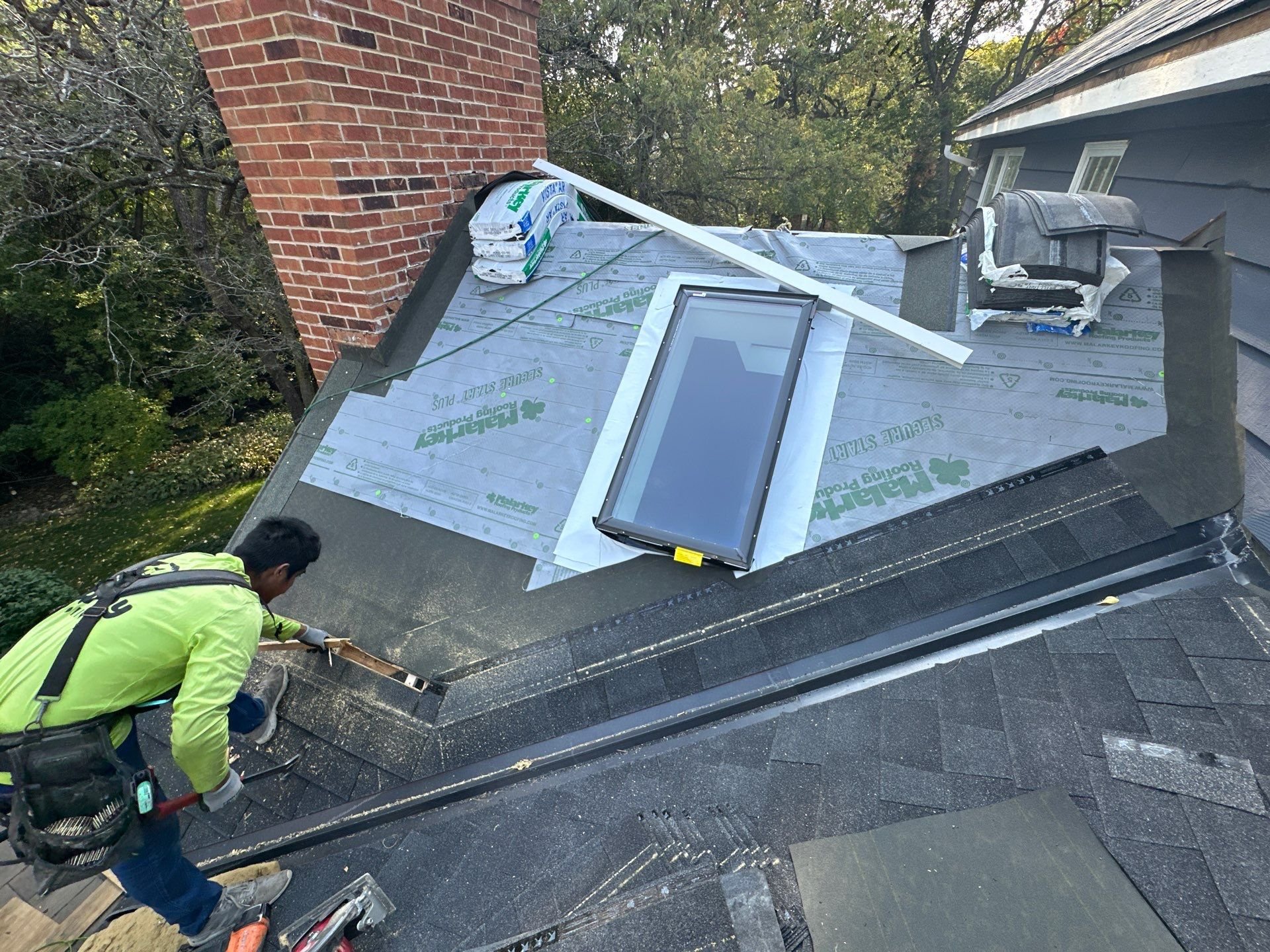
When you’re replacing your roof, there are a lot of decisions to make, like materials, colors, timing, and cost. But one question that often catches homeowners off guard is what to do about their existing skylights.
If your skylights aren’t leaking or causing obvious issues, it’s natural to wonder: Do I really need to replace them, or can I leave them alone? At Happy Roofing, we’ve replaced hundreds of roofs across the greater Chicagoland area and are no strangers to skylights. We’ve seen situations where replacing skylights during a roof replacement made perfect sense, and others where it didn’t.
Our goal isn’t to push you in one direction, but to help you understand the trade-offs so you can make the right decision for your home. In this article, you’ll learn:
- When it makes sense to replace your skylights during a roof replacement
- When it may be okay to keep the existing units
- Factors to consider if you’re not sure whether you need to replace yours during your next roofing project.
By the end, you’ll understand your options and what makes the most sense for your situation.
Table of Contents
- Do Skylights Need to Be Replaced During a Roof Replacement?
- Will Replacing Skylights With Your Roof Save You Money?
- Will Resuing Skylights Affect Your Roof Warranty?
- Deciding Whether to Replace Your Skylights During a Roof Replacement
Do You Have to Replace Skylights During Every Roof Replacement?
You don’t always have to replace your skylights when you replace your roof, but in some cases, it can be worth considering. Skylights don’t automatically need to be replaced just because your roof is, but since they’re built directly into your roofing system, a roof replacement is one of the few opportunities to address them without added cost and complexity later.
Whether it makes sense to replace them now or keep your existing skylights depends on a few key factors, including their age, condition, and how long you plan to stay in your home.
Below, we’ll walk through those factors so you can better understand what applies to your situation.
When Should You Replace Your Skylights?
In most cases, you should think about replacing your skylights if they are over 10 years old, showing signs of wear, or if they’ve already been reused in a previous roof replacement. If your skylights are newer (typically under 5 years old) or are still in good condition, you may be able to reuse them.
As a general rule of thumb, you should consider replacing your skylights if:
- They’re 10+ years old: After the 10-year mark, skylights typically start to show natural wear and tear, especially in the (rubber or silicone) seals that keep water and air out. These seals aren’t always visible, but once they begin to break down, leaks and condensation can follow. At that point, even if there aren’t any active leaks yet, they’re much more likely to occur within the lifespan of your new roof.
- They’re older than your current roof: In some cases, skylights were reused at the time of your home’s last roof replacement. That means if your roof is being replaced due to age, your skylights are likely at or beyond the end of their lifespan. If they need replacement later, the new roof will have to be partially opened up and reworked to access and replace the skylight correctly.
- You’ve noticed leaks, drafts, or condensation between the glass: These are clear signs that moisture is finding its way into the skylight and your home. Condensation between panes usually means the seal has broken, while leaks or drafts indicate water or air is getting past the system. While some minor issues can be repaired, these symptoms often point to larger underlying deterioration, making replacement the more reliable long-term solution.
- You want to avoid higher costs later: Replacing skylights during a roof replacement is typically more cost-effective because everything is already accessible as part of the roofing project. If they’re replaced later, additional labor may be required to work around the existing roof, which can increase the overall cost of the project.
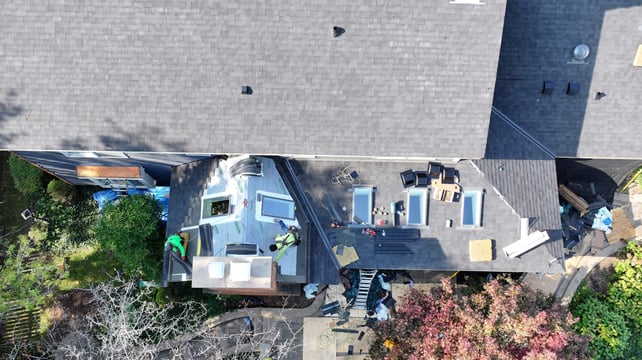
The photo below shows how skylight access is easier when the roof is being replaced because materials like shingles and flashing are removed as part of that process:
When Is it Okay to Reuse Your Skylights?
If your skylights are relatively new, in good condition, and not showing any signs of failure, it can be perfectly reasonable to reuse them during a roof replacement. The key is making sure they’re in good condition and are likely to last the majority of your new roof’s life.
Typically, you may be able to reuse your skylights if:
- They’re under 5 years old: Newer skylights typically haven’t had enough time to develop the seal deterioration and wear that lead to leaks or condensation. If they’re still early in their lifespan, reusing them can be a practical and cost-effective option.
- They’re in excellent condition: If there are no signs of leaks, drafts, fogging, or visible damage, your skylights may still be performing as intended. In these cases, a proper reinstallation with new flashing (the waterproof barrier, usually made of metal, that’s installed around the skylight to keep water out of the home) can help maintain their performance with your new roof.
- You’re comfortable with the potential trade-offs: Choosing to reuse skylights can save money upfront, but future replacement may be more costly if it’s not done directly with a full roof replacement. If they need to be replaced later, sections of your roof will need to be carefully opened up and rebuilt around the skylight. This added labor and material can increase the cost significantly compared to doing it at the same time.
Will You Save Money If You Replace Your Skylights During a Roof Replacement?
In many cases, replacing your skylights during a roof replacement can save you money compared to replacing them later. That’s because the work is more efficient when everything is already open and accessible.
As an example, we used a previous project we quoted and completed to put the cost difference into perspective. We used a recent project on a typical home in our area that had two skylights and saw that the cost came to around $1,200 when done as part of a roof replacement, but closer to $1,800 or more when done later on their own due to the additional labor and materials required to access and rework the surrounding roof area.
Here’s why timing makes a difference:
- Labor is already built into the project: During a roof replacement, your roofing system is already being removed and rebuilt. This gives contractors direct access to the skylights, making installation more straightforward and less labor-intensive.
- You avoid reopening your new roof later: If a skylight needs to be replaced after your roof is complete, sections of the roof will need to be carefully opened up and reworked to access it. This adds extra steps, time, and cost that wouldn’t be as drastic during the original project, as access to the skylights is more efficient during roof replacements.
- It reduces the risk of future disruption to your roof system: Anytime a completed roof needs to be reopened, it introduces additional seams and transitions that need to be properly sealed again. Doing everything at once minimizes those future disruption points.
Replacing skylights during your roof project is typically the most cost-efficient time to do it. That said, it’s not always necessary. If your skylights are newer and in great condition, it may make sense to keep them. But if they’re nearing the end of their lifespan, replacing them now can help you avoid higher costs and added hassle down the road.
Will Reusing Skylights Affect My Roof Warranty?
In most cases, reusing your skylights will not affect your roofing material warranty, but it can impact your contractor’s workmanship warranty:
- Manufacturer warranties are meant to cover the materials produced by that specific manufacturer. They’re separate from skylights entirely, so reusing them won’t directly void that coverage. However, many contractors will exclude existing skylights from their workmanship warranty if they aren’t replaced during the project and they’re in poor condition.
- Workmanship warranties are meant to cover the contractor’s installation and labor quality, so if they can’t guarantee the quality of existing skylights, they typically won’t offer coverage for that part of (or the entire) roof.
This means if a leak develops around a reused skylight later on, it may not be covered, even if the rest of your roof is. Additionally, your workmanship warranty could be voided prematurely if your reused skylights are later replaced by anyone other than the original contractor who replaced your roof (and provided that warranty).
For more information on the differences between these two types of roofing warranties, read our article Roofing Warranties Explained: What They Actually Cover (And What They Don’t).
Deciding Whether to Replace Skylights During Your Roof Replacement
This decision comes down to what you prioritize as a homeowner. Skylights may seem like a small addition to your roof, but because they’re built directly into the system, the choice to reuse or replace them can have a lasting impact.
That said, there’s no one-size-fits-all answer.
If your skylights are newer and in great condition, reusing them may make perfect sense. But if they’re older, showing signs of wear, or unlikely to last as long as your new roof, replacing them now could save you time, money, or simply allow you to upgrade.
If you’re planning a roof replacement and aren’t sure what to do about your skylights, starting with a professional evaluation of your roof can be helpful. We offer no-commitment consultations so you can get a clear, honest assessment of your situation and move forward with confidence, whether you decide to work with us or not.




.jpg?width=700&name=Media%20Template%20(1).jpg)