Why Are My Shingles Curling at the Edges?
If you’ve noticed the edges of your roof shingles starting to curl upward or downward, it’s natural to wonder if your roof is reaching the end of its life. Does this mean you have a roof leak? Does this mean you need a new roof?
At Happy Roofing, we’ve inspected hundreds of roofs throughout Naperville and the surrounding communities and have come across a variety of signs of an aging roof. While curled shingles don’t always mean you need a new roof immediately, they are often one of the first visible signs that your roof is aging or should be evaluated more closely.
In this article, we’ll explain why shingles curl, whether it’s something you should be concerned about, and what it means for the overall condition of your roof. By the end, you’ll have a better understanding of what curled shingles mean for your roof’s health.
- Curled shingles are usually a sign of an aging roof, but they don't always mean you need an immediate roof replacement. The extent of the curling and the overall condition of the roof are what matter most.
- Several factors can cause shingles to curl, including natural aging, poor attic ventilation, prolonged moisture exposure, improper installation, and, in rare cases, manufacturing defects.
- The pattern of the curling can provide clues about the underlying cause. Cupping and clawing are the two most common types of shingle curling and are often associated with different conditions affecting the roof.
- Widespread curling, granule loss, missing shingles, or signs of water intrusion should be professionally evaluated. These warning signs often indicate the roof is nearing the end of its lifespan or requires repairs.
- A professional roof inspection is the best way to determine whether your roof needs a repair or replacement. Evaluating the entire roofing system provides a much clearer picture than looking at curled shingles alone.
Table of Contents
- What It Means When Asphalt Shingles Curl
- What Causes Shingles to Curl
- Do Curling Shingles Signal a Roof Replacement?
- Can You Prevent Shingles From Curling?
- When You Should Worry About Curling Shingles
- What to Do If Your Roof Has Curling Shingles
What Does It Mean When Roof Shingles Curl?
Curled shingles are usually a sign that your roof is aging or has been exposed to conditions that caused the shingles to deteriorate.
As asphalt shingles age, they gradually lose the flexibility that helps them to lay flat against the roof. Over time, exposure to sunlight, weather, moisture, and even just natural wear can cause the edges of the shingles to lift or curl.
Not every curled shingle looks the same, though, and the way a shingle curls can provide clues about what’s causing the problem. While an inspection is needed to determine the exact cause and solution, the curling pattern can sometimes point to whether the issue is related to age, heat, moisture, or another underlying condition.
What Are the Different Types of Shingle Curling?
There are two primary types of shingle curling: cupping and clawing. The way a shingle curls can sometimes provide clues about what's causing the problem.
-
Cupping: The edges of the shingle curl upward, creating a shallow bowl or cup shape. Cupping is often associated with long-term weather exposure, moisture, or natural aging that causes the shingle to lose its flexibility over time.
-
Clawing: The middle of the shingle lifts while the edges curl downward, giving the shingle a claw-like appearance. Clawing is commonly linked to excessive heat, poor attic ventilation, or shingles that have become brittle with age, although several factors can contribute to this type of curling.
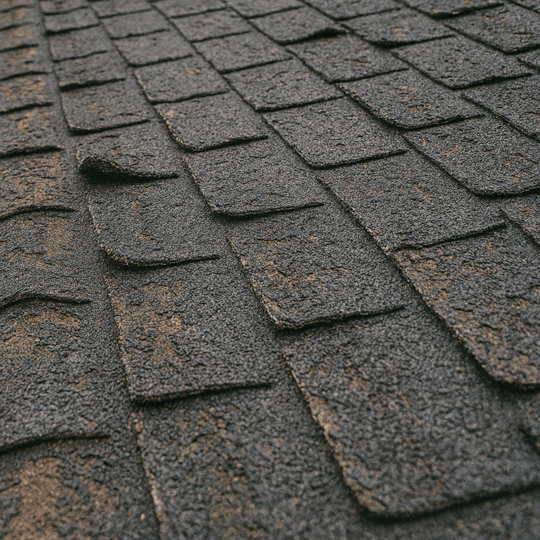
Although the causes may not always be the same, widespread shingle curling is a sign that your roof should be evaluated. Below is an example of a worn roof with widespread shingle curling:
What Causes Roof Shingles to Curl?
Shingles curl when they lose their ability to remain flat, whether from age, heat, moisture, or poor ventilation.
The most common factors that contribute to shingle curling include:
- Age: Asphalt shingles naturally become more brittle as they get older. Years of exposure to sunlight, changing temperatures, and weather gradually dry out the shingles, causing them to lose flexibility and eventually curl.
- Poor attic ventilation: Excessive heat and moisture can become trapped in the attic without proper airflow. Over time, the heat can bake the roof deck from below, accelerating the aging of the shingles.
- Moisture: Roofs that stay damp for long periods due to poor drainage or even heavy tree cover can experience faster shingle deterioration. As moisture repeatedly soaks into the shingles, they gradually lose flexibility and may begin to curl.
- Improper installation: If shingles aren't installed according to the manufacturer's specifications, they may not seal or lay flat the way they're designed to. Over time, this can make them more susceptible to lifting, curling, and premature wear.
- Manufacturing defects: Although it’s relatively uncommon, defective shingles have occasionally caused premature curling on otherwise healthy roofs.
Can Curled Shingles Cause Roof Leaks?
Curled shingles can eventually allow water to get beneath the roofing system. When shingles no longer lay flat, they’re more vulnerable to wind-driven rain and moisture intrusion.
While curling doesn’t always mean your roof is already actively leaking, it does increase the likelihood of future problems if left unaddressed. It’s worth having curled shingles evaluated before water damage develops inside the home.
Are Curled Shingles a Sign You Need a New Roof?
Curled shingles are typically a strong warning sign that your roof is aging or nearing the end of its lifespan, but they don’t always mean you need an immediate replacement.
The biggest factor is how widespread the curling is and what condition the rest of the roof is in. For example, if you only have a couple of curling shingles in an isolated area, a repair may be all that’s needed. But if curling is visible across large sections of the roof, it’s often a sign that the shingles have reached the end of their useful life and replacement should be planned.
During a roof inspection, reputable contractors evaluate the entire roofing system to determine whether a full roof replacement is the safest solution.
Some of the other signs contractors look for during a roof inspection include:
- Cracked or missing shingles: Cracked or missing shingles often appear alongside curling as shingles become more brittle with age, or their adhesive begins to wear out.
- Granule loss: Asphalt shingles are coated with tiny mineral granules that help protect them from UV rays and the elements. As those granules wear away, the shingles lose an important layer of protection and begin to age more quickly.
- Signs of leaks or water intrusion: Water stains, attic moisture, or rotted/warped roof decking can indicate the roof is no longer keeping moisture out.
The combination of your roof’s age, condition, and overall performance helps determine whether a repair will extend its life or if replacement is the more practical long-term investment.
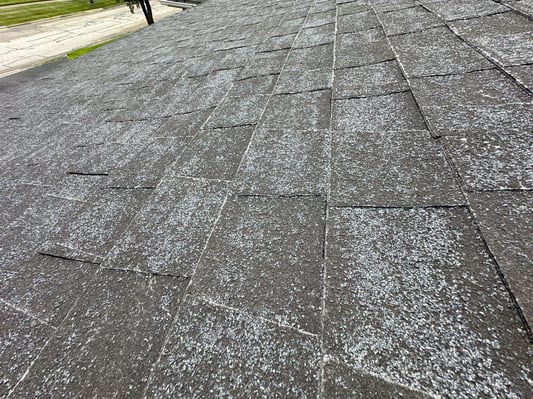
Here is an example of excessive granule loss, where the asphalt in the shingles is left exposed, accelerating wear and leaving the roof vulnerable to water:
Can You Prevent Roof Shingles From Curling?
While you can’t stop shingles from aging, you can reduce some of the factors that contribute to premature curling.
Some of the best ways to protect your roof include:
- Maintain proper attic ventilation to reduce excessive heat buildup.
- Address roof repairs promptly before moisture can spread or cause further damage.
- Keep gutters clean so water can properly shed from the roof.
- Schedule periodic roof inspections to catch problems early, especially if your roof is over 15 years old or you have any general concerns.
Even with proper maintenance, every asphalt roof will eventually reach the end of its lifespan (between 15-30 years depending on materials and installation) and show signs of wear like shingle curling, lifting, or excessive granule loss.
When Should You Be Concerned About Curled Shingles?
Curled shingles deserve professional attention when they’re accompanied by other signs of roof deterioration.
Schedule an inspection if you notice:
- Curling across large portions of the roof.
- Missing or broken shingles.
- Many granules collecting in your gutters.
- Water stains on ceilings or in the attic.
- Sagging roof areas.
These warning signs can indicate that your roof is nearing the end of its lifespan or that it should at least be evaluated to determine whether repairs or replacement make the most sense.
What Should You Do If Your Roof Shingles Are Curling?
If you notice curling shingles on your roof, getting a professional inspection is a good place to start. A roof inspection is the first step in determining whether the curling is isolated or a sign that the roof is nearing the end of its life.
Some roofs with a few curled shingles can continue performing well with minor repairs. Others have widespread deterioration that makes replacement the more practical option. The only way to know for sure is to evaluate the roof as a complete system to identify the source of the problem and determine the best solution.
If you’d like to better understand the condition of your roof, we offer no-commitment roof inspections throughout Naperville and the surrounding communities. We’ll evaluate your roof and help you understand your options, whether you decide to work with us or not.