What Causes Uneven Wear Across a Roof Surface?
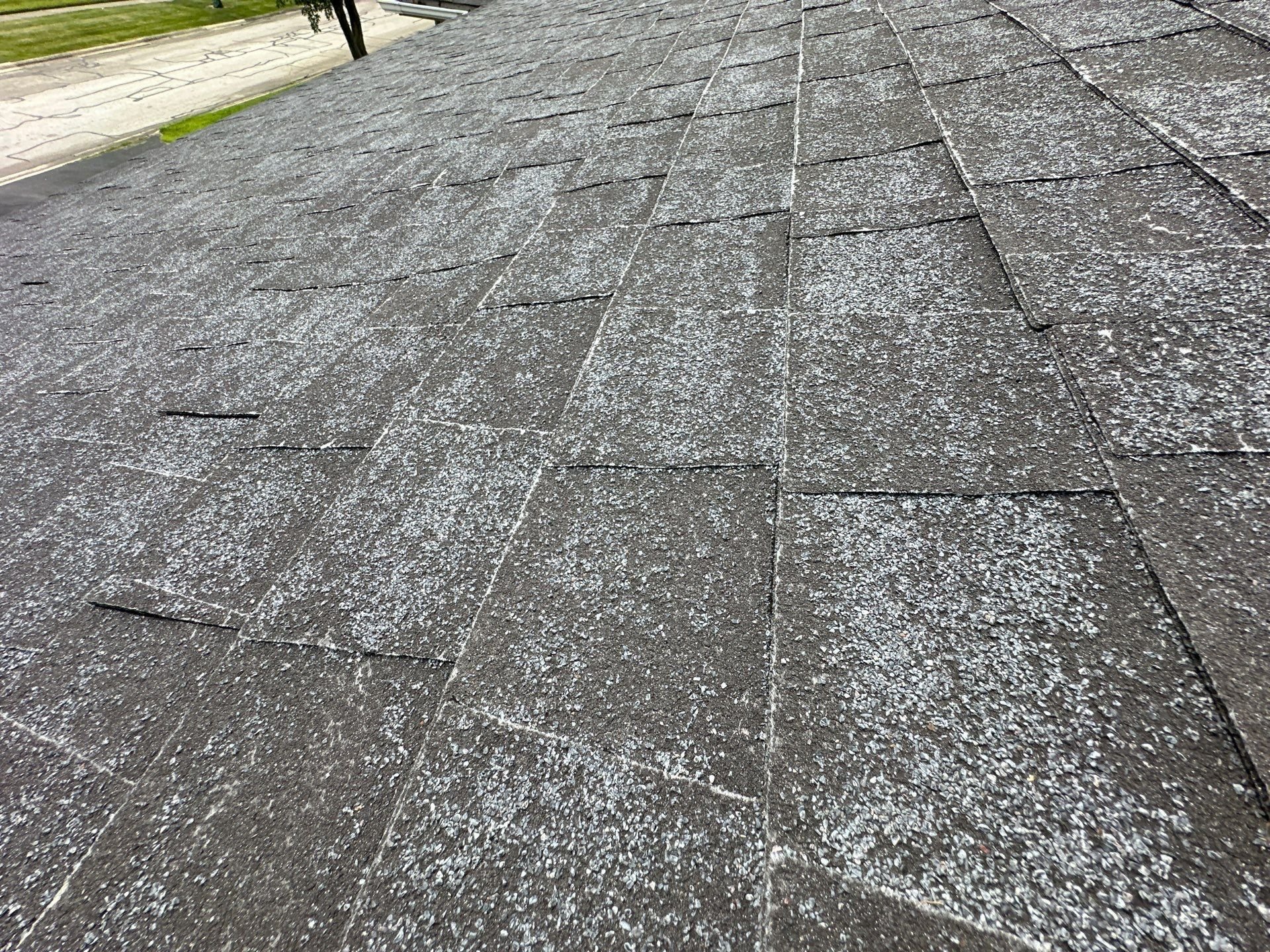
If your entire roof was installed at the same time, you’d probably expect all of it to age at about the same rate. But when you look at your roof, you may notice one side looks more faded, worn, stained, or deteriorated than another.
That difference doesn’t necessarily mean something is wrong. Different areas of the same roof can experience very different conditions throughout the day and over the course of several years. The amount of sunlight an area receives, how long it stays wet, how much water moves across it, and even what’s happening underneath the shingles can all influence how quickly it shows signs of wear.
At Happy Roofing, we’ve inspected hundreds of roofs throughout the greater Naperville area and have seen firsthand how common it is for different areas of the same roof to wear at different rates.
In this article, we’ll explain why different areas of a roof can wear at different rates, what can cause those differences, and when uneven wear may be worth having professionally inspected.
By the end, you’ll have a better understanding of why roofs don’t always age uniformly and what to do if one part of yours is starting to look different from the rest.
Key Takeaways
- Uneven roof wear doesn’t always mean something is wrong. Different sections of the same roof can age at different rates because they experience different conditions over time.
- Sun and weather exposure can cause one roof slope to age differently from another. Differences in UV exposure, heat, wind, and storms can contribute to fading, granule loss, and other signs of wear.
- Moisture and shade can change how certain areas of a roof look and age. Shaded areas may stay wet longer, while valleys and other sections may regularly handle more water, sometimes leading to staining or increased deterioration.
- Poor attic ventilation can contribute to uneven deterioration. Uneven airflow can allow heat and moisture to build up beneath certain areas, potentially damaging shingles and the roof decking below them.
- The cause and extent of uneven wear matter more than appearance alone. Significant granule loss, curling, cracking, repeated shingle loss, sagging, or recurring leaks are signs that the affected area should be professionally inspected.
Table of Contents
- What Are the Most Common Causes of Uneven Roof Aging?
- Does Uneven Wear Mean Something Is Wrong With Your Roof?
- What Should You Do If Your Roof Is Wearing Unevenly?
What Are the Most Common Causes of Uneven Roof Aging?
Uneven roof aging is commonly caused by differences in sun and weather exposure, moisture, conditions beneath the shingles, and previous installation or repair work.
Even though every section is part of the same roof, each area can experience different conditions throughout its lifespan. One side of your home may spend hours in direct sunlight while another remains shaded. One section may dry quickly after it rains while another stays damp beneath nearby trees.
Understanding those differences can help explain why one section may start to look or perform differently from another.
Below are some of the common factors that can contribute to uneven wear across a roof.
Differences in Sun and Weather Exposure
The direction a section of your roof faces can change how much sunlight, heat, wind, and weather it experiences over time. Roof slopes that receive more direct sunlight can spend more time exposed to heat and ultraviolet (UV) radiation. Over many years, that exposure can contribute to the normal aging of asphalt shingles, including fading and granule loss.
Other areas may be more exposed to prevailing winds or the direction storms commonly approach your home. That can mean one slope experiences greater wind pressure, wind-driven rain, or storm-related wear than a more protected section.
This doesn’t mean a sunny or weather-facing side of your roof is destined to fail early. Roofing materials are designed to withstand outdoor exposure. But when you’re comparing two areas of the same roof, differences in the conditions they experience can help explain why they don’t always look identical as they age.
Moisture, Shade, and Water Exposure
Some areas of a roof stay wet longer or regularly handle more water than others, which can create noticeable differences across the roof surface. A shaded section of your roof may not dry as quickly after rain, snow, or morning dew as an area that receives several hours of direct sunlight. Trees close to the home can create additional shade while also dropping leaves, seeds, and other debris that can hold moisture against the roof.
Roof design can also affect how water sheds from certain areas of the roof. Valleys, for example, collect runoff from two adjoining roof slopes and direct it toward the gutters. Lower roof sections may receive additional runoff from roof areas above them. These areas are designed to manage water, but they naturally experience different conditions than sections that only shed the rain falling directly onto them.
Persistent moisture and shade can also contribute to algae, moss, or staining on certain parts of a roof. A darker or stained section of shingles doesn’t automatically mean those shingles are worn or damaged. Sometimes what looks like uneven aging from the ground is primarily a cosmetic difference.
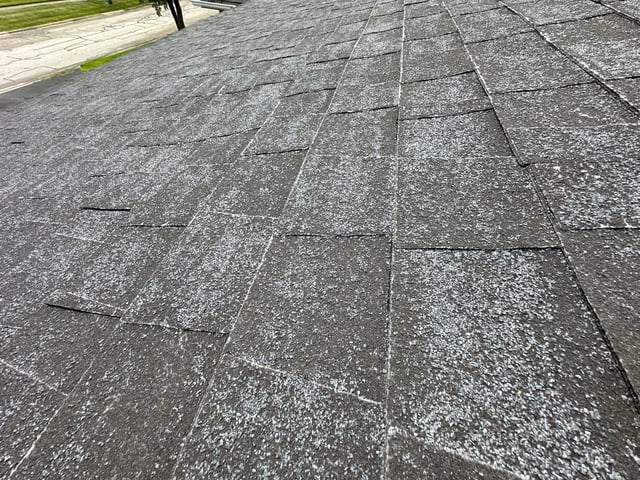
If the shingles themselves are curling, cracking, losing a significant amount of granules, or showing other physical changes, however, there may be more going on. Below is an example of a roof with significant granule loss:
Poor Attic Ventilation
Poor attic ventilation can contribute to uneven roof wear by allowing excess heat and moisture to build up beneath certain areas of the roof.
A properly ventilated attic allows fresh air to enter while warm, moisture-filled air escapes. When that airflow is restricted or unbalanced, heat and moisture can become trapped instead of moving evenly through the attic.
Over time, those conditions can put additional stress on the roofing system. Excess heat can contribute to premature shingle deterioration, while trapped moisture can damage the roof decking and create conditions for mold or mildew. This damaged decking can also lead to shingle issues like cracking, curling, or areas of the roof warping.
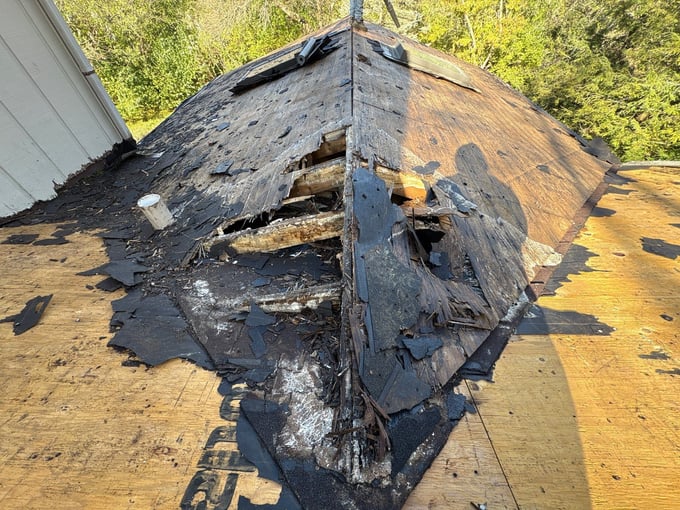
If the airflow is uneven and trapped air accumulates in specific areas of the attic, the shingles above that section may begin showing signs of deterioration sooner than other parts of the same roof. Below is an example of heavily damaged wood caused by poor airflow underneath a portion of a roof we worked on recently:
Previous Roof Work
Differences in how sections of a roof were installed, repaired, or replaced can also cause them to look or age differently.
For example, a roof addition may have been completed several years after the original roof. A previous repair may have introduced newer shingles into an older section. Even when a contractor finds the same shingle product and color, newer materials may stand out because the surrounding shingles have already experienced years of sun and weather exposure.
However, uneven wear by itself isn’t enough to conclude that your roof had certain portions repaired or installed at different times. Sun exposure, moisture, previous repairs, storm damage, and other conditions can create similar differences.
Does Uneven Wear Mean Something Is Wrong With Your Roof?
Uneven wear doesn’t automatically mean there’s a problem with your roof. Some differences are a normal result of different areas being exposed to different conditions over time.
A little more fading on one slope or staining on a shaded section may not affect the roof’s ability to protect your home. What matters more is what’s causing the uneven wear and how extensive it has become. Some differences may be the result of normal exposure over time, while others can point to conditions that are causing one area of the roof to deteriorate faster than it should, and could lead to premature roof failure.
Signs of uneven wear that deserve a closer look include:
- Significant granule loss: If one section is losing noticeably more granules than the rest of the roof, the shingles in that area may be deteriorating and could be vulnerable to water and the elements.
- Curling or cracking shingles: Physical changes to the shingles can indicate aging, heat exposure, moisture problems, or other underlying conditions as opposed to natural aging.
- Repeated shingle loss: If shingles regularly loosen or blow off from the same section, there may be an issue with installation, wind exposure on that portion of the roof, or the decking beneath them.
- Sagging or visible waves: An uneven roofline may point to problems with roof ventilation and the decking or structure underneath the roofing materials.
- Recurring leaks: Water entering around the same area repeatedly deserves immediate investigation, even if the rest of the roof appears to be in good condition.
What Should You Do If Your Roof Is Wearing Unevenly?
If one part of your roof looks noticeably different from the rest, start by determining whether you’re seeing a cosmetic difference or an actual change in the condition of the roofing materials.
If you notice an area is changing quickly, losing shingles, curling, sagging, or showing other signs of deterioration, a professional roof inspection can help determine what’s actually going on and what your options are.
At Happy Roofing, we offer no-commitment roof consultations where we’ll evaluate the entire roofing system, explain what we find, and give you our honest recommendations based on the condition of your roof, without the obligation to move forward with us.