What Your Roofer Probably Isn't Telling You About Roof Ventilation
When many homeowners think about a roof replacement, they focus on the things they can actually see, like shingles, colors, or the final price. But one of the most important parts of your roofing system is something you’ll probably never notice from the ground - ventilation.
At Happy Roofing, we’ve replaced hundreds of roofs for homeowners throughout the greater Chicagoland area. During this time, we’ve seen the issues that poor ventilation can cause, and in many cases, these issues could have been easily prevented.
To be fair, not every roofing contractor intentionally avoids addressing roof ventilation. Many homeowners aren't asking about it, and some roofing companies focus primarily on visible exterior work rather than the full roofing system. But the reality is that homeowners are often making major roofing decisions without fully understanding how important ventilation really is.
In this article, you'll learn:
- Why roof ventilation matters more than most homeowners realize, and the problems poor ventilation can cause
- Why many roofers don't include ventilation in their inspections or quotes
- How to tell whether a roofing company is evaluating your roof as a complete system, instead of just replacing shingles
By the end, you'll feel better prepared knowing what to look for and what questions to ask before moving forward with a roofing project.
Key Takeaways
- Roof ventilation plays a major role in the long-term performance and lifespan of your roofing system by helping regulate heat and moisture inside the attic.
- Many ventilation problems develop beneath the surface of the roof and may not be visible from the exterior until damage has already occurred.
- Not every roofing contractor includes attic inspections or ventilation assessments as part of their estimate process, which can lead to major differences in project scope.
- A thorough roofing inspection should evaluate the full roofing system, including attic airflow, ventilation balance, moisture conditions, and roof decking health.
- Homeowners should understand what is included in their roofing estimate and feel comfortable asking contractors how thoroughly the roof system was inspected before moving forward.
Table of Contents
- Why Roof Ventilation is Important
- How Roof Ventilation is Assessed
- Why Some Roofers Don't Talk About Ventilation
- How to Spot a Thorough Roof Inspection
- How to Correct Roof Ventilation
Why is Roof Ventilation Important?
Roof ventilation helps regulate heat and moisture inside your attic, which helps the entire roofing system perform more efficiently and last longer over time.
When airflow through the attic is unbalanced or restricted, heat and moisture can become trapped inside the home. Over time, this can contribute to issues that affect not only the roof itself, but also insulation, energy efficiency, indoor comfort, and even structural materials inside the attic like wooden rafters or roof decking (often made of plywood or Oriented Strand Board).
This is especially important in the Chicagoland area, where we experience major seasonal swings between hot, humid summers and cold winters with snow and ice, creating constant temperature and moisture changes inside the attic throughout the year.
Here are some of the most common problems poor roof ventilation can contribute to:
- Shortened roof lifespan: Most modern asphalt shingle roofs should last 15-30 years when properly installed, but poor ventilation can cause the roof deck and shingles to age faster over time, even if the materials themselves are high quality.
- Moisture buildup in the attic: Warm, trapped air can create condensation inside the attic, especially during colder months. Over time, this moisture can affect wood decking, insulation, and other materials.
- Mold and mildew growth: Poor airflow creates an environment where moisture can linger longer than it should, increasing the risk of mold growth inside the attic.
- Higher energy bills: Hot attics can force your HVAC system to work harder during the summer months. When heat becomes trapped inside the attic, it can radiate downward into the living space, making upper floors harder to cool and increasing strain on the air conditioning system.
- Ice dam issues in winter: In colder climates with harsher winters, poor attic ventilation can contribute to uneven roof temperatures that increase the likelihood of ice dams forming along roof edges. Warm air caught in the attic causes snow to melt, run down to the edges of the roof, and recool, leading to a layer of ice (ice dam) that catches more melting snow and could lead to roof leaks.
Below is an example of a roof with poor ventilation that led to mold growth across the decking. Without an attic inspection, it would be very difficult to verify damage like this:
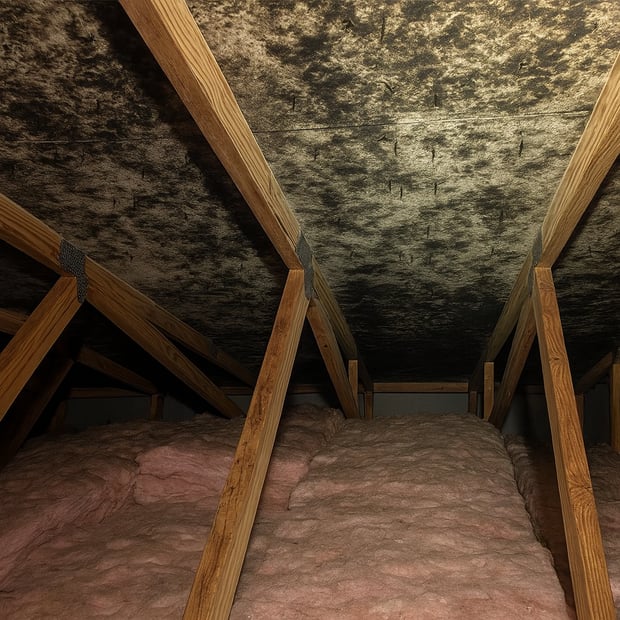
One important thing to understand is that ventilation problems are often invisible from the ground until costly damage has occurred. A roof may look perfectly fine from the outside while hidden airflow or moisture issues slowly develop underneath the surface.
That's part of why ventilation conversations matter so much during a roof replacement. If ventilation isn't properly evaluated during the inspection process, homeowners may end up with a brand-new roof sitting on top of the same underlying airflow problems that affected the previous one, and its lifespan can be negatively impacted.
How Is Roof Ventilation Assessed?
Roof ventilation is typically assessed by inspecting how air enters, moves through, and exits the attic (or the space directly beneath the roof in homes without a traditional attic).
This usually involves checking both intake ventilation, which commonly comes from soffit vents near the bottom edge of the roof, and exhaust ventilation near the roof peak, such as ridge vents or roof vents.
Some roofing contractors also use ventilation calculators, like this one from Owens Corning, to determine whether a home has enough intake and exhaust airflow based on the size and design of the attic space. These calculations help estimate how much ventilation the roof system should have and whether the existing vents are properly balanced.
During a ventilation assessment, a roofing contractor may look for:
- Blocked or restricted soffit vents
- Signs of trapped heat or moisture inside the attic
- Mold, condensation, or stained roof decking
- Improper intake-to-exhaust airflow balance
- Outdated or insufficient ventilation systems
- Insulation blocking airflow pathways
Because ventilation problems are often hidden, a thorough inspection is usually one of the best ways to identify whether airflow issues may be affecting the roof's long-term performance.
Why Don't More Roofers Talk About Roof Ventilation?
Because many roofers focus primarily on visible roofing materials during inspections, roof ventilation often does not get evaluated thoroughly.
Most roofing conversations naturally center around shingles, warranties, visible damage, and price because those are the parts of the project homeowners can easily see and compare. Ventilation is different because the real problems usually exist inside the attic, not on the roof surface itself.
Properly evaluating roof ventilation usually requires a more thorough inspection of the attic and airflow system, and many of the homeowners we work with are surprised that we request access to the attic at all. With the lack of conversation and education around ventilation, it's no surprise that some of these homeowners think that ventilation updates are an upsell or unnecessary add-on.
Here are a few reasons ventilation sometimes gets overlooked during roof inspections and estimates:
- Ventilation problems are often hidden: Issues like trapped heat, condensation, blocked soffit vents, or poor airflow balance usually cannot be identified from the ground. Roofing contractors that focus on speed and job volume may not take the time to assess your attic or ventilation before providing a quote, and instead focus on direct replacement of existing materials.
- Some roof inspections never include the attic: Without checking the attic itself, it can be difficult to identify moisture buildup, restricted airflow, or signs of long-term ventilation problems. If you have an attic and your contractor doesn't include it in their inspection, there's a good chance the ventilation won't be evaluated at all.
- Ventilation can make the project more complicated: If ventilation issues are discovered, homeowners may need additional vents added or other updates to help the roofing system achieve proper airflow balance. That can increase the overall project cost, and contractors trying to provide the lowest or most competitive quote sometimes choose not to include ventilation improvements.
- Many homeowners are not asking about ventilation: Some people understandably assume a new roof automatically includes everything needed for proper long-term performance. While there are contractors who build ventilation into all of their quotes, not every roofer does this. If your goal is longevity, ask your contractor if they'll be assessing your roof's ventilation before providing a quote.
Not every roofing contractor is dishonest or intentionally avoiding the conversation if they don't include a ventilation assessment with their inspections, but homeowners should understand that not every roofing inspection evaluates the same things.
How Can You Tell If a Roofer Is Evaluating Your Entire Roofing System?
One of the easiest ways to tell is whether the contractor's inspection goes beyond the surface. A thorough roofing inspection should evaluate how the entire roofing system is functioning, not just the visible condition of the shingles.
If a roofing contractor only measures the roof, looks at the shingles, and provides a quote within a few minutes, there's a good chance the inspection is focused mostly on direct material replacement rather than overall system performance.
Here are a few signs a roofing contractor may be evaluating the roof more thoroughly:
- They request attic access: Contractors who inspect the attic are usually checking for airflow balance, moisture buildup, mold, insulation issues, and signs of long-term ventilation problems.
- They discuss intake and exhaust ventilation: Instead of only talking about shingles, they explain how air enters and exits the attic and whether the current system appears balanced.
- They inspect more than just damaged areas: A more complete inspection looks at the overall condition of the roofing system, not only the areas with visible leaks, damage, or missing shingles.
- They explain why ventilation recommendations are being made: Rather than simply adding vents to increase project cost, they should explain what problem they are trying to solve and how the ventilation changes may help.
- They are willing to show photos of what they find: A thorough roof inspection often includes photos documenting the overall condition of the roofing system, including flashing details, damaged materials, problem areas, ventilation concerns, or signs of aging. This helps homeowners better understand what the contractor is seeing and provides transparency around why certain repairs or recommendations are being made.
A good roofing inspection should help homeowners understand not just what is being replaced, but why certain recommendations are being made and how those decisions may affect the long-term performance of the roof.
How to Correct Poor Roof Ventilation
Correcting poor roof ventilation usually involves improving how air enters and exits the attic to create more balanced airflow throughout the roofing system.
As we discussed throughout this article, ventilation problems are not always caused by a lack of vents alone. In many homes, the issue may be blocked soffits, poor intake-to-exhaust balance, outdated ventilation designs, or roofing systems that were never properly configured in the first place.
The right solution depends on the design of the home, the attic space, and the specific ventilation problems that are present. If you want a more detailed breakdown of how ventilation issues are diagnosed and corrected long-term, read our article The Best Ways to Fix Poor Roof Ventilation for Long-Term Results for more details on the various methods used.
And if you'd like a professional opinion on your current roof system, we offer no-commitment roof consultations where our goal is to help you understand the condition of your roof, walk you through your options, and answer any questions you may have without the obligation to move forward with us.