Why Is My Roof Leaking Near the Chimney?
Few things make homeowners panic faster than noticing water stains in their home. And if you’ve discovered a roof leak near your chimney, you probably want to know where it’s coming from as soon as possible.
The frustrating part is that chimney leaks, like any roof leak, can often be misunderstood. Sometimes the chimney is the issue. Sometimes it’s the flashing around it. Other times, the real problem stems from worn roofing materials around the chimney, like shingles.
At Happy Roofing, we’ve helped hundreds of homeowners throughout the greater Naperville area diagnose and repair roof leaks, with many of them being chimney-related. We’ve seen everything from poor flashing installation that caused slow leaks to long-term water intrusion that caused hidden decking and structural damage.
Not every chimney leak requires a large project to correct. In some cases, the solution is relatively minor, especially if the roof is in otherwise good condition. In this article, you’ll learn the most common causes of leaks around the chimney, what warning signs to look for, what repair options exist, and how to determine the right next step for your home.
By the end, you’ll have a much clearer understanding of why roof leaks happen near chimneys, how serious your situation may be, and what to expect if you experience a leak near your chimney.
Key Takeaways
- Roof leaks near chimneys are commonly caused by damaged flashing, deteriorated chimney materials, or worn roofing components surrounding the chimney.
- Warning signs like ceiling stains, musty odors, bubbling drywall, rusted flashing, or deteriorating mortar should be inspected early before more serious damage develops.
- Proper chimney flashing installation, especially cut-in counter flashing installed into mortar joints, provides more durable long-term protection than surface-mounted flashing sealed only with caulk.
- The right repair depends on the actual source of the leak, which is why a professional inspection is important before deciding between a repair, flashing replacement, or larger roofing work.
Table of Contents
- Signs of a Chimney Roof Leak
- How Chimney Leaks Are Repaired
- What to Do If Your Roof Is Leaking Near the Chimney
What Causes a Roof Leak Near a Chimney?
A roof leak near a chimney is most commonly caused by damaged flashing, deteriorated chimney materials, or roof wear around the chimney.
Because chimneys interrupt the surface of the roof, they create one of the most vulnerable areas for water intrusion. In places like Illinois that see a wide range of weather conditions, rain, snow, and ice naturally collect and move around the chimney. This means multiple roofing components have to work together perfectly to keep water out.
When even one part fails, water can find its way into the home.
Here are the most common causes of chimney-related roof leaks that homeowners experience:
- Damaged or improperly installed flashing: Flashing is the metal material installed where the chimney meets the roof. Its job is to direct water away from seams and vulnerable areas, and keep it out of your home. If flashing was installed incorrectly, becomes loose over time, rusts, or pulls away from the chimney, water can slip underneath the roofing materials and into the home.
- Cracked chimney crown: The chimney crown is the concrete surface at the very top of the chimney. If it cracks or is damaged, water can seep into the chimney structure itself and eventually make its way into the attic, ceilings, or walls below.
- Missing or deteriorated mortar joints: Over time, the mortar between chimney bricks can begin to crack, separate, or wear away due to weather exposure and freeze-thaw cycles common in Illinois winters. Once gaps form, moisture can penetrate the chimney and the surrounding roofing system, eventually finding its way into the home.
- Worn or damaged shingles around the chimney: Sometimes, the chimney is not actually the main issue. Aging shingles, exposed nail heads, storm damage, or deteriorated underlayment near the chimney can allow water intrusion that simply appears around the chimney inside the home.
- Condensation mistaken for a roof leak: In some homes, poor attic ventilation or chimney condensation can mimic the signs of a roof leak. This is one reason proper inspection matters before jumping to conclusions about repairs or replacement.
One of the biggest challenges with chimney leaks is that the visible water stain inside your home is not always directly below the actual source of the leak. Water can travel along roof decking, rafters, or insulation before becoming visible inside the house, so a professional assessment can help diagnose the true source of the issue before deciding on the proper solution.
What Are the Signs of a Chimney Roof Leak?
The signs of a chimney roof leak often include water stains, musty odors, damaged drywall, or visible deterioration around the chimney itself.
In many cases, homeowners first notice the symptoms inside the home long before they ever see the actual source of the leak on the roof. Because water can travel before accumulating and forming a stain, the warning signs are not always obvious at first.
Here are some of the most common signs that a chimney-related roof leak may be developing:
- Water stains on ceilings or walls near the chimney: Yellow-brown stains, bubbling paint, or discoloration around the fireplace or upper-floor ceilings are some of the most common indicators of water intrusion.
- Dripping water during or after rainstorms: If you notice active dripping or growing stains near the chimney after heavy rain or melting snow, there is likely an opening somewhere in the roof or chimney system that is allowing water inside.
- Musty odors or damp smells: Moisture trapped in insulation, drywall, or attic spaces can create a persistent musty smell, especially after storms or during humid weather. Sometimes these can be noticed before an obvious stain can be seen, especially if the leak is hidden somewhere, like an attic.
- Peeling paint or damaged drywall: Water intrusion can weaken drywall over time, causing paint to peel, seams to separate, or sections of the ceiling to sag. In some cases, trapped moisture can cause bubbling or soft spots to form in the drywall as it collects water.
- Visible rust on flashing or chimney components: Rusted flashing, chimney caps, or metal components often indicate prolonged moisture exposure and can signal that water is no longer being properly diverted away from the roof. These can’t always be seen from the ground, but if you do notice deterioration on these components, it’s a good idea to get a professional opinion.
- Cracked bricks or deteriorating mortar: Chimney masonry that appears cracked, crumbling, or worn can allow water to penetrate the structure and eventually leak into the home. Over time, repeated freeze-thaw cycles can make these gaps worse, allowing moisture to seep deeper into the chimney and surrounding roofing materials.
One important thing homeowners should understand is that roof leaks don’t really improve on their own. Even a small leak can begin to damage roof decking, insulation, wooden framing, or interior finishes over time if left unaddressed for too long.
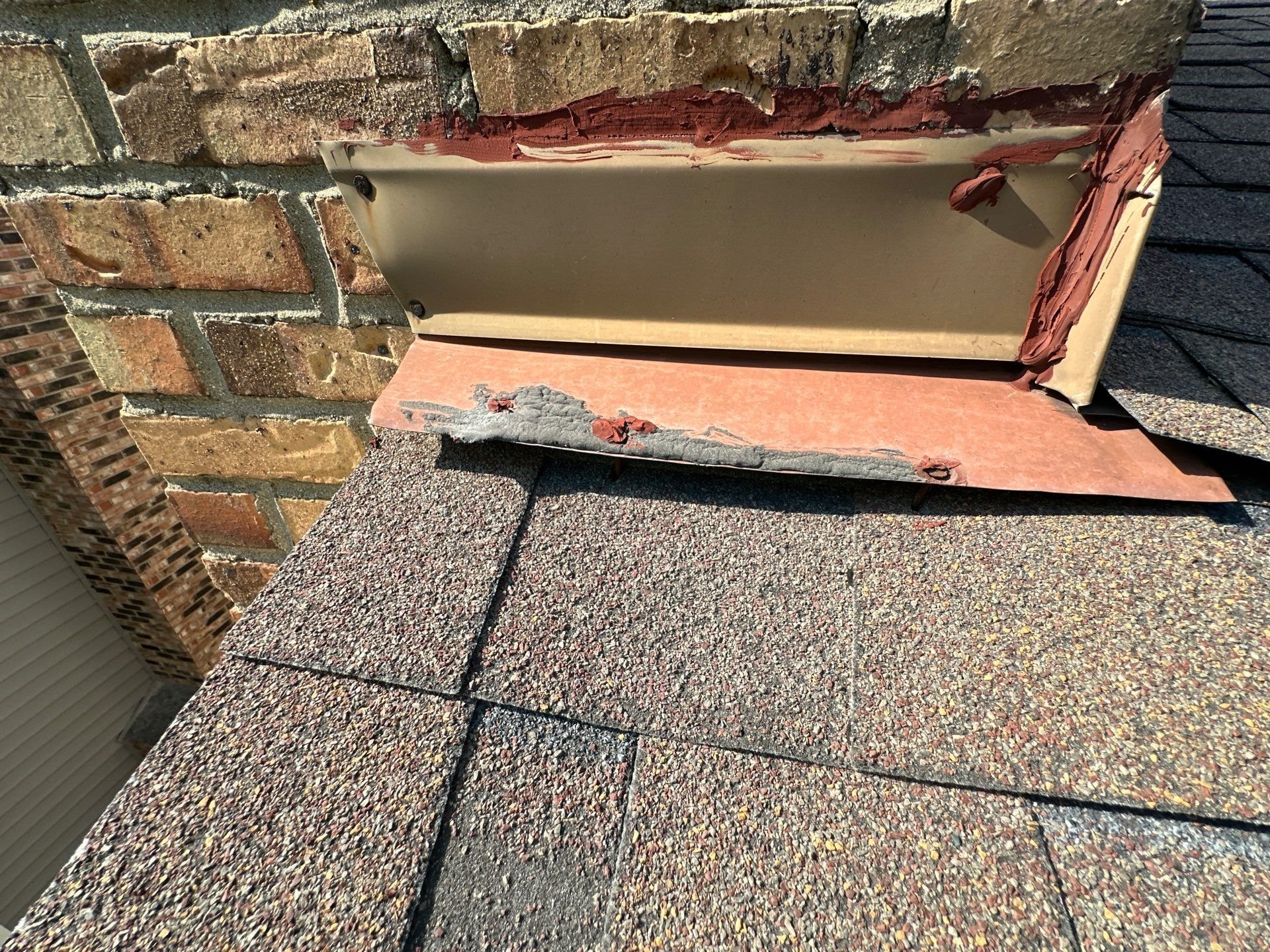
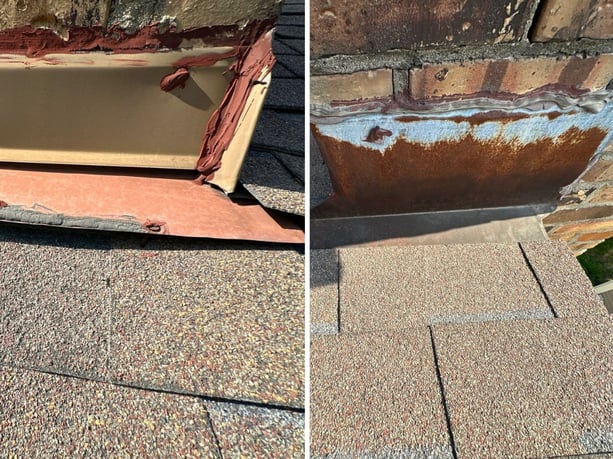
Below is an example of deteriorated and poorly installed chimney flashing. You can see that the sealant was poorly installed, and the material is beginning to rust and lift from the surface:
How Are Roof Leaks Around a Chimney Repaired?
Roof leaks around a chimney are repaired by identifying the exact source of the leak and correcting the roofing, flashing, or chimney components allowing water intrusion.
Because chimney leaks can come from several different areas, the repair itself depends on what has failed. In some cases, a small repair is enough. In others, older roofing materials or long-term water damage may require more extensive work.
Some common chimney leak repairs include:
- Repairing or replacing chimney flashing
- Replacing damaged shingles or underlayment around the chimney
- Repairing or rebuilding deteriorated chimney crowns or mortar joints
- Installing or replacing chimney caps
- Correcting attic ventilation or condensation issues
One of the most common repairs we find ourselves performing in our experience is chimney flashing replacement.
Some contractors simply place flashing against the side of the chimney and seal it with caulk or roofing sealant, leaving the sealant to do all of the work when it comes to moisture protection. While this may stop water temporarily, sealants naturally deteriorate over time from sun exposure, temperature changes, and weather. Once that seal breaks down, leaks can return.
A longer-lasting method is called cut-in flashing or counter flashing. This process involves cutting the flashing directly into the chimney mortar joints before sealing them properly. By embedding the flashing into the chimney itself, water has a much harder time working behind the metal and into the roof system, even if the sealant starts to deteriorate.
While no roofing system lasts forever, properly installed cut-in flashing generally provides a far more durable and reliable solution than surface-mounted flashing alone.
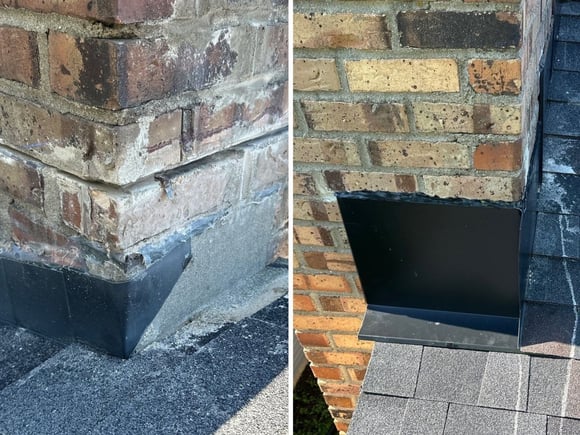
Below is an example of how we cut in all of our chimney flashing directly into the mortar joints, and then seal it to create durable protection against water intrusion:
What Should You Do if Your Roof Is Leaking Near the Chimney?
If your roof is leaking near the chimney, the best thing to do is to have the area properly inspected so the actual source of the leak can be identified before deciding on a repair.
As you’ve seen throughout this article, chimney leaks can come from several different causes. Sometimes the issue is isolated to flashing. Other times, it may involve worn shingles, deteriorating masonry, condensation issues, or aging roofing materials around the chimney itself.
The right repair option depends on the true source of the leak, the age and condition of the roof, and whether the damage is localized or widespread. The important thing is not to assume every chimney leak automatically requires a full roof replacement, but also not to rely on temporary patchwork that only hides the symptoms for a short time.
A thorough inspection from a reputable contractor can help identify the true cause of a roof leak, so you can make an informed decision about what repair approach makes the most sense for your situation. If you’d like your roof evaluated directly, you can schedule a no-obligation roof consultation with our team to determine exactly what’s causing the leak and what options are available, without the obligation to move forward with us.