Why Does My Roof Leak Only When It Snows?
You notice a water stain forming on your ceiling in the middle of winter, or maybe there's water dripping into your attic after a heavy snowfall. Maybe it even gets worse once the snow melts and the weather warms up.
At Happy Roofing, we've inspected hundreds of roofs throughout the greater Naperville area, and we've seen how winter weather can reveal roofing problems that aren't noticeable during the warmer months. Sometimes the issue is related to the roofing materials themselves, but other times, it starts with ice buildup, problems with insulation, or moisture accumulating inside the attic.
In this article, we'll explain why roof leaks happen during snowy weather, the most common causes of winter-only leaks, how to recognize what might be happening with your roof, and what to do to prevent further damage if you're experiencing a winter leak.
Key Takeaways
• Snow and freezing temperatures can cause roof leaks that aren't noticeable during warmer weather due to melting snow, refreezing, and trapped water.
• Ice dams, damaged roofing materials, and attic condensation are three common causes of winter roof leaks, each requiring different solutions.
• The location and timing of a leak can help identify its cause, but a professional inspection is important for an accurate diagnosis.
• If your roof leaks during snowfall, protect your home from further damage. Document the leak, cover and protect your belongings, and contact a roofing professional.
• A roof that leaks during snow doesn't always need replacement. Localized damage may be repairable, while ice dams or condensation may require improvements to insulation or ventilation.
Table of Contents
- Why Does My Roof Leak When It Snows?
- What Are the Most Common Causes of a Roof Leak During Snow?
- How Can You Tell What's Causing Your Winter Roof Leak?
- What Should You Do if Your Roof Is Leaking During Snowfall?
- Does a Roof That Leaks During Snow Need to Be Replaced?
Why Does My Roof Leak When It Snows?
Your roof may leak when it snows because snow accumulation, melting and refreezing, and freezing temperatures can create conditions that allow water to enter your roofing system or moisture to build up inside your attic.
Instead of immediately running off your roof, snow can accumulate and remain there for days or even weeks at a time. As temperatures fluctuate, portions of that snow may melt, refreeze, and melt again.
This can create several problems:
- Water can become trapped behind ice: Instead of flowing off your roof, melting snow may collect in areas where ice prevents proper drainage, like at the edges of the roofline.
- Melting snow can expose existing weaknesses: Small gaps around flashing, roof penetrations, or other vulnerable areas may allow water to enter when snowmelt reaches them or sits on the roof for an extended period of time.
- Warm air and moisture can build up in your attic: During cold weather, indoor humidity can condense on cold surfaces and create moisture that looks like a roof leak. This is especially true for homes with poor attic ventilation, where the lack of airflow can promote those exact humid conditions.
The timing of the leak can provide useful clues about what's happening, but it isn't enough to confirm the cause by itself.
What Are the Most Common Causes of a Roof Leak During Snow?
Ice dams, melting snow entering through vulnerable roof areas, and attic condensation are three common explanations for leaks that appear during winter weather.
Although these problems can produce similar water stains or dripping inside your home, they happen for different reasons and may require different solutions.
Ice Dams Are Trapping Water on Your Roof
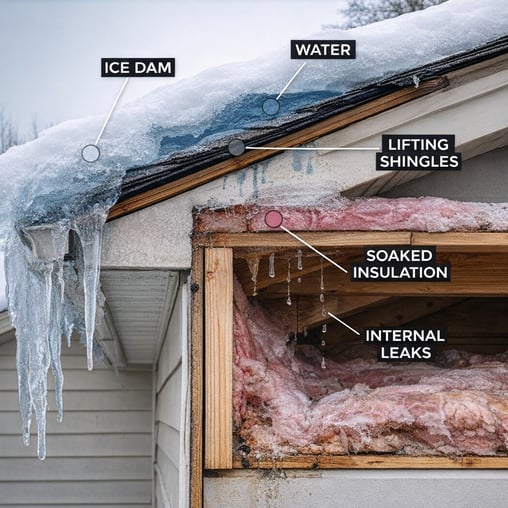
An ice dam forms when melting snow refreezes near the edge of your roof, creating a barrier that prevents additional water from draining away.
This is one of the most common explanations for a roof that leaks during snowy weather but not during ordinary rainfall.
Here's how ice dams form:
- Snow accumulates on your roof.
- Heat escaping from your home or attic warms portions of the roof, causing some of the snow to melt.
- The melted water flows toward the colder edges of the roof.
- That water refreezes, creating a ridge of ice that grows over time.
- Additional melting snow becomes trapped behind the ice and may work its way beneath shingles and into your home.
Depending on the severity of the ice dams, you might notice thick ice buildup along the roof edge, unusually large icicles, or water stains appearing near exterior walls. However, not every icicle means you have an ice dam, and not every winter leak is caused by them.
Below is a visual of what ice dams look like when they form on a roof's edge:
Melting Snow Is Finding a Weak Spot in Your Roofing System
Snowmelt can enter through damaged flashing, deteriorated roofing materials, or other vulnerable areas that don't normally leak during rainfall. A roof can have a small weakness that remains unnoticed until the right weather conditions occur.
For example, flashing is installed around chimneys, vents, skylights, and other areas where different parts of your roofing system meet. Its job is to help keep water from entering those vulnerable points.
If flashing is loose, deteriorated, or improperly installed, moisture from melting snow may find a path underneath it.
Some other possible points of entry include:
- Damaged, lifting, or missing shingles
- Exposed or improperly sealed fasteners
- Worn pipe boots around plumbing vents
- Improperly installed or deteriorated roof transitions
What If My Roof Wasn’t Leaking During the Summer or Fall?
In some cases, rainfall moves past the vulnerable area quickly enough that water doesn't enter, or there simply may not have been enough rainfall to expose the leak. Snowmelt, especially when drainage is restricted by ice, may keep water against that area for much longer.
The leak might also depend on the direction water travels, how much snow has accumulated, or where ice forms.
A roof that stays dry during rain isn't necessarily free of damage or installation problems. Certain weaknesses may only become noticeable under specific weather conditions, or when they become worse.
Attic Condensation Is Being Mistaken for a Roof Leak
Sometimes the water appearing inside your home during winter isn't coming through the roof at all. It may be condensation forming inside your attic.
During winter, warm, humid air from your living space can escape into the attic through gaps around ceiling penetrations, attic access points, or other openings. When that moisture reaches cold surfaces, such as the underside of your roof decking or exposed nails, it can condense and sometimes freeze.
As temperatures rise, the frost melts, and water can drip onto insulation, ceilings, or other materials below. From inside your home, this may lead to ceiling stains that look identical to a roof leak.
Some clues that condensation could be involved include:
- Frost forming on the underside of roof decking or exposed nails
- Moisture appearing across multiple attic areas rather than near one obvious entry point
- Damp or matted attic insulation
- Water stains that appear during temperature changes
- Mold growth
Poor or insufficient insulation and inadequate ventilation can contribute to these conditions. However, these signs aren't enough to diagnose condensation on their own.
It’s important to determine whether water is entering from outside or accumulating from moisture already inside your home.
How Can You Tell What's Causing Your Winter Roof Leak?
The location of the water, when it appears, and what you can observe around your roof or attic can help narrow down the cause, but a thorough inspection may be needed to confirm it.
You don't need to diagnose the problem yourself. However, paying attention to a few details can help a roofing professional investigate it more effectively.
| What you're noticing | What it could indicate |
|---|---|
| Water stains near exterior walls after snowmelt | Ice damming near the roof edge |
| Dripping near a chimney, vent, or skylight | A flashing or roof penetration issue |
| Frost or widespread moisture beneath roof decking, visible from the attic | Attic condensation or moisture buildup, potentially from poor ventilation |
| Leaks appearing during warmer afternoons after snowfall | Melting snow, thawing ice, or attic frost |
| The same leak returning in the same location each winter | An unresolved roofing or attic condition |
These are possibilities rather than definitive diagnoses. Water can travel along roof framing or other areas before reaching a localized spot on your ceiling, so the stain you see may not be directly below where the water entered.
A professional inspection is the best way to verify exactly what the source of the leak is, so you can identify the proper solution.

What Should You Do if Your Roof Is Leaking During Snowfall?
If you notice an active winter roof leak, focus on limiting interior water damage, documenting what you're seeing, and arranging an inspection to determine the cause.
You don't necessarily need to replace your roof or immediately commit to a major repair. But you also shouldn't ignore water entering your home just because the leak seems to stop when the weather changes.
Start with a few practical steps:
- Protect the area beneath the leak. If the leak is actively dripping, move furniture and belongings away from the water and use a container to collect dripping water where it's safe to do so.
- Document the leak. Take photos of water stains, dripping, visible ice buildup, and the weather conditions when the problem appears.
- Check your attic only if it's safe and accessible. Look for visible moisture or frost without disturbing electrical equipment, insulation, or structural components.
- Avoid climbing onto a snowy or icy roof. Winter roof conditions can be extremely slippery, and attempting to remove ice or snow yourself can lead to injury or roofing damage.
- Contact a roofing professional. Explain that the leak appears during snow or snowmelt rather than ordinary rainfall, since that detail may help guide the inspection.
If water is reaching electrical fixtures, a ceiling is sagging, or the leak is rapidly worsening, treat the situation as more urgent and seek appropriate professional assistance.
Can You Fix a Roof Leak in the Middle of Winter?
Some winter roof leaks can be addressed immediately, while others may require temporary measures until conditions allow for a lasting repair. The options depend on what's causing the leak, how severe it is, and whether the roof can be worked on safely given the current weather conditions.
A contractor may be able to address certain localized problems during a suitable weather window. Other more intensive repairs may require temporary tarping of the problem area to prevent further leaks until it can safely be addressed when the weather is more suitable.
If the problem is caused by an ice dam, removing the immediate ice buildup may help relieve trapped water, but it won't necessarily correct the conditions that caused the ice dam to form (like poor ventilation).
The goal is to protect your home from further damage while identifying what needs to be corrected for a lasting solution.
Does a Roof That Leaks During Snowfall Need to Be Replaced?
A roof that leaks during snowy weather doesn't always need to be replaced. Whether a repair or replacement is necessary depends on what's causing the leak and the overall condition of your roofing system.
If the leak is coming from damaged flashing, a worn pipe boot, or another isolated area, a targeted repair may be enough to resolve the problem. If ice dams or attic condensation are responsible, the solution may involve addressing insulation, ventilation, or a similar underlying issue rather than replacing the roofing materials themselves.
However, if your roof has widespread deterioration, significant damage, or multiple areas where water can enter, a replacement may be the more practical long-term solution.
Before deciding on a solution, you should understand what the inspection revealed and why the contractor is making their recommendations.
If you're dealing with a roof leak during snowy weather, you can schedule a no-commitment roof consultation with our team. We'll evaluate your roofing system, explain what we find, and help you understand whether a repair or replacement makes the most sense for your situation.