Why Do Roof Quotes Vary So Much?
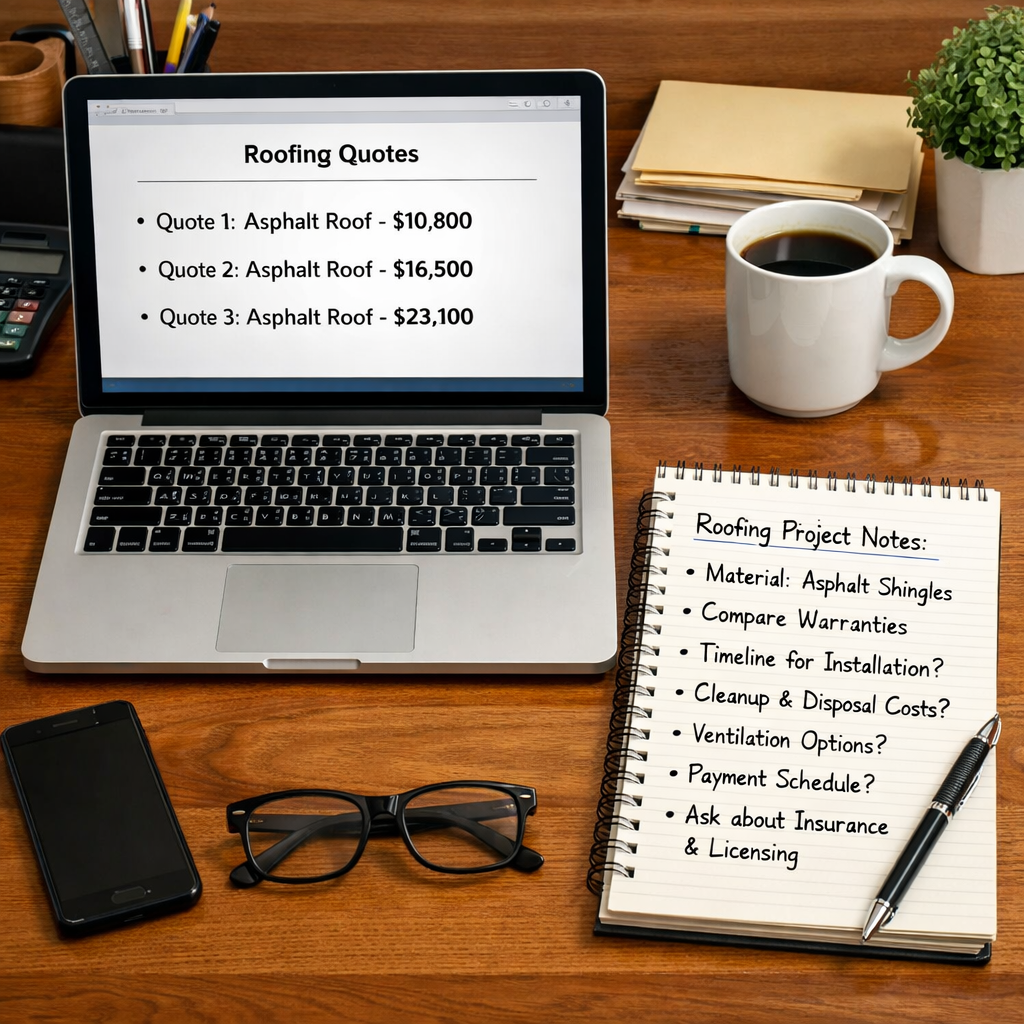
If you’ve gotten multiple quotes for a roofing project, you’ve probably noticed something confusing pretty quickly: the numbers can be all over the place. It’s natural to wonder what’s actually causing those differences, and whether a higher quote means better quality or just higher pricing.
At Happy Roofing, we’ve quoted hundreds of roofs across the greater Naperville, and we’ve had homeowners show us quotes they’ve received from other contractors when comparing prices. We’ve seen quotes across the board, both significantly lower than ours, as well as some that came in higher for the same roof.
Although the quotes were all for the same home and all for the same project, they didn’t all reflect the same scope of work. Unless you know what to look for, those differences aren’t always obvious at first glance.
In this article, you’ll learn:
- Why roofing quotes can vary so widely, and what affects these costs
- What you can do to identify a thorough and accurate quote
- How to compare quotes beyond just price checks alone
By the end, you’ll have a clearer understanding of what you’re really paying for when you’re comparing these quotes, and how to choose a roofing contractor with confidence.
Key Takeaways
- Roofing quotes for the same project can vary widely because they often include different materials, labor standards, and scopes of work
- Price differences are usually driven by what’s included, and not just contractor pricing or profit margins
- The goal is not to choose the cheapest or most expensive quote, but to understand what you’re getting and whether it aligns with your goals.
- A thorough quote should clearly outline scope, materials, line-item costs, and potential additional expenses; an accurate comparison requires reviewing quotes line by line
- Quick estimate tools can provide a helpful baseline, but they should not replace a detailed inspection and quote
Table of Contents
- How to Identify a Thorough Roofing Quote
- Are Lower Roofing Quotes High Risk?
- How to Compare Roofing Quotes Accurately
- Quickly Comparing Rough Estimates
Why Can Two Roofing Quotes for the Same House Be So Different?
Two roofing quotes for the same house can be very different because they often don’t include the same materials, labor, or scope of work.
Even when contractors are quoting what looks like the same project, there are a lot of decisions happening behind the scenes that impact price. These differences aren’t always obvious in the quote itself, which is where confusion starts.
Here are some of the most common reasons quotes vary:
- Different materials: Not all shingles, underlayments, or components are the same quality. One quote may include durable, higher-performance materials designed to last longer, while another uses more basic options to keep costs down. With so many shingle options available, your contractor should clearly explain what they’re recommending and why. If you’re only given one option or the explanation feels vague, that’s usually a red flag.
- Scope of work differences: Some quotes include everything needed for a complete, long-lasting installation, while others may strictly quote for the bare minimum shingle replacement. This can include things like flashing replacement, addressing roof ventilation, or replacing worn or damaged roof decking (the plywood, Oriented Strand Board, or plank foundation of your roof). If these items aren’t included in the quote, the price will be significantly lower than quotes that do reflect these necessities.
- Labor and installation standards: The way a roof is installed matters just as much as the materials used. Some contractors follow stricter installation guidelines, use more precise techniques, or take extra steps to protect your home during the project, which can add to labor costs.
- Warranty coverage: Some quotes include stronger workmanship warranties or upgraded manufacturer warranties, while others offer more limited coverage. While workmanship warranties vary greatly depending on the contractor offering it, many manufacturer warranties rely on manufacturer-specific standards to remain valid. These standards often include specific materials and certified crews, which could push one quote over the price of a contractor who doesn’t offer a strong manufacturer’s warranty.
At a glance, two quotes might look similar or can even be described the same way, but what’s actually included can be very different. That’s why price alone rarely tells the full story, and it’s important to review thorough quotes that include line items and specific details.
How Can You Identify a Thorough and Accurate Roofing Quote?
A thorough and accurate roofing quote clearly outlines the full scope of work, materials, and expectations so you know exactly what you’re paying for before the project begins.
The biggest issue homeowners run into is a lack of clarity among roofing quotes. A strong quote should remove guesswork, not create more confusion.
Here’s what to look for:
- Clear scope of work: A good quote should clearly explain what’s included in the project and what materials will be used for that work. This should cover items like flashing, ventilation, decking, and even cleanup. If the scope feels vague or overly simplified, it’s worth asking for more detail or clarification from your contractor.
- Specific material details: Look for exact product names, not just general terms like “shingles” or “underlayment.” A thorough quote will tell you the brand, product line, and key components being used so you can understand the quality and performance you’re getting. A brief description of the material or why it’s important is also a positive sign.
- Line-item breakdowns: Detailed quotes will separate costs for materials, labor, and potential repairs. This makes it easier to compare quotes side by side and understand where differences are coming from, item by item. If a quote lumps the project into broad categories like “roof install,” it can lead to confusion about where the money is going.
- Explanation of potential additional costs: A transparent contractor will explain what could change the price after work has begun, and by how much. This is common for things such as replacing damaged decking because the condition of the deck can’t always be verified before it’s exposed during the project. This doesn’t mean the price will always increase, but it prepares you for realistic scenarios instead of surprises.
- Warranty details and requirements: Look for clear explanations of both workmanship and manufacturer warranties. A strong quote should also explain what’s required to keep those warranties valid, since this can affect both installation and material choices. For more information on how these two types of warranties differ, read our article Roofing Warranties Explained: What They Actually Cover (And What They Don’t).
A well-prepared quote should make you feel more confident in your decision, not more overwhelmed than when you started. If you’re left guessing what’s included or why something costs what it does, it’s worth taking a closer look or asking your contractor for more details before moving forward.
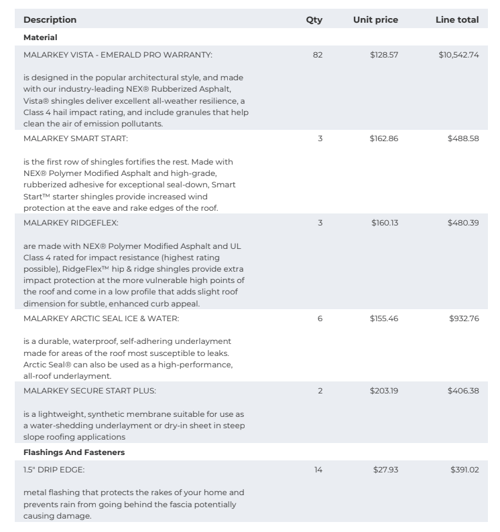
Here's an example of how we structure our quotes, where we break down each aspect of the project into line items and provide the relevant details for each:
Are Lower Roofing Quotes a Higher Risk?
Lower roofing quotes aren’t always a red flag, but they should prompt you to take a closer look at what’s included and what might be missing – especially when they’re much lower than the average quotes you’ve been receiving.
It’s easy to assume a lower price means you’re getting a better deal, but in roofing, price differences often reflect differences in materials, scope, or installation standards rather than just profit margins.
Here are a few reasons a quote might come in lower:
- Reduced scope of work: Some contractors may only quote the basic shingle replacement and leave out important components like flashing, ventilation improvements, or decking repairs. This keeps the upfront cost lower by saving on both labor and materials, but those items may still need to be addressed later or could lead to premature failure of the new roof.
- Lower-cost materials: Using basic-level materials can help reduce the price. While this isn’t always a bad thing and not everyone needs premium roofing materials, it’s important to understand how those materials compare in terms of durability and performance.
- Labor quality and crew structure: Labor is one of the biggest factors in roofing cost. Some contractors use smaller, consistent crews or full-time employees who follow specific installation standards, while others rely on a rotating group of subcontractors to help keep costs lower or complete as many installations as possible. This doesn’t automatically make one right or wrong, but consistency, training, and accountability can impact the quality of the installation, and those traits typically come at a higher cost.
- Limited warranty coverage: Lower quotes may come with shorter or less comprehensive warranties due to a lack of certified crews or the specified materials to qualify for some stronger warranties. This can reduce upfront cost, but it may not align with your goals as a homeowner if you’re looking for long-term durability and better warranty coverage.
A lower quote doesn’t automatically mean something is wrong, but it’s worth asking more questions to understand why it’s lower. The goal isn’t to choose the cheapest or the most expensive option, but to understand what you’re getting for the price and if it aligns with your goals.
How Can You Compare Roofing Quotes Accurately?
To compare roofing quotes accurately, you need to look beyond the total price and evaluate what’s actually included in each proposal.
Two quotes might look similar at a glance, but unless you break them down line by line, it’s easy to miss important differences that affect both cost and long-term performance.
Here’s how to compare quotes the right way:
- Review the scope of work in detail: Look for clear descriptions of what’s included in the project. This should cover more than just “roof replacement” and include items like flashing, ventilation, decking, and cleanup. If one quote is vague while another is detailed, that’s a sign they’re not covering the same work.
- Compare material specifications: Don’t just look for “shingles – $X amount,” look for the exact brand, product line, and components being used. This helps you compare quotes more thoroughly, and it also allows you time to research those specific products on your own instead of relying solely on a contractor’s description.
- Understand what’s not included: Sometimes the biggest differences aren’t in what’s listed, but what’s missing. Ask each contractor if there are any potential additional costs, like decking replacement or ventilation upgrades, that could come up during the project and alter the cost. If one contractor evaluated your attic space and the other didn’t, their quotes likely aren’t going to include the same scope of work.
- Ask about warranties and requirements: Make sure you understand both workmanship warranties and manufacturer warranties, and what each contractor offers. Some warranties require specific materials and installation methods to remain valid, which can impact both cost and long-term protection.
- Evaluate communication and transparency: How a contractor explains their quote matters. If someone is willing to walk you through the details, answer questions clearly, and explain their recommendations, that’s often a good sign of how they’ll handle the project itself. Be cautious of any pressure sales tactics (like time-dependent reduced price offers), because choosing a contractor to partner with shouldn’t be something you feel rushed into.
When you take the time to compare quotes this way, you’re choosing the level of quality, protection, and service that aligns with your expectations and goals as a homeowner.
Is There a Quick Way to Roughly Compare Roofing Quotes?
There isn’t a perfect shortcut to replace a thorough inspection and detailed quote, but there are ways to quickly sense-check roofing quotes so you have a starting point to compare contractors.
If you’re trying to compare any quotes, it’s best to understand what each quote includes and whether it aligns with your expectations for quality, durability, and protection. That said, we know not everyone wants to analyze line items or go back and forth with multiple contractors just to get a baseline when they’re beginning their search.
Our online instant estimator tool is meant to give you a rough estimate based on your home and project details, so you can quickly understand what a realistic cost might look like before committing to anything.
It’s not a replacement for a full inspection or detailed quote, but it’s a helpful way to get a ballpark price range for your project and compare against quotes you’ve already received. If you’re still early in the process or just want a second opinion, it’s a simple way to move forward with more clarity.