Are Instant Roof Estimates Accurate? What Homeowners May Not Realize

Online roof estimates can be a great starting point. They're fast, convenient, and help homeowners get a general sense of what a new roof might cost. But here's what most people don't realize: those numbers aren't quotes, they're ballpark figures meant to give you a general idea of what your project might cost.
At Happy Roofing, we've created hundreds of roof replacement quotes for homeowners across the greater Naperville area and have seen firsthand how instant estimators can help homeowners understand what to expect before contacting a contractor. We use an instant estimating tool because it empowers homeowners to start planning and compare general cost ranges, but we also know its limits.
No instant estimate software can see inside your attic, accurately assess your ventilation, or spot hidden damage beneath your shingles. If homeowners don't understand the limitations of these tools up front, they can be caught off guard when the actual quote comes in much higher than expected due to hidden factors the software couldn't detect.
In this article, we'll break down what instant roof estimates are (and what they can't do), why they can vary from actual quotes, and how to use them to make smarter, more confident decisions about your roof.
Table of Contents
- How Instant Roof Estimator Tools Work
- Are Instant Roof Estimators Accurate?
- What Factors Do Instant Roof Estimators Miss?
- What Should Instant Estimator Tools Be Used For?
- How to Get an Accurate Roof Estimate
How Do Instant Roof Estimates Work?
Most instant roofing calculators use a combination of public data (like satellite imagery) and user-submitted inputs to generate a rough estimate. While this process is fast and helpful for early-stage budgeting or rough comparisons, it comes with built-in limitations.
What Data Points do Instant Estimator Tools Use to Create Your Roof Estimate?
Instant roof-estimating tools are designed to quickly calculate a rough cost based on a handful of data points, such as satellite imagery, property records, and homeowner responses. While these inputs help generate a useful starting estimate, they also rely on assumptions and homeowner-selected options, which can impact accuracy.
Here's a breakdown of the common data points that instant estimate tools use:
Satellite Imagery and Property Records
These tools often pull data from mapping services like Geospan and public property databases like Zillow to estimate:
- Total roof surface area to estimate the amount of materials that may be needed.
- The overall shape and complexity of your roof. For example, whether it's a simple design or has multiple angles, peaks, and sections. This allows the tool to generate a rough size and difficulty level. It can't detect factors that could affect pricing, like a sagging roofline, soft spots in the roof, or the level of attic ventilation the home currently has.
Roof Pitch (Slope)
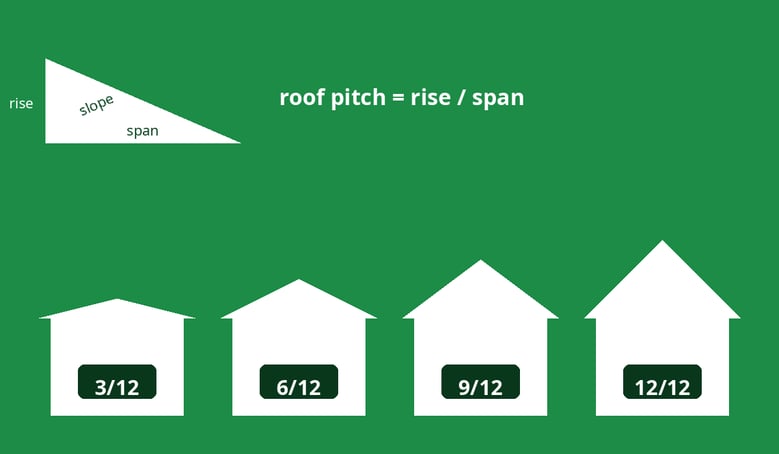
Roof pitch refers to how steep your roof is, and it plays a big role in how easy it is to work on and, as a result, labor costs. Most instant estimator tools ask homeowners to choose between basic categories like low, medium, or steep.
Not every homeowner will have the same definition of a steep roof slope, so the level of accuracy can vary depending on how questions like this are answered.
If a homeowner guesses their roof is "walkable" when it's actually steep, the instant estimate may come in several thousand dollars too low. That's why the pitch input is one of the most common sources of pricing gaps between online estimates and final quotes.
Below is a visual representation to put the slope of a roof into perspective, with 4 examples included. Roof slopes can go beyond 12/12, but the key takeaway is that the higher the first number, the steeper the slope:
Shingle Type or Material Selection
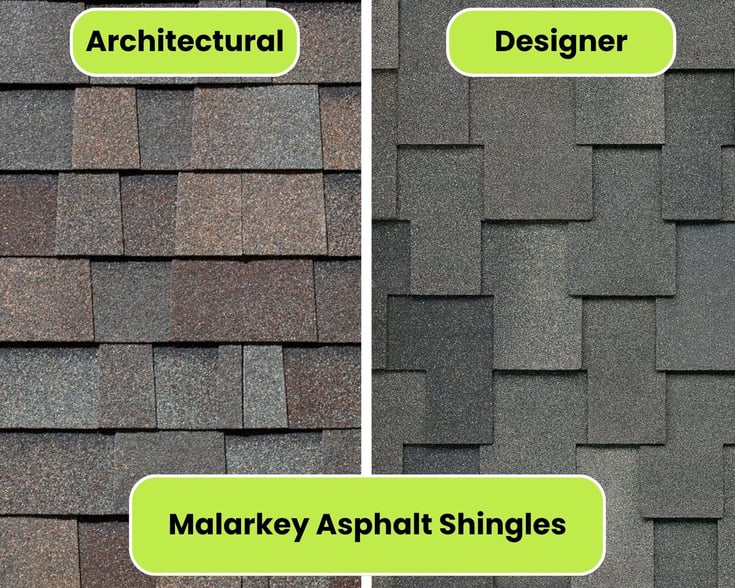
Most instant roof estimators offer a choice of materials and upgrades, like choosing between standard architectural asphalt shingles and designer asphalt shingles (architectural shingles have a layered, dimensional look, while designer shingles are thicker, styled for premium curb appeal, and built for maximum durability).
The material you choose affects both the cost of the shingles themselves and the labor required to install them, especially if heavier materials or specialized techniques are involved.
Some homeowners may even change their mind later in the process after seeing samples or learning more about their options. If that happens, the final quote can jump by several thousand dollars, especially on larger homes.
It's important to treat the material selection in the estimator as a placeholder, not a final decision. If you're considering a higher-end option, it's better to get a quote that reflects that reality upfront. We've included a side-by-side visual of Malarkey's architectural asphalt shingles and their premium, designer asphalt shingles below:
Contractor-Specific Pricing
Instant roof estimating tools don't typically pull pricing from public data, and instead will rely on the contractor's information to calculate the estimate. That includes what that specific roofing company charges for:
These metrics are pre-set by the contractor to reflect their specific pricing structure, but they can't account for every possibility (like necessary ventilation updates). So while the tool can quickly generate a price range, it's still based on a ballpark range for the information it's been given, not the full scope of your specific roof.
If your roof has unique challenges or needs, the final quote after inspection may be higher than what the tool initially displays.
Are Instant Roofing Estimates Accurate?
Instant roofing estimates are often not a completely accurate representation of the final quote, sometimes being up to a few thousand dollars off. For straightforward roofs with no surprises, the estimate might come close, but for most homes, these tools often miss hidden factors that affect the real price.
We've seen this play out firsthand:
In one case, in the late summer of 2024, a local homeowner from the Naperville, Illinois area used our online estimator and received an initial quote of around $10,000. After our inspection, their official quote came out closer to $13,000 for the work they needed in order to ensure a durable and long-lasting roof replacement. They were understandably confused, admitting: "It just felt like the estimate was a hook to get me in the door, and then you hit me with the real price."
In reality, the instant tool had no way of seeing the poor condition of the roof decking (requiring replacement sheets of plywood) or verifying the steep pitch that required added labor and safety precautions. Both of these factors contributed to the difference between their online estimate and our official quote.
That kind of experience happens when the limits of the tool aren't made clear, and we used this situation as a learning experience moving forward. It isn't so much that the instant estimate was inaccurate; it's that it was incomplete. It reflected best-case assumptions, not the reality of the roof. Now, we make it clear that our instant estimate tool is meant to be a ballpark estimate rather than a hard quote.
While instant estimates are useful, they're not guarantees. It's like asking a mechanic for a repair quote without letting them look under the hood. It gives you a starting point, but there's no guarantee that it'll tell the whole story or be an accurate assessment of the final cost.
What Do Instant Roof Estimates Often Miss?
While instant estimating tools help generate a ballpark figure, they can't perform a physical inspection, which is why there is often a difference in price between instant estimates and final quotes.
Here are the key things these tools can't evaluate:
- Roof decking condition: Tools can't detect water-damaged or rotting plywood under your shingles, which often requires replacement and can add significant cost. To put it into perspective, we charge $94.60 per half-inch sheet of plywood for removal and replacement if we find damaged decking during the tear-off phase.
- Ventilation requirements: If your attic ventilation is insufficient or missing altogether, upgrades may be needed to meet modern building codes or manufacturer warranty requirements. More often than not, the problem is a lack of intake ventilation. To cut in and properly install new intake vents, the roof decking along the edges of the roof needs to be replaced. At nearly $100 a sheet, this can significantly raise the price from the initial instant estimate.
- Multiple layers of shingles: Some homes, especially older ones, may have more than one layer of shingles. This happens when new shingles are laid on top of existing ones (known as a roof overlay), rather than tearing off the existing material before replacement. That extra layer adds labor and debris costs for removal and disposal, which tools can't account for. If you'd like to learn more about the difference between roof overlays and tear-offs, you can read our article Roof Replacement Options: Roof Overlay vs. Tear-Off: Pros, Cons, Costs.
- Roof access challenges: Steep slopes, multiple roof levels, crowded landscaping, and tight lot lines can make accessing your roof harder and more time-consuming to work on. These factors can't always be assessed by instant estimators, and they have an impact on labor, safety setup, and total job time.
- Structural issues or unique features: Tools can't always see all of the roof features, like chimneys, skylights, vents, sagging areas, or structural concerns that affect how the roof is installed and how long the job will take.
These blind spots are why a full inspection is essential before committing to a final quote, and instant estimate tools aren't meant to replace quotes.
What Should Instant Roof Estimates Be Used For?
Instant roof estimates should be used as a quick, ballpark starting point rather than a final quote. They're designed to give homeowners a rough price range for budgeting or planning purposes, but they can't replace an in-person roof inspection and a thorough quote.
Here's what instant roof estimates are great for:
- Getting a fast price range for budgeting, planning, or quickly comparing roofing contractors in your area.
- Understanding cost differences between material types or shingle tiers, if a contractor offers more than one option.
- Exploring your options before you need to reach out to any roofing professionals or sales teams.
These tools are a great first step, but you shouldn't expect them to be the most accurate assessment of how much your roofing project will cost. Without a follow-up inspection, they're just an educated guess.
How to Get an Accurate Roofing Estimate
Instant roofing estimates are a great first step, but they aren't a substitute for a professional assessment of your roof. If you want to avoid being blindsided by unexpected costs, the most important thing you can do is follow up with a professional roof inspection.
During that inspection, a trained roofing consultant can identify the details no calculator can see, like decking issues, poor ventilation, or multiple layers of shingles, and explain how those factors affect your final price. We offer no-commitment roof consultations for an accurate assessment of your roof's health, without any obligation to move forward with us.
If you're in Northern Illinois and you'd like to start with a ballpark estimate, our instant roof estimate tool can help with that. Simply provide your address and answer a few questions about your roof, and our instant quote software will calculate a ballpark estimate for your project within minutes.



.jpg?width=700&name=Title%20Cover%20Template%20(9).jpg)