Can You Trust a Roofing Estimate Without an Attic Inspection?
When homeowners are comparing roofing estimates, it can be easy to assume that all roof replacement quotes will reflect the same amount of work. In reality, two contractors may be quoting for two entirely different scopes of work, and that difference often starts with the inspection itself.
At Happy Roofing, we've inspected hundreds of roofs throughout the greater Chicagoland area, and many homeowners are surprised when we ask to access their attic during the inspection process. Over time, we've found that some roofing problems simply cannot be fully diagnosed without evaluating what's happening underneath the roof itself. Moisture buildup, ventilation problems, condensation, insulation blockage, and even roof decking damage often cannot be verified from the exterior alone.
We're not saying that a contractor who doesn't inspect the attic is automatically unreliable, but homeowners should understand that exterior-only inspections have limitations, especially when the goal is to provide a long-lasting and durable roof.
In this article, you'll learn:
- What contractors can learn from inspecting the attic
- Why exterior-only roof inspections can miss important roofing issues
- How to identify a reliable roofing estimate
By the end, you'll feel more confident in understanding what separates a surface-level roofing estimate from a more complete and accurate quote.
Key Takeaways
- Two roofing estimates can look similar on paper while being based on completely different levels of inspection and project scope.
- Attic inspections can reveal hidden issues like moisture buildup, ventilation problems, condensation, mold growth, and roof decking damage that may not be visible from the exterior.
- Exterior-only roof inspections have limitations and may miss underlying problems that could affect the long-term performance of the new roof.
- A reliable roofing estimate should clearly explain the scope of work, document findings, and help homeowners understand why specific recommendations are being made.
- Homeowners should feel comfortable asking questions and fully understanding what is included in a roofing estimate before moving forward.
Table of Contents
- Why Roofers Need to Inspect the Attic
- Can a Roofer Provide an Accurate Quote Without Inspecting the Attic?
- How to Identify a Reliable Roofing Quote
- How to Tell If a Roofer Is Pressuring You Into a Sale
Why Do Some Roofers Inspect the Attic?
An attic inspection can reveal roofing problems that are nearly impossible to fully identify from the exterior alone.
While the outside of the roof may show visible signs of aging or damage, the attic often provides a clearer picture of how the roofing system is performing well before any visual signs appear externally. Issues related to moisture, airflow, condensation, and structural wear frequently start beneath the roof long before they become visible from outside the home.
Here are some of the things a roofing contractor may look for during an attic inspection:
- Moisture buildup: Damp insulation, water staining, or elevated moisture levels can indicate ventilation problems or hidden roof leaks.
- Condensation issues: Poor attic airflow can cause condensation to form on nails, decking, and other surfaces, especially during colder months.
- Roof decking damage: Soft spots, staining, sagging, or deteriorating decking (the foundation of your roof, often made of plywood or Oriented Strand board in modern homes) may not always be visible from the roof surface itself.
- Ventilation imbalance: Contractors may evaluate whether intake and exhaust ventilation are properly balanced to support healthy attic airflow.
- Mold or mildew growth: Dark staining or mold growth inside the attic can indicate long-term moisture retention or poor ventilation.
- Signs of previous leaks or repairs: The attic may reveal water intrusion or past problem areas that are no longer obvious from the exterior roof.
In many cases, smaller issues develop gradually over time and remain hidden until a more serious roofing problem appears. Attic inspections can play an important role in helping homeowners better understand the true condition of the roofing system, so corrections can be made during a roof replacement if needed.
Why Are Attic Inspections Important Before a Roof Replacement?
Many roofing problems begin beneath the surface of the roof system, and an attic inspection can help identify these issues before they become visible from the exterior, preventing cost changes mid-project if any damage is found after the shingles are removed.
Not every roof requires a major ventilation overhaul, but a more thorough inspection can lead to a more accurate understanding of the roofing system's overall condition. Below, we've included photos of two roofs we inspected that were found to have ventilation issues.
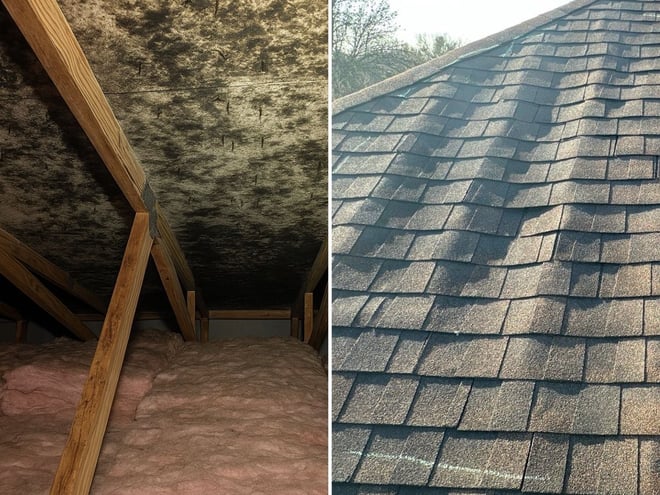
In the image on the left, moisture buildup led to mold growth across the roof decking, and it would've been difficult to verify this without an attic inspection. The other shows a more extreme example of what happens when roof decking takes on too much moisture over time, warps, and affects the shingles.
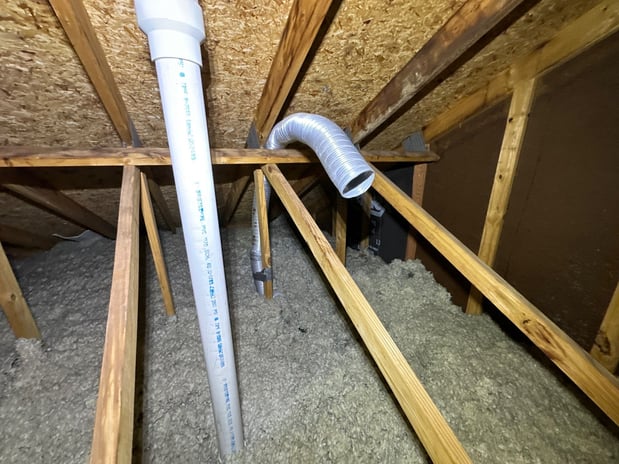
Another reason attic inspections are important is that they provide an opportunity to identify non-roof-related issues that could impact the longevity of the new roof, giving homeowners a chance to correct them. In the example below, you can see a bathroom exhaust duct that leads nowhere, pushing the warm air and moisture from the bathroom directly into the attic:
Can a Roofer Give an Accurate Quote Without Inspecting the Attic?
Sometimes an accurate roofing quote can be given without inspecting the attic, but there are limits to how accurately a roofing system can be evaluated without seeing what's happening underneath the roof.
An exterior inspection can still identify many common roofing issues, especially when visible damage, aging materials, or storm-related problems are present. But without inspecting the attic, some hidden conditions may go unnoticed during the estimate process.
Here are a few ways skipping the attic inspection can affect the accuracy of a roofing estimate:
- Hidden roofing problems may go undetected: Moisture damage, ventilation issues, condensation buildup, or deteriorating decking may not be discovered until work has already begun. This could add to labor and material costs and extend project timelines.
- The scope of work may change later: Once roofing materials are removed or the attic is inspected more thoroughly, additional repairs or ventilation updates may become necessary, or worse, ignored. If your quote was given with the assumption that the ventilation wouldn't need any updates, your final price could come in up to a few thousand dollars higher than you expected.
- Long-term roofing issues may not be addressed: A roof replacement may solve visible exterior problems while underlying airflow or moisture conditions continue affecting the new roof system. Most modern-day asphalt shingle roofs last anywhere between 15 and 30 years, but this lifespan could be negatively affected by unaddressed underlying issues.
How Can You Identify a Reliable Roofing Quote?
A reliable roofing quote should clearly explain not just what is being replaced, but why certain recommendations are being made.
Many homeowners naturally focus on the final price when comparing quotes , but the inspection process behind the quote is just as important. Two estimates may look similar on paper while being based on very different evaluations of the roofing system.
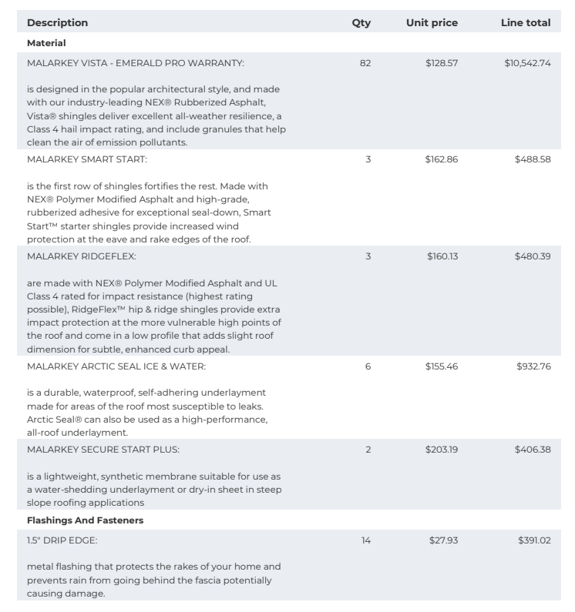
A more thorough quote often includes explanations about the condition of the roof, potential underlying issues, ventilation findings, and line items to clearly define the scope of the project. Below is an example of one of our estimates, showing how each part of the project is separated into line items with relevant details for each item:
Here are a few signs that a roofing estimate may be more complete and reliable:
- The contractor performs a thorough inspection: This may include evaluating the attic, ventilation system, flashing details, roof decking condition, and other parts of the roofing system beyond the visible exterior.
- Photos or findings are documented: Reliable contractors are usually willing to show homeowners what they found during the inspection and explain why certain recommendations are being made.
- The estimate explains the scope of work clearly: Homeowners should understand what materials, repairs, ventilation updates, or decking replacements are included before moving forward. Your estimate should contain line items for each aspect of the project so you understand where your money is going and what materials are being used.
- Potential issues are discussed upfront: If there are concerns about moisture, ventilation, or potential decking damage, they should be addressed during the estimate process rather than discovered later during installation. Some factors, like decking condition, can't always be verified until the shingles are removed, but any probable cost expectations should be set by the contractor before the estimate is given.
- Questions are answered directly: Homeowners should feel comfortable asking why certain recommendations are being made and how those decisions may affect the roof long-term. If your contractor is avoiding direct answers or confusing you more than they're educating, it could be a sign that the quote may not be as solid as they'd like you to believe.
A lower estimate is not automatically a bad estimate, and a higher estimate is not automatically better. The key is understanding how thoroughly the roof was inspected, because this can help homeowners make more informed comparisons when evaluating different roofing proposals.
How Can I Tell If a Roofer Is Rushing Me Into a Sale?
One of the biggest signs is when a contractor pushes you to make a decision before fully helping you understand the condition of your roof and the scope of work being recommended.
A reliable roofing contractor should be willing to explain their findings, answer questions, discuss potential concerns, and give homeowners enough information to make a comfortable and informed decision. If the focus becomes signing a contract quickly instead of helping you understand the roofing system itself, that can be a reason to slow down and ask more questions.
As you've seen throughout this article, roofing estimates can vary significantly depending on how thoroughly the roof system is inspected. That's part of why homeowners should feel comfortable slowing down, asking questions, and understanding exactly what is included in a roofing estimate before signing anything.
If you want to learn more about the warning signs of high-pressure roofing sales tactics, read our article How to Tell If a Roofer Is Pressuring You Into a Sale.
If you'd like a professional opinion on your current roof system, we offer no-commitment roof consultations designed to help homeowners better understand the condition of their roof, review their options, and get answers to their questions without any pressure to move forward with us.