How Much Does Chimney Flashing Cost to Replace?
If a roofer has told you that your chimney flashing needs to be replaced, one of your first questions is probably, “How much is this going to cost?”
Maybe you noticed a leak near your chimney and found out the flashing is the problem. Or maybe you’re preparing to replace your roof, and your contractor is recommending chimney flashing replacement at the same time. Either way, you probably want to know what a reasonable price looks like and whether replacement is actually necessary.
At Happy Roofing, we’ve helped hundreds of homeowners throughout greater Naperville with roof repairs and replacements, including the replacement of chimney flashing. We’ve seen firsthand how important it is to install chimney flashing correctly. When flashing is damaged or poorly installed, water can find its way into your home, potentially leading to leaks and damage to the materials underneath.
In this article, you’ll learn:
- What it costs to replace chimney flashing
- What affects the cost of replacing chimney flashing
- How to determine whether that price is a necessary investment.
By the end, you’ll have a better understanding of what it costs to replace chimney flashing and what can affect the final price of your project.
Table of Contents
- What Is Chimney Flashing
- What Does a Proper Chimney Flashing Replacement Include?
- How Much Does It Cost to Replace Chimney Flashing?
- What Affects the Cost of Replacing Chimney Flashing?
- Is Chimney Flashing Less Expensive to Replace During a Roof Replacement?
- How Do You Know If Your Chimney Flashing Needs to Be Replaced?
- What Should You Do If You Think Your Chimney Flashing Needs to Be Replaced?
What Is Chimney Flashing?
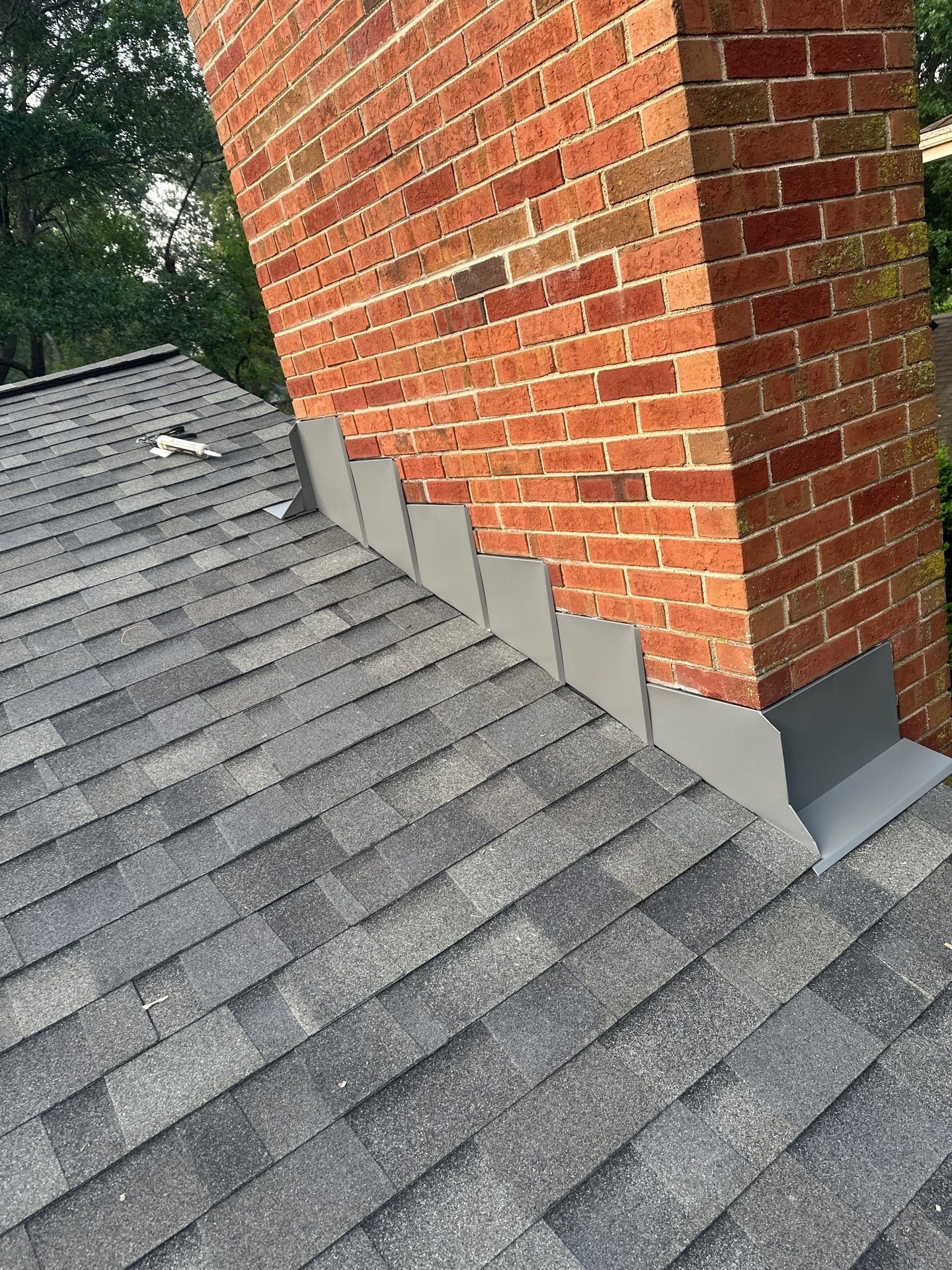
Chimney flashing is the metal (typically made from aluminum, galvanized steel, or copper) installed where your chimney meets your roof to help keep water from getting into your home.
Because a chimney creates a break in your roofing system, the area where the roof and chimney meet is especially vulnerable to water. Flashing creates a barrier that directs water away from this connection and back onto the roof.
If these pieces become damaged, deteriorate, or are installed incorrectly, water can get behind them and potentially cause a leak.
What Does a Proper Chimney Flashing Replacement Include?
A proper chimney flashing replacement should create a layered system that directs water away from the connection between your roof and chimney.
There are typically two important parts of that system around a chimney.
-
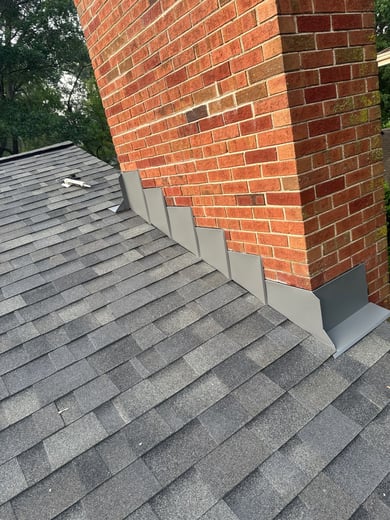
Step flashing consists of individual, overlapping pieces of metal installed where the roof meets the side of the chimney. These pieces are layered with the shingles so water continues moving down the slope of the roof instead of getting behind them.
-
Counter flashing covers the upper portion of that step flashing and helps prevent water from getting behind it from the chimney side.
For masonry chimneys, properly installed counter flashing is typically cut into the mortar joints of the chimney and sealed there.
Attaching a piece of metal to the face of the chimney and relying heavily on caulk may be faster and less expensive, but sealant deteriorates over time. The flashing itself should do the majority of the work directing water away from the roof-to-chimney connection.
How Much Does It Cost to Replace Chimney Flashing?
In the Chicagoland area, replacing chimney flashing typically costs $800 to $2200+, though more complicated replacements can cost more.
The exact cost depends on factors like the size of your chimney, the type of flashing being installed, how difficult the area is to access, and how much of the surrounding roofing material needs to be removed and replaced.
There is also a difference between repairing existing flashing and completely replacing it. A minor repair or simple resealing may only address a small portion of the flashing and can be completed for less than a replacement, while a full replacement involves removing the existing flashing and installing new materials that properly integrate with your roof and chimney.
If there is any additional damage to the shingles, roof decking, or chimney masonry, those repairs can increase the final cost beyond the typical replacement range as well.
What Affects the Cost of Replacing Chimney Flashing?
The biggest factors affecting chimney flashing replacement cost are the amount of flashing being replaced, the complexity of the chimney, roof accessibility, and whether there is damage underneath the existing flashing.
Below, we’ll talk about some of the biggest factors that can impact the final cost.
Size and Complexity of the Chimney
A large or more complex chimney will typically cost more to reflash because it requires more material and more time to properly integrate the flashing with the roof. For example, a wider chimney, an unusually shaped chimney, or one positioned where multiple roof sections meet can require additional pieces of flashing, more cuts, or more detailed installation, leading to higher labor costs.
Including a Chimney Cricket
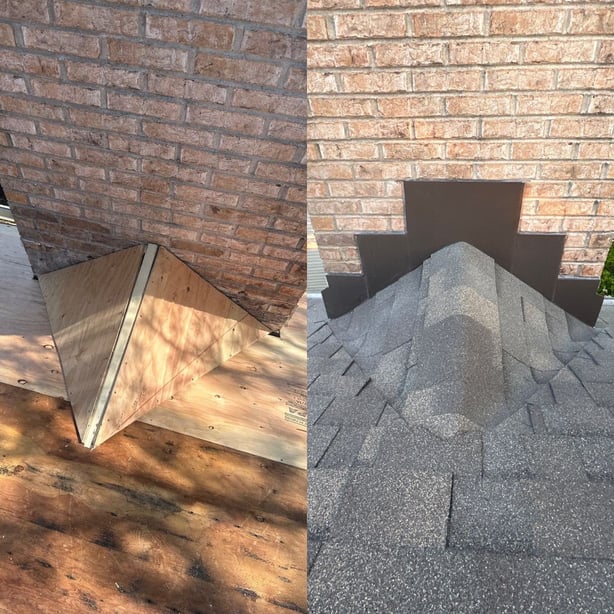
The width of the chimney can also affect whether additional water-management components are needed. On wider chimneys, a contractor may recommend a chimney cricket, which is a small peaked structure built where the chimney meets the roof to divert water around it instead of allowing water, snow, and debris to collect.
If a cricket needs to be built or replaced along with the flashing, that adds materials and labor to the project and can increase the overall cost. Below is an example of a cricket we installed on a recent project:
How Many Materials Need Replacement
Not every problem requires a completely new flashing system. If the existing metal is still in good condition and the problem is isolated to a small area, your contractor may be able to make a targeted repair to save on overall costs.
If the flashing is rusted, damaged, improperly installed, pulling away from the chimney, or no longer integrated correctly with the roof, a complete replacement is likely necessary.
Accessibility
A chimney on a low-slope, easily accessible roof is generally easier to work around than one on a steep or complicated roof. Roof pitch, chimney location, roof height, and other accessibility issues can all increase the amount of time and safety equipment required to complete the work safely and properly.
Shingle Removal and Replacement
Properly replacing chimney flashing usually requires removing at least some of the roofing material around the chimney. That’s because flashing is not supposed to simply sit on top of the roof and rely solely on sealant to keep water out.
The flashing and shingles work together to direct water down the roof. To replace the flashing correctly, your contractor may need to remove shingles around the chimney and replace them after the new flashing is in place.
The more roofing material that needs to be removed and replaced, the more labor and material the project can require.
Additional Damage Correction
Sometimes the biggest unknown is what you cannot see until the existing materials are removed. If water has been getting behind the flashing for a while, the roof decking around the chimney may be rotted, warped, or otherwise damaged.
Replacing deteriorated wood or other damaged materials adds to the scope and cost of the project, but covering those problems with new flashing would leave damaged material underneath your roof and could lead to premature leaks in the future.
Cutting In the Flashing
Properly installing counter flashing into a masonry chimney can add labor to the replacement because the flashing needs to be cut into the chimney’s mortar joints rather than simply attached to the outside.
Cutting in chimney flashing means the installer creates a small groove in the mortar joint, inserts the flashing into the groove, and seals the connection. This helps prevent water from getting behind the flashing as it runs down the chimney.
A less involved approach is to attach flashing directly to the face of the chimney and rely heavily on sealant to keep water out. While this may cost less upfront, sealant deteriorates over time and should not be the primary thing preventing water from getting behind the flashing.
Here is an example of what cutting in the chimney flashing looks like after installation is complete. The top edge of the flashing is inserted slightly into the mortar joint, and then sealed:
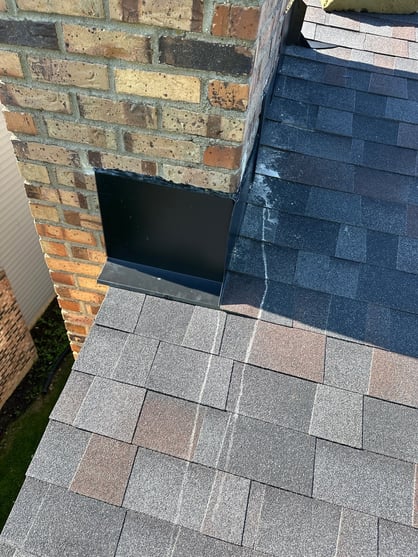
If you’re comparing chimney flashing quotes, ask how the counter flashing will be installed. The installation method can help explain differences in price between contractors, and not every contractor takes the time to properly cut in chimney flashing during a replacement.
Is Chimney Flashing Less Expensive to Replace During a Roof Replacement?
Replacing chimney flashing during a full roof replacement can be more efficient because the shingles around the chimney are already being removed.
For a standalone chimney flashing replacement, a roofer has to carefully remove enough of the existing roofing system to access the flashing and then rebuild that area afterward. During a roof replacement, that tear-off work is already happening.
This creates an opportunity to integrate the new flashing directly with the new roofing system instead of trying to work around existing shingles, which can save on labor costs since you’re only paying for material removal once as part of the roof replacement.
A contractor may recommend replacing older chimney flashing while replacing your roof, even if you have not noticed an active leak. But that does not mean every piece of existing flashing is automatically bad. Some materials, such as properly installed copper flashing, may still have useful life left and could potentially be reused safely.
If you’re currently replacing your roof and trying to decide whether your existing flashing should stay or go, our article “Does Roof Flashing Need to Be Replaced With a New Roof?” goes deeper into that decision.
How Do You Know If Your Chimney Flashing Needs to Be Replaced?
Leaks located around the chimney are one of the most common signs of a flashing problem, but an inspection is usually necessary to confirm the condition of the flashing before any wear can escalate into leaks.
Signs that should prompt a closer look include:
- Water stains on ceilings or walls near the chimney
- Rusted or visibly damaged flashing
- Flashing pulling away from the chimney
- Cracked or deteriorated sealant
- Loose or damaged shingles around the chimney
- Repeated leaks that return after previous repairs
Keep in mind that where water appears inside your home is not always where it entered the roof. Water can travel along roof decking, framing, and other materials before becoming visible inside, and a thorough inspection can help you diagnose the source of the issue before making any decisions.
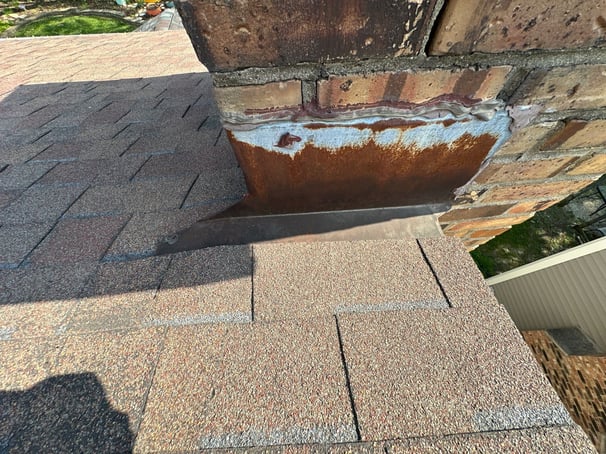
We included a photo below that shows chimney flashing in need of replacement, as the metal had begun to rust and the sealant had started to crack:
Can Chimney Flashing Be Repaired Instead of Replaced?
Chimney flashing can sometimes be repaired instead of completely replaced if the existing flashing is still properly installed and in good condition.
Although in some cases, repairs can be made, replacement becomes more likely when:
- The metal is deteriorating. Rust, holes, bending, or other physical damage can prevent the flashing from reliably directing water away from the chimney.
- The flashing is pulling away. Gaps between the flashing and chimney can give water a path into the roofing system.
- The original installation was incorrect. Repairing one section may not solve the problem if the entire flashing system was installed incorrectly.
- The roof is being replaced. If older flashing has questionable remaining life, replacing it while the surrounding roofing materials are already removed may make more sense than trying to reuse it.
- The area keeps leaking. If previous sealing or patching has repeatedly failed, the underlying flashing system may need to be addressed instead of adding another temporary fix.
What Should You Do If You Think Your Chimney Flashing Needs to Be Replaced?
Start by confirming where the water is coming from and whether the flashing actually needs to be repaired or completely replaced.
If you have an active leak, a roofing contractor should inspect the flashing, surrounding shingles, roof decking when accessible, and other potential entry points around the chimney. If you’re replacing your roof and your contractor recommends new chimney flashing, ask them to show you the condition of the existing flashing, why they recommend replacement, and explain how the new flashing will be installed.
Whether you’re dealing with a leak or simply want a better understanding of the health of your roof, you can schedule a no-commitment roof inspection with our team. We’ll assess your entire roofing system, including the chimney flashing, document what we find, and go over your options without any obligation to move forward with us.