How Does Poor Attic Insulation Affect Your Roof?
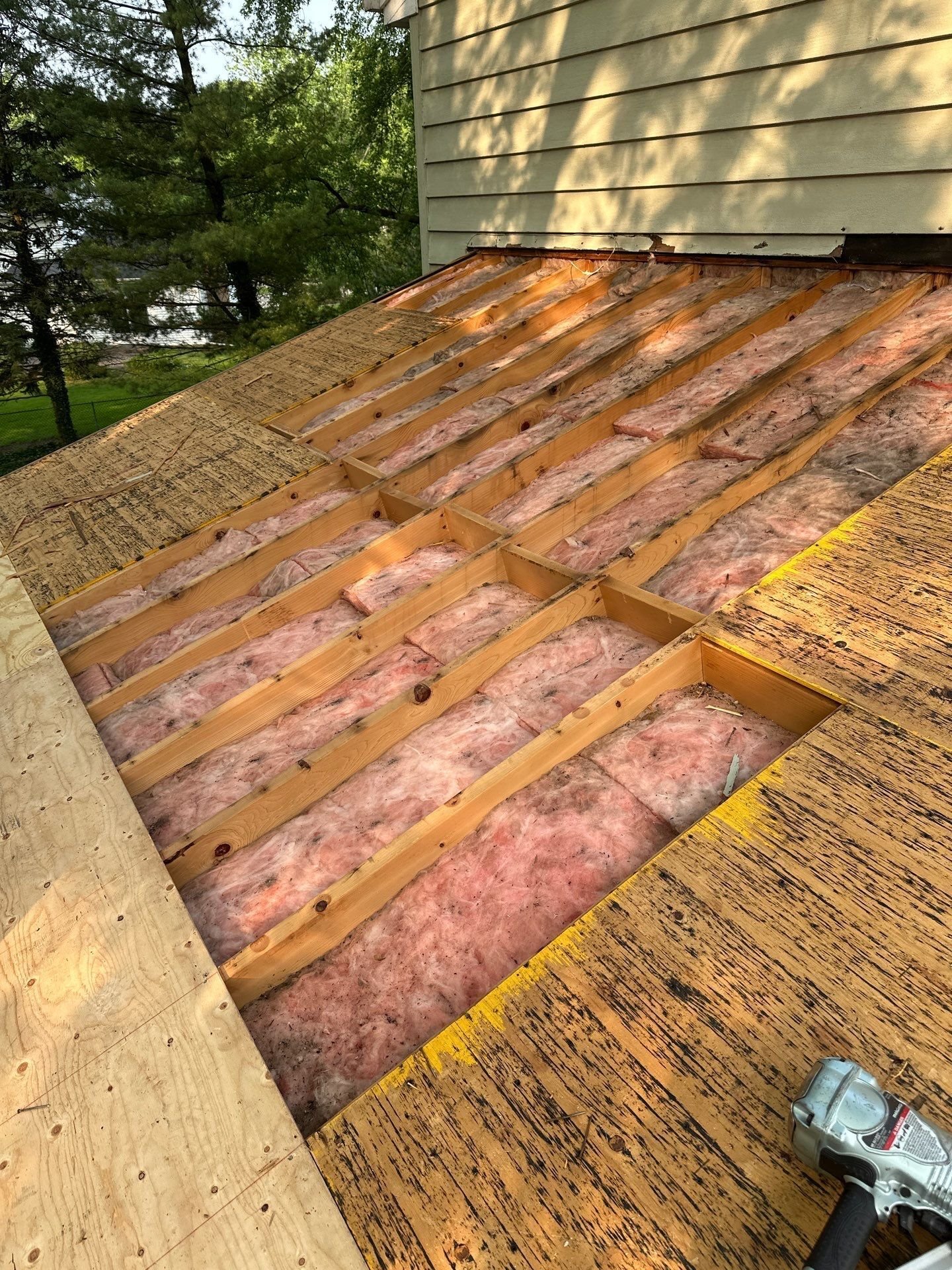
If you're dealing with leaks on your ceiling, ice buildup on the edges of your roof during winter, or premature shingle damage, your first thought may be something like: there’s something wrong with my roof.
Sometimes, that’s true, but in other cases, the real problem doesn't stem from the roof itself. Poor insulation, combined with issues like a lack of airflow, can create conditions that lead to trapped moisture, ice dams, and even structural damage to your roof system. The challenge is that from the outside, it’s hard to determine the true cause of issues like these, and most homeowners don’t realize this connection until the damage is already done.
At Happy Roofing, we’ve inspected hundreds of roofs across the Chicagoland area, and we’ve seen this scenario play out countless times. Homeowners call us out for what they believe is a roofing failure, only for us to find that the underlying issue started with missing insulation or poor sealing that led to years of moisture buildup, quietly deteriorating the roof from below.
In this article, you’ll learn:
- How poor insulation impacts your roof
- The most common problems poor insulation can cause
- How to spot the warning signs, and what you can do to fix the issue as soon as possible
The relationship between attic insulation and your roof’s health isn’t always obvious, but by the end of this article, you’ll have a better understanding of what to look out for to help you avoid costly repairs or premature roof replacement.
Key Takeaways
- Poor attic insulation can directly cause roof damage, even if your roof itself was installed correctly
- Common roof problems caused by poor insulation include ice dams, leaks, mold growth, and rotting roof decking
- Signs of poor insulation include uneven indoor temperatures, high energy bills, moisture in the attic, and visible insulation gaps
- Homes with vaulted ceilings (no attic) are not exempt, as insulation issues can still affect the roof
- The best way to confirm insulation-related roof issues is through a professional roof and attic inspection
Table of Contents
- Can Poor Attic Insulation Lead to Roof Damage?
- How Poor Insulation Can Damage Your Roof
- Roof Issues That Can Arise From Poor Insulation
- The Signs of Poor Attic Insulation
-
Can Poor Attic Insulation Really Cause Roof Damage?
The answer is yes, poor attic insulation can absolutely cause roof damage. When insulation isn’t doing its job, heat and moisture escape into the attic, creating conditions that can lead to ice dams in winter, trapped moisture and condensation, and long-term deterioration of your roof decking (the foundation of your roof, often made of plywood or Oriented Strand Board) and shingles.
What makes this especially challenging is that this type of damage often begins out of sight and worsens over time. Unlike storm damage or missing shingles, insulation-related issues don’t usually show immediate, obvious signs. Instead, they slowly weaken your roofing system from the inside out before problems like leaks, mold, or structural damage become noticeable.
By the time symptoms appear inside your home, the underlying issue has often already caused some damage to both your attic and your roof.
How Does Poor Attic Insulation Lead to Roof Damage?
Poor attic insulation leads to roof damage because it allows heat and moisture to escape into the attic, disrupting temperature balance and creating conditions that can deteriorate your roofing system over time.
When insulation is missing, insufficient, or compromised:
- Heat escapes from your living space into the attic, warming up the roof from underneath. In winter, this causes snow on your roof to melt unevenly. As that melted water runs down to the colder edges, it refreezes and could lead to ice dams. This is a common issue in colder climates like Northern Illinois, and one we see frequently during inspections. If you’d like to learn more about how ice dams can affect your roof, read our article, How Do Ice Dams Cause Roof Damage?
- Your attic can also overheat in the summer, even if your living space is kept cool. Without proper insulation, your air-conditioned air doesn’t stay where it should, and instead it escapes upward, forcing your HVAC system to work harder. At the same time, heat from outside builds up in the attic and has nowhere to go, creating extreme temperatures that stress both your roofing materials and your home’s energy efficiency.
- Moisture builds up inside the attic, especially without proper ventilation to allow it to escape. Over time, this trapped moisture can soak into the roof decking and framing, leading to mold growth, wood rot, and even structural weakening if left unaddressed.
- Shingles can age faster due to heat buildup from below in warmer months. When the attic space gets excessively hot, shingles are essentially “baked” from both the top (sun exposure) and the bottom (trapped attic heat). This can cause them to dry out, curl, or deteriorate prematurely and shorten the overall lifespan of your roof.
- Higher energy bills and HVAC strain are often a hidden side effect. Poor insulation allows constant heat transfer between your attic and living space, meaning your furnace and AC have to run more frequently to maintain comfortable temperatures. Over time, this not only increases utility costs but can also shorten the lifespan of your HVAC system.
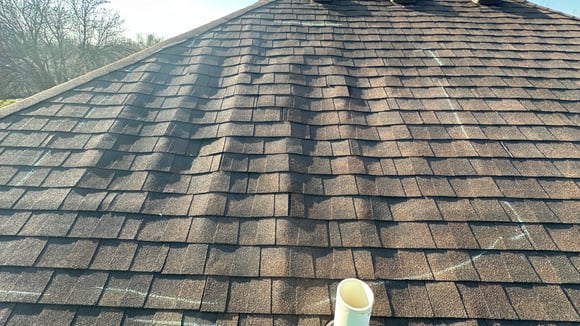
Even if your roof was installed perfectly, poor insulation alone can still lead to leaks and damage over time. Below is a photo of what excessive heat and moisture trapped in the attic space can do to a roof. Over time, that heat and moisture warped the roof deck, causing the shingles to follow the distortion and compromise the entire area:
What Problems Can Poor Attic Insulation Cause for Your Roof?
Poor attic insulation can lead to a range of visible and hidden problems, including ice dams, roof leaks, mold growth, rotting roof decking, higher energy bills, and premature shingle failure.
What Damage Caused by Poor Insulation Could Look Like
While the damage caused by poor insulation can begin out of sight, there are some signs you can look for as a homeowner to stay ahead of any larger, more costly damage. Here’s how this damage can typically appear to homeowners:
- Water stains or mystery leaks on ceilings: These leaks may seem random or inconsistent, showing up in winter or after temperature swings. In many cases, they’re caused by condensation or ice damming caused by poor attic conditions (including poor insulation).
- Mold or musty smells coming from the attic: When moisture gets trapped in your attic, it creates the perfect environment for mold growth. Over time, this can spread across insulation, wood framing, and roof decking, impacting your roof and even your indoor air quality.
- Soft, rotting, or weakened roof decking: This is one of the more serious (and expensive) outcomes. The wood beneath your shingles can absorb moisture over time, eventually rotting or becoming soft and structurally compromised. If it gets bad enough, replacement of the affected sheets of decking is the only safe solution.
- Shingles that curl, crack, or wear out faster than expected: Excess heat and moisture from below can cause shingles to deteriorate prematurely, even if they were installed perfectly. This can shorten the lifespan of your roof and lead to earlier-than-expected repairs or replacement.
- Ice dams forming along the edges of your roof: You might notice thick ridges of ice building up along your gutters in winter. What you don’t see is water backing up underneath your shingles because the dams prevent it from draining, which can eventually leak into your home. Ice dams can be caused by poor attic ventilation as well, but they could be a sign that the insulation is lacking.
- Higher heating and cooling bills without a clear reason why: If your insulation isn’t doing its job, your HVAC system has to work harder year-round. Many homeowners notice rising energy costs but don’t realize that their attic insulation could be the root cause.
What Are the Signs of Poor Attic Insulation?
You can often tell you have poor attic insulation by noticing signs like uneven temperatures in your home, high energy bills, visible gaps or thin insulation in the attic, or issues like moisture, mold, or ice dams on your roof.
Common signs to look for:
- Visible low, patchy, or missing insulation in the attic
- Damp insulation, dark spots in the insulation, or signs of mold
- Rooms that are too hot in summer or too cold in winter
- Unusually high heating and cooling costs
- Drafts or inconsistent temperatures throughout the home
- Ice dams forming along the edges of your roof in the winter months
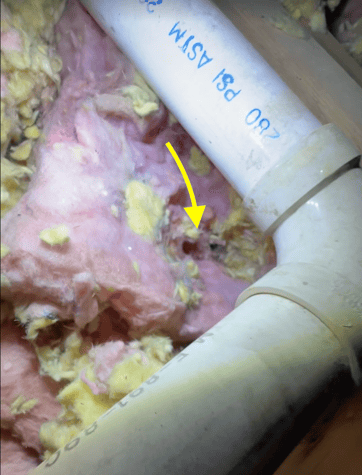
Below is an example of what can happen when insulation is exposed to an active leak. In this case, a leaking pipe repeatedly dripped into the insulation, eventually creating a visible hole. When insulation becomes saturated from leaks or even prolonged moisture exposure, it loses its ability to properly regulate temperature and protect your home:
It’s important to understand that these signs don’t always point to insulation alone. Many of these symptoms can also be caused by other issues, especially poor attic ventilation or air sealing problems. In fact, insulation and ventilation often go hand-in-hand, and it can be difficult to tell which one is the root cause without a closer look.
If you have a vaulted ceiling, you might assume that these issues won’t affect your roof, but they still can. In homes with vaulted ceilings, insulation is installed directly along the underside of the roof, right above the ceiling. If that insulation is missing, thin, or improperly installed, you can still run into the same types of heat and moisture issues that affect traditional attics.
Because of this, the best way to get a clear answer is to have a professional inspection. A qualified contractor, especially one who understands how insulation, ventilation, and roofing systems work together, can evaluate your entire roof and identify what’s actually causing the problem.
What to Do If You Suspect Poor Insulation in Your Attic
Poor attic insulation is one of the most overlooked causes of roof problems, and one of the most misunderstood. The good news is that once you understand how these systems work together, you’re in a much better position to catch problems early, ask the right questions, and make informed decisions about your home.
It’s also important to remember that insulation is just one piece of the puzzle. Ventilation plays an equally critical role, and in many cases, the two issues are closely connected. If you want to better understand how airflow impacts your roof, and how it could be costing you, you can learn more by reading our next article: Why Poor Attic Ventilation Is One of the Most Expensive Roofing Mistakes Homeowners Make.
If you’re noticing any of the signs we discussed, or if you just want peace of mind, the best thing to do is schedule a professional roof evaluation with a contractor who has experience with insulation and ventilation components. We offer no-commitment roof consultations where we take a comprehensive look at your roofing system (including the attic when accessible) to help you understand exactly what’s going on, go over your options, and give you our honest recommendations without the obligation to move forward with us.