Is a Leaking Roof an Emergency?
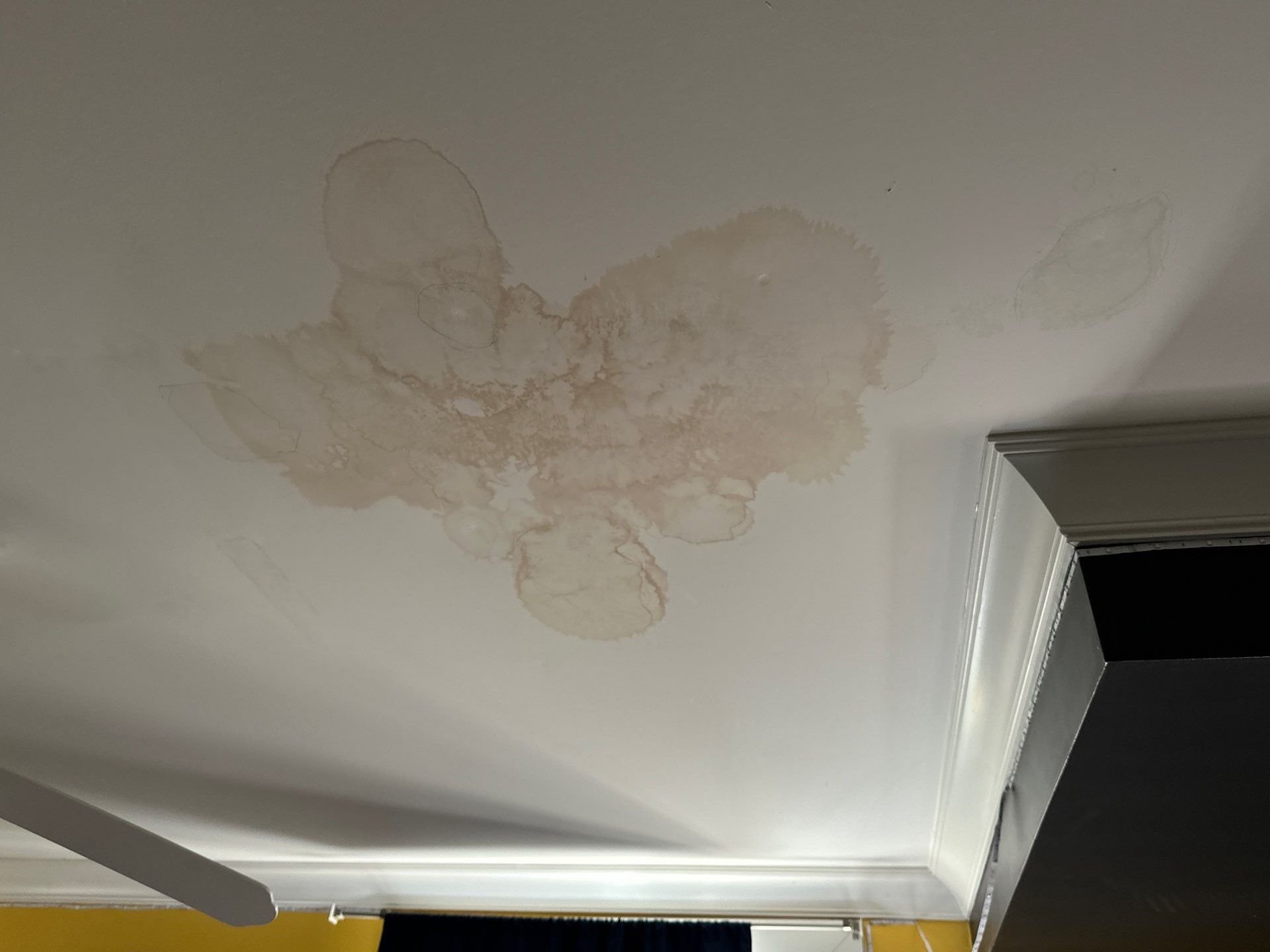
When a roof starts leaking, the first question many homeowners ask is: "How serious is this?" Some leaks feel urgent the moment they appear, while others seem manageable or easy to put off. The challenge is that not all roof leaks are caused by the same thing, and treating every leak as an emergency can lead to unnecessary stress or rushed decisions. But water in the home isn't something to be ignored in any case, and should be addressed as soon as possible.
At Happy Roofing, we've inspected and repaired hundreds of roofs across the greater Naperville area, and we've seen firsthand how differently roof leaks can behave (and some of the damage they can cause). Some require immediate action to prevent escalating damage, while others can safely wait for an available contractor without putting the home at risk.
In this article, we'll explain when a leaking roof should be treated as an emergency, and when you may have time to decide on a repair route. By the end, you'll be able to face any surprise roof leaks without panicking or needing to wait too long.
Table of Contents
- When a Roof Leak Is Considered an Emergency
- What to Do If Your Roof Is Leaking
- Will Insurance Cover a Leaking Roof?
- What to Do If You're Not Sure How Serious a Roof Leak Is
When Is a Roof Leak Considered an Emergency?
A roof leak is considered an emergency when it is actively causing damage or is likely to cause additional damage in the near future if not addressed right away.
Not every leak requires immediate action, but some situations do. The key distinction isn't how alarming the leak feels, but whether the damage is ongoing, spreading, or unavoidable without intervention.
A roof leak should generally be treated as an emergency when:
-
Water is entering the living space of the home: Leaks affecting ceilings, walls, insulation, or flooring can quickly escalate and cause widespread interior damage. If you're noticing an active drip or spreading ceiling stain, it's best to get an assessment right away.
-
Interior materials are at risk: Furniture, wood framing, electronics, and other personal items can all be impacted by ongoing leaks. If you can't have someone come look at the issue immediately, move anything of value away from the leak and try to contain any drips with buckets or other containers temporarily.
-
The leak is active and worsening: If there's an immediate risk of water intrusion due to rain, snowmelt, or expected storms, the risk of further damage may warrant a call to a professional to prevent further damage before the weather event hits.
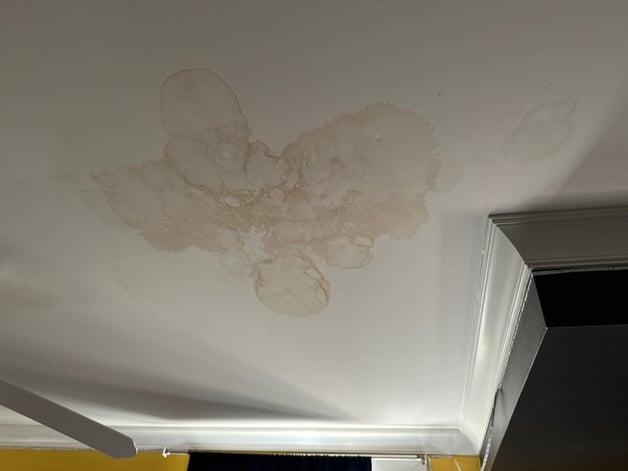
The example below shows a pretty large leak in the living space of the home, prompting more urgent action:
Are All Roof Leaks Considered an Emergency?
While any leak should be taken seriously, some do not require immediate emergency response. True emergencies require immediate mitigation, while non-urgent leaks can often be addressed with a planned, thoughtful approach (but still shouldn't be completely put off). Some homeowners understandably label any leak as an emergency out of urgency or stress, but understanding the difference helps prevent unnecessary costs and rushed decisions.
A roof leak may not require emergency response if:
-
The leak is confined to a garage, attic, or unfinished space where additional damage is unlikely to occur. A leak in a detached, unfinished garage where concrete is the only thing (other than the damaged roof) affected by the water is less of a concern than an active leak in the living room.
-
The issue is stable and not actively worsening. The leak does not increase during rainfall or snowmelt, water intrusion remains minimal, and there are no signs that additional areas of the home are being affected. In these cases, the problem can often be monitored and scheduled for repair without the risk of immediate or escalating damage.
-
The repair timeline is clear, and the roof isn't exposed to ongoing weather. A contractor can inspect the issue and schedule repairs within a reasonable timeframe, and there are no active openings or conditions that would allow additional water to enter the home before those repairs are completed.
What Do I Do If My Roof Is Leaking?
Focus on limiting interior damage first, then get the roof professionally evaluated to determine whether emergency action is actually needed. A leaking roof is stressful, but the most important thing is to respond calmly and methodically. The goal is to prevent further damage to the interior to better your chances of smooth repairs.
Step 1: Protect the Interior of the Home
While the source of the leak will ultimately need professional attention, you can significantly reduce repair costs and prevent further structural or cosmetic damage by taking action when you notice the issue.
Water intrusion can quickly affect drywall, insulation, flooring, electrical systems, and even furniture. Acting calmly and promptly can prevent what might start as a manageable repair from turning into a much larger restoration project.
If water is entering the home and you see an active drip or growing water stain:
- Move furniture, electronics, and valuables away from the affected area
- Place containers to catch dripping water and protect the floor
- Use towels or plastic to protect any items that can't be moved if needed
These steps won't stop the leak, but they can reduce interior damage while you assess the situation. Roof repairs are stressful enough to deal with alone, and minimizing the damage to drywall, floors, and other interior components will improve your chances of a quick repair.
Step 2: Observe and Document the Leak Carefully
Acting quickly is important, but you should also be as informed as possible before reaching out to contractors. The more clearly you can describe the issue, the easier it will be for a professional to diagnose the problem, estimate costs accurately, and determine whether the situation is urgent.
Proper documentation can also help with insurance claims, prevent miscommunication, and protect you from unnecessary repair recommendations. A little preparation now can save you time, money, and frustration later. Before contacting a contractor:
-
Where you noticed the leak inside: This helps you and the contractor determine how fast the leak is spreading. It can also help document where the leak started, as new stains or moisture in additional areas can signal increasing risk.
-
Whether the leak worsens during rain or snowmelt: If it's currently raining or if your roof has gathered enough snow, see if the leak grows rapidly. This helps determine the severity of the situation.
-
What materials are being affected: Whether water is reaching drywall, insulation, flooring, or electrical fixtures helps determine urgency and potential damage. While you're protecting the area around the leak (from step 1), take note of any other materials that may come in contact with the water.
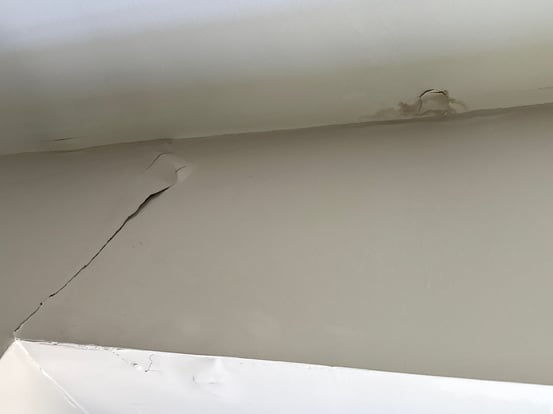
The photo below is a good example of damage documentation that could help you accurately track how quickly the leak (or other damage) is spreading, if at all:
Step 3: Check the Attic or Roof Area Above the Leak
If you can safely access your attic, look for signs such as wet insulation, damp roof decking, or active dripping above the area where the leak appears inside the home. This can help confirm whether the issue is coming from the roof or if it may be related to plumbing, HVAC, or another source. Keep in mind that water often travels along pipes, rafters, or other surfaces, and a thorough inspection from a professional may be the only way to find the source in some cases.
The photo below shows a leak caused by a failed plumbing connection, and is a good example of how water can bore a hole into insulation:
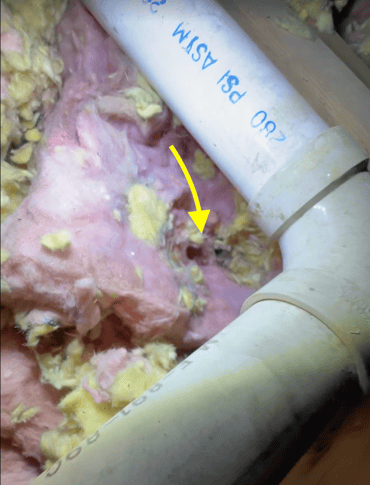
If accessing the attic feels unsafe, visibility is limited, or you're unsure what you're looking at, it's best to skip this step and move on. Safety always comes first, and a professional inspection can determine the source without putting you at risk.
Step 4: Schedule a Professional Inspection
Once you’ve taken immediate steps to minimize interior damage and gathered basic information, the next move is to schedule a professional inspection. Even if the leak appears minor, hidden damage can worsen quickly, and what looks like a small issue inside may signal a larger roofing problem.
A roofing professional can determine:
- Whether the leak qualifies as an emergency, and immediate action is needed
- If temporary measures (like tarping the roof to cover any exposed areas) are necessary to prevent further damage before the repairs
- What the appropriate long-term solution looks like to repair the leak
A thorough roof inspection provides clarity, helping you understand where the leak is from, what can be done to fix it, and how urgent the timeline is.
Will My Insurance Cover a Roof Leak?
Sometimes homeowners insurance policies will cover a roof leak, but it depends on what caused the leak, not just the fact that your roof is leaking.
Insurance coverage for roof leaks is often misunderstood. Many homeowners assume that any leak will be covered, but insurance companies focus on whether the damage was caused by a sudden, covered event versus a long-term or maintenance-related issue.
When Is Insurance More Likely to Cover a Roof Leak?
Insurance is more likely to cover a roof leak when it's caused by a sudden, covered event such as a storm, wind damage, or a falling tree, and results in immediate interior damage. Coverage is also more likely when the homeowner takes reasonable steps to prevent further damage, and the issue isn't related to long-term wear, poor maintenance, or pre-existing conditions.
Taking the steps to contain the leak and protect other interior items can help your chances of getting a claim approved. It's a good idea to document when you made the call to a roofing professional, so that your insurance knows you promptly addressed the leak as well.
Insurance may cover a roof leak when:
- The leak was caused by a sudden event, such as a storm, wind damage, or a falling tree
- The leak resulted in interior damage (like ceilings, walls, or flooring) that occurred suddenly
- The homeowner took reasonable steps to mitigate further damage, such as temporary protection or prompt repairs
- The damage was not pre-existing or caused by neglect
In some cases, insurance focuses more on the interior damage caused by the leak than the roof issue itself.
Why Interior Damage Is Treated Differently
Insurance policies often cover damage that happens suddenly and unexpectedly. With roof leaks, the interior damage (like water-stained drywall or damaged flooring) is often considered sudden once it appears, even if the roof issue developed over time.
The roof problem itself, however, is not always considered sudden unless the issue can be directly tied to a recent event. If that event happens to be part of the policy's coverage, your insurance should cover the roof repair itself.
What If I'm Not Sure How Serious My Leak Is?
The difference comes down to whether the leak is actively causing damage or likely to worsen if left unaddressed. Not every roof leak is an emergency, but some absolutely are, and water in the home is nothing to ignore in any situation. Understanding that distinction helps homeowners avoid unnecessary panic while still acting quickly when it truly matters.
Protecting the interior, documenting the damage, and getting a professional assessment often leads to better outcomes and fewer surprises. Rushing into decisions can create unnecessary costs, while waiting too long can allow manageable issues to escalate into preventable and costly repairs.
If you're dealing with a roof leak and aren't sure how serious it is, we offer no-commitment roof consultations to help you understand what's going on and what your options are. We'll give you an honest assessment of whether the issue needs immediate attention and what your options are, so you can make the right decision with confidence.