Can You Repair Your Roof in the Winter?
If your roof starts leaking in the middle of winter, your first thought is probably something like: Can I address this now, or do I have to wait until winter? It’s a fair question, and you wouldn’t be the only one to ask.
Cold temperatures, snow, and ice make it seem like roofing work always comes to a complete stop in the winter months. Some homeowners assume that repairs simply aren’t possible in winter, or worse, that attempting one could cause more harm than good.
But the reality isn’t a one-size-fits-all scenario.
At Happy Roofing, we’ve repaired and replaced hundreds of roofs across the Chicagoland area, and we’ve helped many homeowners address urgent roofing issues even in freezing conditions. The key is understanding what can be done, what should be done, and when a temporary solution might be the smarter choice.
If you’re dealing with a roofing issue during the colder months, it can feel stressful and uncertain, but you’re not out of options.
In this article, you’ll learn:
- Whether roof repairs can be done in the winter
- What types of repairs are safe and effective in cold weather
- What to expect if you need a repair during the winter
By the end, you’ll have a clear, honest understanding of your options so you can make the best decision for your home, no matter the season.
Key Takeaways
- Roof repairs can be completed in the winter, but they require extra precautions and the right conditions
- Emergency issues like leaks should not wait until spring to be covered or repaired, as delays can lead to more damage
- Signs you may need a winter repair include leaks, ceiling stains, and damaged shingles
- Repairs in winter may take longer and cost more due to added labor, safety measures, and conditions
Table of Contents
- Can Roof Repairs Be Completed in Winter?
- How Roof Repairs Are Done in the Winter
- Determining Whether You Need a Roof Repair in the Winter
- What to Expect If You Need a Winter Roof Repair
- What to Do If Your Roof is Actively Leaking
Can Roof Repairs Actually Be Done in the Winter?
Roof repairs can be done in the winter as long as precautions are taken to protect both the crew and the materials. While cold weather, snow, and ice can limit certain types of work, many repairs can still be completed safely and effectively when handled by an experienced contractor.
Winter roofing isn’t impossible, but it does require the right approach and expectations. Here are some key considerations to keep in mind:
- Emergency repairs can (and should) be addressed right away: If your roof is leaking or has active damage, waiting until spring to act can cause more damage. Temporary or targeted repairs can help prevent further water damage to your home. If it isn’t safe or feasible to perform full repairs, a tarp can be used to prevent further damage to the roof and home until more permanent repairs can be made.
- Certain materials and methods need to be adjusted: Cold temperatures can affect how roofing materials perform during installation. For example, asphalt shingles can become stiff and brittle in freezing weather, making them more prone to cracking when handled. In some cases, contractors may use heated tents or store materials in a warm space before installation to keep them flexible and ensure the adhesive can bond properly.
- Not every repair is ideal for winter conditions: Larger or more complex projects, like large-scale repairs or full roof replacements, may be better scheduled for warmer months, depending on the situation. If a roof is particularly steep or hard to access, temporary tarping may be the better solution in the meantime.
How Are Roof Repairs Done in the Winter?
Roof repairs in the winter are done by carefully managing temperature, safety, and material handling to ensure the repair is effective – even in cold conditions.
How Winter Projects Should Be Approached
When repairs can’t wait until spring, experienced roofing contractors take extra precautions to make sure the work holds up:
- Materials are kept warm before installation: As mentioned earlier, shingles can become brittle in cold weather. Contractors may store materials in heated spaces or use heated enclosures (like tents or a heated trailer) on-site to keep them flexible and prevent cracking during installation. This is also important to maintain the performance of the adhesive meant to secure the shingles, as it can lose its strength under freezing temperatures.
- Manual sealing may be required: In warmer months, asphalt shingles are designed to self-seal using heat from the sun, which activates the adhesive strip and bonds the shingles together. In winter, colder temperatures can prevent that seal from activating properly. Because of this, contractors may need to take extra steps, such as hand-sealing shingles with roofing cement, so they stay secure and aren’t vulnerable to wind damage.
- Snow and ice are carefully removed before work begins: The roof surface needs to be clear and dry for repairs to be effective. Crews will remove snow and ice as safely as possible to create a workable area.
- Work is timed around weather conditions: Repairs are often scheduled during milder winter days when temperatures are higher, and conditions are safer. Extreme cold, heavy snow, or icy conditions may delay work, even if the project can be completed during the winter months.
How Can You Tell If You Need a Roof Repair in the Winter?
The best way to know for sure is to have a professional inspection. If you’re seeing active issues like leaks or visible damage, it’s usually a sign that your roof shouldn’t wait until spring for attention.
Here are a few signs that you may need a repair sooner rather than later:
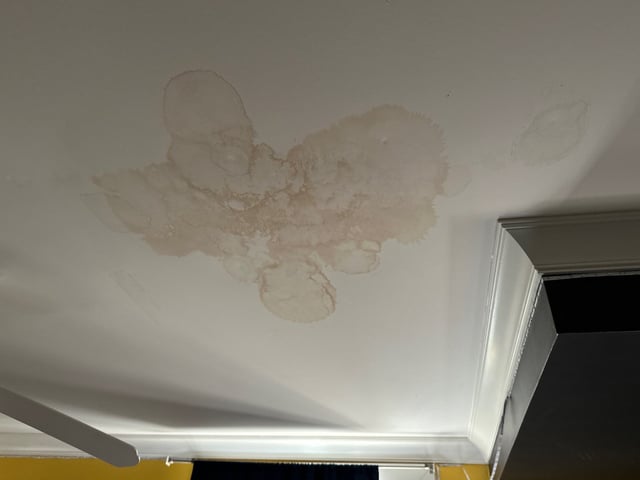
- Active leaks or water stains inside the living area of your home: If water is getting in, even intermittently, it’s important to address it before it causes more damage. If you notice a stain on your ceiling, like the one in the photo below, it's a good idea to monitor its size and call a trusted professional.
- Ice dams forming along your roofline: These can trap water and force it under your shingles, increasing the risk of leaks. While these don’t always lead to leaks right away, if water can’t drain from the roof, it can get forced under your shingles and cause damage to the interior of your home.
- Missing, lifted, or visibly damaged shingles: Winter weather can make existing damage worse, especially with wind and freeze-thaw cycles. Any missing or damaged shingles can serve as an entry point for water as snow melts.
A qualified roofing contractor can assess any roof concerns you may have and give you insight into how urgent the problem may be, and what can be done to fix it.
Below is a photo of an active leak in the living area of a home:
What Should You Expect If You Need Roof Repairs in the Winter?
If you need a roof repair in the winter, you can expect a more cautious, weather-dependent process that may involve temporary solutions, adjusted timelines, higher costs, and slightly different installation methods than in warmer months.
What that looks like in practice
- Repairs may be scheduled around weather windows: Contractors will often plan work during milder days when temperatures are higher and conditions are safer. This can sometimes mean a short wait for the right opportunity.
- Temporary fixes may be used when needed: If conditions aren’t ideal for a full repair, or if the issue isn’t very urgent, a contractor may recommend a temporary solution like tarping to stop active leaks and prevent further damage until a more permanent fix can be completed.
- The process may take a bit longer: Extra precautions, like clearing snow, handling materials carefully, and ensuring safe accessibility both on and off the roof, can add labor time compared to a typical repair in warmer weather. The exact amount of time added will depend on the complexity and size of the repair, but in general, roof work in the winter months should be expected to take longer than when the weather is ideal.
- Costs can vary depending on conditions: In some cases, since winter repairs may involve additional labor or safety measures, pricing can be impacted. You can always ask your contractor before the project begins to verify, but expect emergency roof repairs in the winter to cost more than roof work in warmer months.
What to Do if Your Roof is Actively Leaking
Roof problems rarely follow a convenient schedule, and when something goes wrong in the winter, it can leave you feeling stuck between acting quickly and waiting for better conditions. Many roof repairs can be handled during the winter with the right approach. The key is understanding what needs immediate attention and what can safely wait.
If you’re noticing signs like leaks or water stains on your ceiling, and you’re unsure of how serious it is or what to do next, this guide can help give you a better idea of where to start: Is a Leaking Roof an Emergency? It'll help you develop a clear plan of action so you feel better prepared to address the situation.
If you’d rather get a clear assessment of your roof right away, the best next step is getting a professional evaluation. We offer no-commitment roof consultations to help you understand exactly what’s happening and give you our honest recommendations, whether you decide to work with us or not.