Should You Switch From Cedar Shake to Asphalt Shingles?
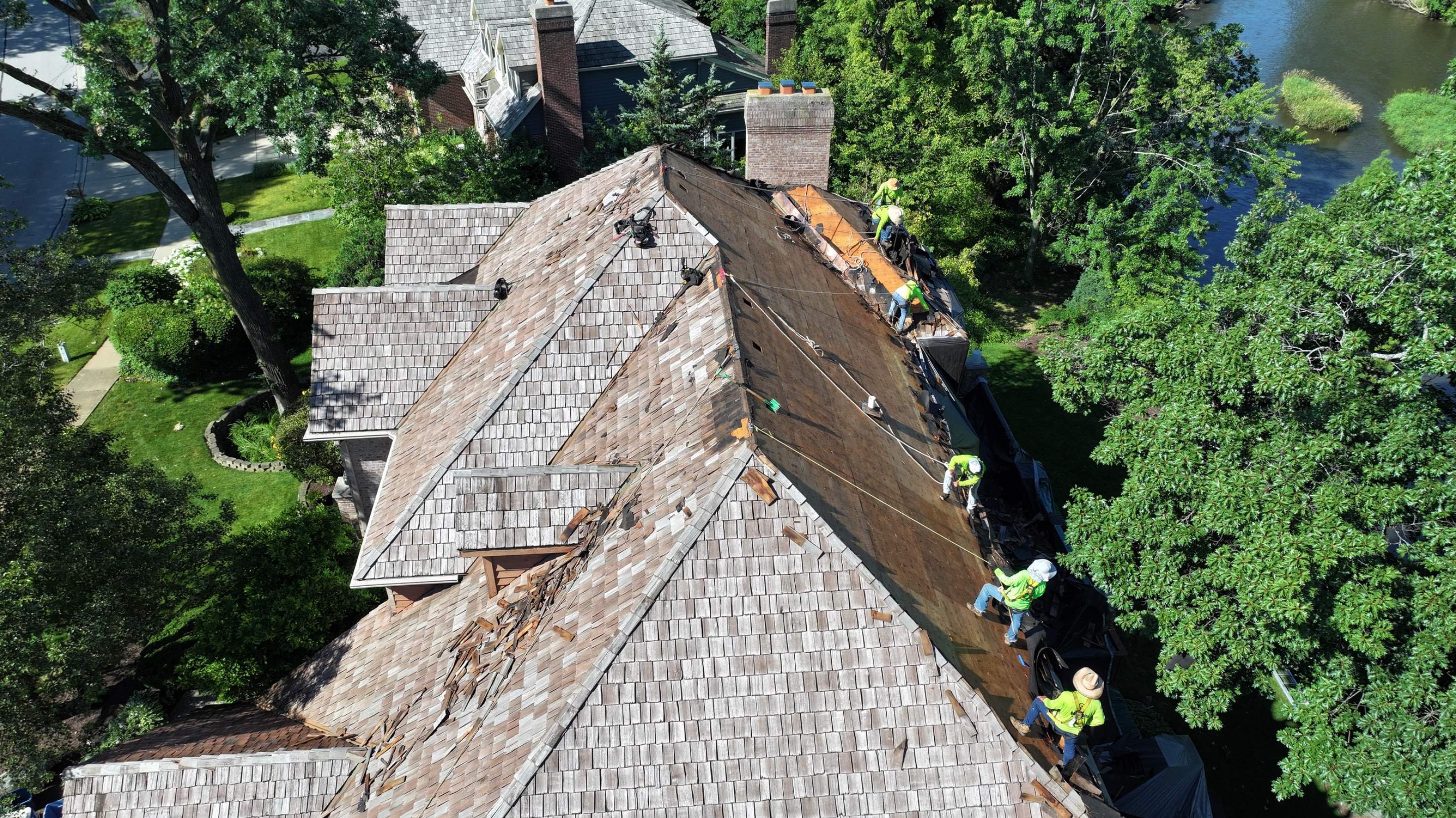
If your cedar shake roof is reaching the end of its lifespan, you may be asking a practical, and sometimes difficult, question: Should I replace it with cedar again, or switch to asphalt shingles instead?
Switching from cedar shake to asphalt shingles is absolutely possible, and for many homeowners, it’s a practical and smart financial decision. But whether you should make that switch depends on your roof’s condition, your long-term plans for the home, your tolerance for maintenance, and even your local climate.
At Happy Roofing, we’ve replaced hundreds of roofs throughout the greater Naperville area and have worked with homeowners who were facing this exact decision. After inspecting and working on hundreds of roofs, we’ve seen firsthand how both of these roofing systems perform over time, where they tend to fail, and what types of homeowners each system is better suited for.
This article is meant to give you clear, experience-based insight so you can make a confident, informed decision.
In this article, you’ll learn:
- When switching from cedar shake to asphalt shingles makes the most sense
- When sticking with cedar shake is the better choice
- What the replacement process of switching from cedar shake to asphalt shingles involves
- The financial trade-offs homeowners should understand before making a decision
By the end, you’ll be better equipped to make a confident decision when it comes to choosing the right material for your roof replacement.
Table of Contents
- Why Some Homeowners Switch From Cedar Shake to Asphalt Shingles
- Do Asphalt Shingles Cost Less Than Cedar Shake?
- When You Should Switch to Asphalt Shingles
- When You Should Keep Your Cedar Shake Roof
- Things to Consider Before Switching From Cedar Shake to Asphalt
-
Why Do Some Homeowners Switch From Cedar Shake to Asphalt Shingles?
Most homeowners who switch from cedar shake to asphalt shingles do so to reduce maintenance, lower long-term costs, and simplify ownership. While cedar offers natural beauty and longevity potential, it also requires ongoing upkeep and carries higher replacement costs, factors that lead some homeowners to choose a more predictable and lower-maintenance option like asphalt shingles.
Here are the most common reasons we see homeowners make the switch:
Maintenance Fatigue
Cedar shake roofs require regular cleaning, treatments, and inspections to reach their full lifespan because cedar is a natural wood product that absorbs moisture, expands and contracts with weather changes, and can deteriorate if not properly maintained.
Over time, some homeowners grow tired of:
- Staining or treating the roof every few years to help repel moisture, reduce UV damage, slow cracking and surface deterioration, and extend the lifespan of the wood
- Managing moss or algae growth, especially in shaded areas where this organic growth is amplified
- The financial impact of ongoing cedar shake maintenance, as recurring treatments, cleanings, and inspections can add up significantly over decades of ownership.
Asphalt shingles eliminate the need for routine surface treatments and generally require only periodic inspections and storm-related repairs. However, asphalt shingles aren’t the best choice for every homeowner, as we’ll explore later.
Cost Effectiveness
As we briefly mentioned above, the recurring costs of maintenance for cedar shake roofs can add up over decades of ownership. Maintenance costs aren’t the only consideration homeowners should make when it comes to weighing the cost of cedar shake over asphalt shingles.
Cedar shake roofs generally cost more than asphalt shingles because:
- Upfront installation costs are higher, often 2-4 times more than asphalt shingles, due to material pricing, thicker construction, heavier overlap between shingles (meaning longer installation times), and the labor-intensive process of installing each shake individually.
- Repairs can be more specialized and variable. Since individual shake replacement often requires careful integration with surrounding materials and involves navigating more overlapping layers, repairs tend to be less predictable than standard asphalt shingle systems and have a wide range of cost estimates.
- They have a greater sensitivity to proper upkeep, meaning long-term performance is closely tied to consistent maintenance, ventilation quality, and climate conditions, all of which can influence lifetime value when adding the costs of treatments together over the life of the roof.
While cedar shake can offer impressive longevity when properly maintained (up to 30-40 years), the total cost of ownership is typically higher and less predictable than that of asphalt shingles. For some homeowners, the premium look of natural cedar shake is worth it, but for others, switching to asphalt becomes a practical alternative.
Preparing to Sell the Home
Homeowners who plan to sell their home in the near future sometimes choose asphalt shingles when replacing a cedar shake roof. Sometimes, that decision is about making the property easier to market and reducing potential concerns from prospective buyers.
They may make this choice because:
- Asphalt shingles tend to appeal to a broader range of buyers
- They help reduce buyer concerns about consistent maintenance
- The cost to install an asphalt shingle roof is typically lower than the cost of cedar shake
If you’re planning to sell your home in the near future, it may be more financially appropriate to replace an aged cedar shake roof with asphalt rather than cedar shake.
Does Switching From Cedar to Asphalt Actually Save Money?
Switching from cedar shake to asphalt shingles typically reduces the upfront investment, eliminates recurring maintenance treatments, and creates a more predictable long-term cost structure for homeowners.
But what does that actually look like over 10, 20, or 30 years of ownership?
To answer that, you have to look beyond installation price alone and consider how maintenance cycles, replacement timelines, and long-term budgeting differ between the two materials.
How Do the Costs of Asphalt Shingle and Cedar Shake Roof Installations Compare?
While cedar shake can deliver impressive longevity when properly maintained (often 30-40+ years), its lifetime costs are more sensitive to maintenance and environmental conditions. Asphalt shingles generally provide greater cost predictability, which is why many homeowners switch when replacing aging cedar roofs.
| Cost Factor | Cedar Shake Roof | Asphalt Shingle Roof |
|---|---|---|
| Upfront Installation Cost | Significantly higher, often 2-4x the cost of asphalt due to premium materials, thicker construction, heavy overlap, and the labor-intensive process. | Lower upfront investment thanks to standardized materials, faster installation times, and an easier disposal process (lighter materials). |
| Installation Labor | More time-intensive because shakes are installed individually and layered with significant overlap and interwoven underlayment. | Faster and more straightforward installation, as the strips of shingles cover a larger area when installing. |
| Repair Complexity | Repairs can be more specialized and variable. Costs may sometimes be comparable to asphalt repairs, but can skew higher depending on access and condition. | Repairs are generally more predictable due to material costs and simpler replacement of individual shingles. |
| Maintenance Costs | Requires periodic treatments, cleaning, and inspections to manage moisture, UV exposure, and wood deterioration. | Minimal routine maintenance beyond inspections and occasional storm-related repairs. |
| Long-Term Cost Predictability | Less predictable because performance and costs depend heavily on maintenance consistency and climate conditions. | More predictable lifecycle costs, but durability is still heavily influenced by climate conditions and variables like roof ventilation quality. |
| Lifetime Cost Structure | Costs are spread over time through maintenance cycles and occasional repairs, with higher upfront investment compared to most asphalt shingles. | Lower upfront costs with fewer recurring expenses, though full replacement typically is needed sooner than well-maintained cedar. |
When Should You Switch From Cedar Shake to Asphalt Shingles?
Switching from cedar shake to asphalt shingles typically makes the most sense for homeowners who prioritize practicality and low maintenance requirements. While cedar shake offers distinctive character and superior longevity when properly maintained, some homeowners reach a point where a simpler, lower-maintenance roofing system better fits their needs.
You may want to consider switching if:
- Function outweighs aesthetics: If reducing maintenance, simplifying ownership, and prioritizing practicality matter more than the natural character and architectural appeal of cedar shake, asphalt shingles may be the better fit for you.
- You want a simpler ownership experience: If you’d prefer not to manage treatments or schedule more frequent roof inspections, asphalt shingles are a good option.
- You want to save costs over the life of the roof: If the higher upfront cost of installing new cedar doesn’t align with your financial priorities and you’d prefer a roofing system with lower initial investment and fewer ongoing maintenance expenses, asphalt shingles would fit your priorities better.
When Should You Stick to Cedar Shake?
For some homeowners, the architectural value, long-term durability, and overall character of cedar shake outweigh the additional maintenance and upfront investment. For those who value the natural aesthetic, cedar shake can be worth the upkeep and higher costs typically associated with it.
You may want to consider sticking with cedar if:
- Your home has historic or high-end architectural character: If your home’s design relies on the natural texture and craftsmanship of cedar shake, replacing it with the same material can help preserve its architectural integrity and long-term curb appeal.
- Your neighborhood has strong architectural consistency: If many homes in your area use cedar shake or other premium roofing materials (or if your homeowners association requires it), maintaining that consistency can help preserve the overall character of the neighborhood and protect property value.
- You plan to stay in your home long-term: If you’re committed to maintaining your home and are willing to keep up with the treatments and inspections cedar requires, replacing cedar with cedar may make sense to preserve its longevity and distinctive appearance.
What to Consider Before Replacing a Cedar Shake Roof
Before deciding to replace cedar shake with asphalt shingles, it’s important to understand that switching materials involves more than just choosing a different type of roofing. The structure of the roof, ventilation system, and even surrounding exterior elements can influence how straightforward the transition will be.
Evaluating these factors ahead of time helps prevent surprises during installation and ensures your new roof performs properly for years to come.
You should consider:
- The condition of the roof structure and decking: Older cedar shake roofs are often installed over spaced or “skip sheathing” rather than solid decking. Asphalt shingles require solid decking for proper support, so contractors may need to install additional sheathing before the new roofing system can be applied. This can add material and labor costs to the project.
- Ventilation and airflow requirements: Proper attic ventilation is critical for roof performance, no matter the material. When switching materials, it’s a good opportunity to evaluate whether the roof has adequate intake and exhaust ventilation to prevent heat buildup and moisture issues that could shorten the lifespan of asphalt shingles. To learn more about how ventilation affects your roof, read our article How Roof Ventilation Affects Shingle Lifespan, Energy Costs, and Warranty Coverage.
- How the roof thickness affects siding and flashing details: Cedar shake roofs are usually much thicker than asphalt shingles (typically ½”-¾” for cedar shakes, compared to ¼” for asphalt shingles) due to their heavy overlap and layered construction. When cedar is removed and replaced with thinner asphalt shingles, it can sometimes leave a visible gap beneath the bottom edge of the siding where the thicker roofing once sat. In some cases, contractors may need to adjust flashing or add trim to ensure the transition looks clean and remains properly sealed.
- Local building codes or HOA requirements: Some municipalities or homeowner associations have restrictions related to roofing materials or architectural consistency. Checking these guidelines beforehand helps avoid delays or unexpected limitations during your project.
- The grade and quality of asphalt shingles you choose: Not all asphalt shingles perform the same, and there are a few design and construction options to choose from.
- Architectural or dimensional shingles generally offer better durability, wind resistance, and visual depth than basic three-tab shingles, making them a more common choice when replacing cedar shake.
- Designer asphalt shingles are an even higher-end option (at a cost more comparable to natural cedar shake), with more pronounced profiles to mimic the appearance of natural roofing materials like cedar shake or slate while still offering the lower maintenance benefits of asphalt.
What to Do If You're Ready to Switch to Asphalt Shingles
Understanding whether to switch from cedar shake to asphalt shingles matters because this decision influences the cost of ownership, the amount of maintenance your roof will require, and what to expect in terms of your roof’s serviceable life.
The best roofing system for you is the one that best aligns with your priorities as a homeowner. The key to making a decision is finding the one that fits your style, your budget, and how you plan to maintain your property over time.
If you’re considering switching from cedar shake to asphalt shingles, the next step is choosing an asphalt shingle that you trust. A helpful starting point is our other article, What Are the 3 Best Asphalt Shingles for Homes in Illinois? We highlight the asphalt shingles we recommend for homes in Northern Illinois, and how they compare in durability and performance.
Since switching from cedar shake to asphalt shingles can sometimes involve additional considerations like decking upgrades, ventilation improvements, or siding adjustments, make sure you understand the entire scope of the project before agreeing to work with any contractor. A qualified roofing professional can help you understand these factors before installation begins and how they’ll impact the final cost.
If you’re ready for a professional assessment of your roof, we offer no-commitment roof consultations to give you a clear understanding of your options with no obligation to move forward with us.