Architectural vs. 3-Tab Shingles: Which Is Better for Your Roof?
When homeowners start researching a roof replacement, specifically when looking at shingle options, it’s common to see the terms “architectural” and “3-tab” appear consistently. But what’s the difference?
At Happy Roofing, we’ve replaced hundreds of roofs across the greater Naperville area, and we’ve seen how different shingles hold up in real-world scenarios. We’re not here to steer you toward the most expensive option or tell you what you “should” buy. Our goal is to help you understand what you’re paying for, how these options perform, and which choice makes the most sense for your home and long-term goals.
In this article, you’ll learn:
- What makes architectural shingles different from 3-tab shingles
- How these options compare in durability and lifespan
- How to decide which one is the better fit for your roof and goals
By the end, you’ll have a solid understanding of how architectural and 3-tab shingles compare so that you can make a well-informed decision.
Table of Contents
- What Are Architectural and 3-tab Shingles?
- How Do Architectural and 3-Tab Shingles Compare Based on Performance?
- How Does the Cost of Architectural Shingles Compare to 3-tab?
- How You Can Decide Which Shingle Type Is Best for You
- Exploring Architectural Shingle Options
What Are Architectural and 3-Tab Shingles?
Architectural and 3-tab shingles are both types of asphalt shingles, meaning they’re made to do the same basic job: protect your roof by shedding water and standing up to the elements. The big difference is how they’re built, which affects how they look, how they hold up over time, and what kind of value they offer for the cost.
Architectural Shingles
Architectural shingles are multi-layer (laminated) asphalt shingles designed to be thicker, more durable, and more dimensional in appearance than 3-tab shingles. Here is what is unique about their construction:
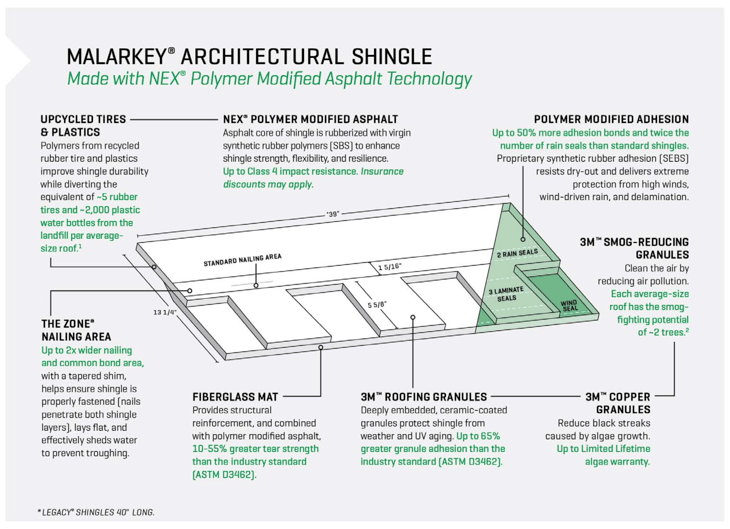
- Built with multiple layers bonded together: Architectural shingles are made by laminating (bonding) more than one layer of asphalt shingle material together, which creates a stronger, more reinforced shingle compared to a single-layer design. This layered build is also what gives them their more premium look and performance.
- Thicker and heavier than 3-tab shingles: Because they’re laminated, architectural shingles are physically thicker and heavier, which usually means they hold their shape better over time, are less prone to lifting or fluttering in wind, and offer better long-term durability in normal wear conditions. Many architectural shingles offer impact-rated protection, making them a great choice for storm-prone regions.
- A more dimensional look: Architectural shingles are designed to look textured and layered, not flat. That added depth creates shadow lines and variation that can make a roof look more modern or high-end, and less “patterned” (repetitive) than 3-tab shingles.
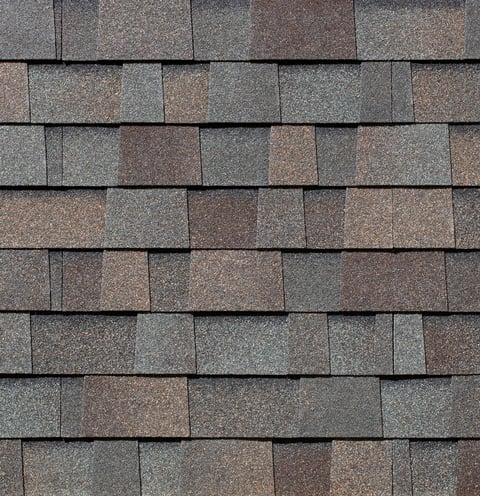
A photo of one of Malarkey's asphalt shingle options is included below:
3-tab shingles
3-tab shingles are single-layer asphalt shingles with a flat, uniform look made up of three repeating “tabs” per shingle strip. While they’re not as widely used today, you can still purchase them. Key things to note about 3-tab shingles are:
- Single-layer design: 3-tab shingles are made with one flat layer of asphalt shingle material, which keeps them lightweight and straightforward. Because there’s no laminated reinforcement, they’re generally considered a more basic, entry-level shingle compared to architectural options.
- Flat look with a very uniform, repeating pattern: 3-tab shingles have a clean, consistent appearance because each strip is cut into three identical tabs. That creates a very recognizable “grid” look across the roof, which some homeowners like for its simplicity, but it usually doesn’t have the depth or texture most people want in a modern roof.
- They are much less common today: 3-tab shingles have been phased out in many markets, so fewer manufacturers carry them, and color options can be limited. Some manufacturers still carry them, but they’re not as readily available in the same variety as architectural shingles. That matters because if you ever need a repair, finding matching shingles can be difficult.
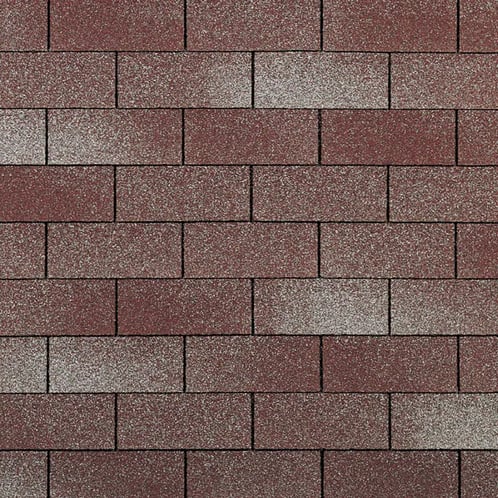
Here is an example of a 3-tab shingle's design, this one is from Owens Corning:
How Do Architectural and 3-Tab Shingles Compare Based on Performance?
When it comes to performance, architectural shingles are generally the stronger choice. They tend to last longer, are more durable (important for storm-prone areas), and maintain their appearance over time. 3-tab shingles can still protect a home, but they’re a more basic shingle with a thinner build, which usually means less durability and fewer advantages outside of simplicity.
We’ll take a look at how they stack up in some of the most important categories to consider when weighing shingle options:
Durability and Lifespan
In general, architectural shingles are built to last longer than 3-tab shingles because they’re thicker and reinforced with layered construction. These layers better withstand impact and hold their shape longer when compared to 3-tab designs. In most cases, homeowners can expect architectural shingles to last around 20-30 years, while 3-tab shingles are often closer to 15-20 years (depending on the roof system, installation quality, and local weather).
While 3-tab shingles can still last a long time in the right conditions, they’re typically a shorter-lifespan option because they’re lighter and less robust by design. If your priority is long-term durability, architectural shingles will have the advantage.
Here is a diagram of Malarkey's architectural shingle construction, showing its layered design:
Wind and Weather Resistance
3-tab shingles are typically less wind resistant than architectural shingles because they’re thinner, lighter, and have more exposed tab edges that wind can lift. As the roof ages, that risk increases even more since the adhesive seals that help hold shingles down can weaken over time (which is true for any type of shingle with age), making it easier for tabs to flap, crease, or break off during storms.
The heavier and more rigid design helps architectural shingles better withstand premature lifting, helping them stay put in windy conditions. This varies by manufacturer and installation quality, but in general, architectural shingles are more secure. If you live in a windy area (or just want strong protection during storms), architectural shingles are the safer bet.
Appearance and Curb Appeal
3-tab shingles have a flatter, more uniform appearance because their design creates a consistent, repeating pattern across the roof. That clean “grid” look can work fine on some homes, but it usually doesn’t add much depth, so it comes down to personal preference.
Architectural shingles are designed to look more dimensional and textured, with layered construction that creates natural shadow lines and variation. That added depth typically gives the roof a more modern, higher-end look, and it can make a home’s exterior feel more updated without changing anything else.
While curb appeal is subjective and depends on the home’s style, architectural shingles are generally the better choice if you want your roof to have more depth, appear less repetitive, and look more premium from the street. 3-tab shingles are best if you prefer a simpler, more uniform look.
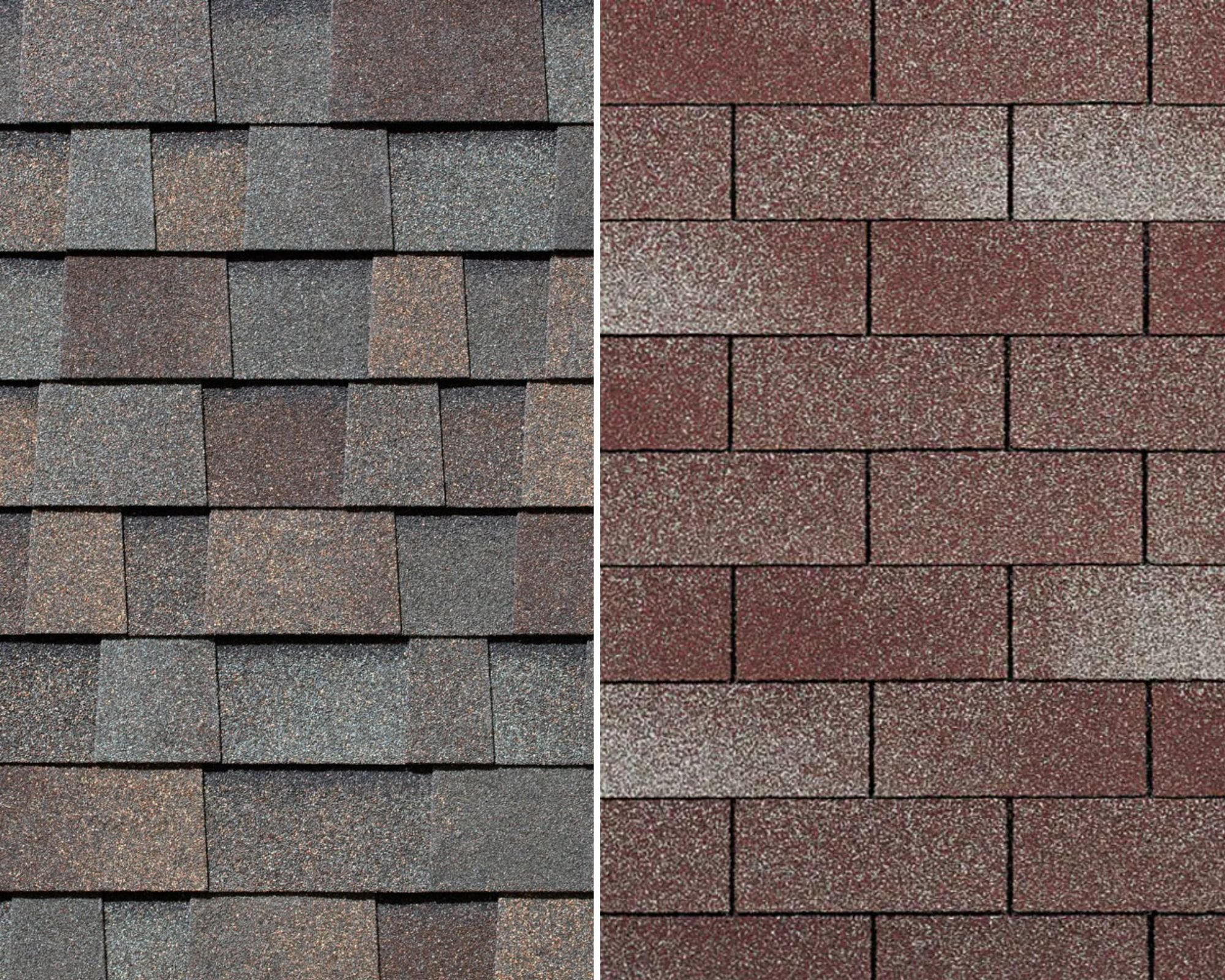
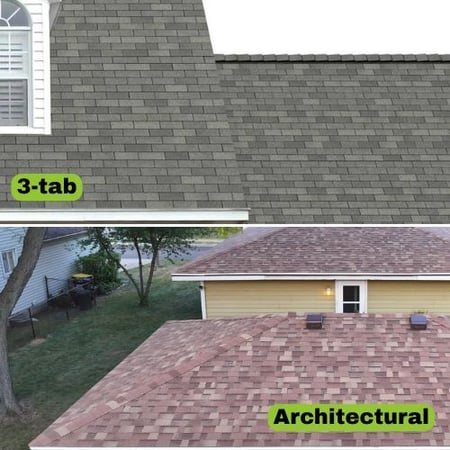
The photo here shows the difference in appearance between the two (the 3-tab image was sourced from Owens Corning's website, and the asphalt shingle example is from a job we personally completed using Malarkey architectural shingles):
Weight and Material Composition
3-tab shingles are thinner and lighter because of their single-layer design. That lighter build makes them easier to handle and install, but it also means they don’t have as much rigidity or “mass” working in their favor when it comes to long-term durability.
Architectural shingles are heavier due to their laminated construction. That added thickness and weight generally improve how they hold up against things like wind uplift, everyday wear, and overall aging over time.
Architectural shingles typically feel more rugged and durable, while 3-tab shingles are a lighter, more basic asphalt shingle option. If your main priority is durability, architectural shingles should be your go-to.
Manufacturer Warranties
Warranties themselves vary a lot by brand and product line, so there isn’t one universal rule that applies to every shingle. In general, architectural shingles are considered a higher-tier product, so they sometimes come with stronger warranty options than basic 3-tab shingles.
That doesn’t automatically mean they’re “twice as good,” but it usually reflects the fact that manufacturers expect architectural shingles to deliver better long-term performance. That said, the best warranty on paper doesn’t always translate to the best real-world outcome.
Things like installation quality, proper attic ventilation, and overall roof system design can make or break how well your roof performs, regardless of what the warranty says. To learn more about what goes into the longevity of a roof, you can read our article What Really Makes a Roof Last? A Homeowner’s Guide to a Long-Lasting Roof Replacement.
How Does the Cost of 3-tab Shingles Compare to Architectural Shingles?
Because 3-tab shingles have been largely phased out and supply is more limited, that can push pricing up to the point where they’re often close to (or even on par with) architectural shingles.
In fact, we’ve even seen real examples where a 3-tab shingle costs more per bundle than an architectural shingle from the same manufacturer. Before we get into those details, it’s important for us to clarify that these prices vary from contractor to contractor. This is mainly due to factors like supplier relationships, bulk purchasing volume, and what pricing tier a contractor has access to.
In other words, two homeowners can choose the exact same shingle and still get two different material prices depending on who’s quoting the job, but our personal pricing example will provide a reference point to compare the cost difference between products, as those differences themselves typically remain similar across the board.
Architectural vs. 3-Tab Cost Comparison
When it comes to installation, architectural shingles and 3-tab shingles are installed using the same general roofing process, so labor costs usually aren’t dramatically different just because you choose one shingle style over the other.
Where things vary is the material pricing, with some homeowners assuming 3-tab shingles are always the “budget” option. In reality, that’s not always true anymore.
For example, in our pricing research through our supplier, we saw:
- GAF Timberline (architectural shingle with a Class 4 impact rating) is priced around $40.75 per bundle
- GAF Royal Sovereign (3-tab shingle with no impact rating) priced around $44.57 per bundle
So even within the same manufacturer, a 3-tab shingle can sometimes cost more than an architectural shingle. This is partly because 3-tab shingles have been phased out by many manufacturers, which limits supply and keeps pricing from dropping the way people expect.
Before comparing prices too closely, it’s also worth noting that material costs can vary by contractor depending on things like supplier pricing tiers, purchasing volume, and local availability, so your actual quote may look different. For this example, we provided what our real-world cost would be if we were quoting a job with these materials.
Note: We are a Malarkey Certified installer here at Happy Roofing, but hold no certifications from GAF. This is important to call out because it’s possible that a contractor who does have certifications through a manufacturer may get different pricing. We didn’t use Malarkey Roofing Products shingles for this example, as they don’t offer 3-tab shingles.
Expected Maintenance and Repairs Over Time
In some cases, 3-tab shingles can cost less upfront, but that doesn’t automatically make them the better investment over time. The long-term cost difference is important to consider if you plan on staying in your home long-term.
3-tab shingles can cost more over time because:
- They’re more vulnerable to wind and impact damage, especially as the roof ages
- Repairs may be needed more often after severe weather events (lifting, creasing, missing shingles)
- Even in areas that don’t see severe weather throughout the year, their lifespan is typically shorter than that of architectural shingles.
How Can You Decide Which Shingle Type is Best for You?
For most homeowners, architectural shingles are the better choice because they offer stronger performance, better curb appeal, and usually better long-term value (and this is apparent in their popularity today).
However, 3-tab shingles can still make sense in specific situations, like matching an existing 3-tab roof, choosing a simpler, more uniform look, or for smaller structures like sheds. Choosing the right shingle for you depends on your long-term goals as a homeowner.
It’s important to look at the key differences between both shingle types when making the decision that’s best for you:
| Category | Architectural Shingles | 3-Tab Shingles |
|---|---|---|
| Durability & Lifespan | Better long-term durability and thicker construction; typically last 20-30 years | More basic, typically shorter lifespan; typically last 15-20 years |
| Wind Resistance | More secure in high winds (heavier and more rigid) | More prone to lifting over time |
| Appearance / Curb Appeal | Dimensional, modern look with a wide variety of appearance options | Flat, uniform “grid” look, not as readily available today |
| Cost Difference Today | Often only slightly higher than 3-tab, but not in every case | Not always cheaper due to limited supply |
| Repair / Matchability | Easier to find and match in most cases | Can be harder to match due to fewer colors/options |
When to Choose Architectural Shingles
Architectural shingles are usually the right move if you want:
- Better durability and longer lifespan
- Better wind resistance and storm performance
- A more modern, dimensional look
- Stronger long-term value, as they typically last longer
- Easier color and style matching for future repairs
When to Choose 3-Tab Shingles
3-tab shingles are usually only the best choice if:
- You prefer a simple, flat, uniform look
- You’re trying to match an existing 3-tab roof
- You’re primarily focused on budget, and found a meaningful cost difference in your quote
Choosing the Best Shingle for Your Budget and Goals
In most cases, architectural shingles are the better long-term investment. They typically last longer, handle the environment better, and offer a more dimensional look that most homeowners prefer. That said, 3-tab shingles can still make sense in certain situations, especially if you’re trying to match an existing 3-tab roof or you genuinely prefer a simpler, uniform appearance.
If you’re considering a roof replacement and want to explore the variety of architectural shingle options available, check out our next article: What Are the 3 Best Asphalt Shingles for Homes in Illinois? In it, we highlight our top choices for asphalt shingles for homes in Northern Illinois, giving you a good starting point when starting your research on manufacturers and specific shingles.
If you want help comparing shingle options for your roof specifically, schedule a non-commitment consultation with our team, where we’ll walk you through your options, give you our recommendations, and show you examples of the shingle styling options we offer so you can decide if they’re right for you.