What Should Be Included in a Roofing Contract?
.jpg?width=1200&height=900&name=Title%20Cover%20Template%20(7).jpg)
Signing a roofing contract is one of, if not the most important, steps in the roof replacement process, but it’s not always clear what you should be looking for before you sign. Without understanding what's included or what's missing, it can be difficult to compare contractors, set expectations, or know whether you're agreeing to a fair contract.
At Happy Roofing, we've completed hundreds of roof repairs and replacements throughout the greater Naperville area. Every project starts with a roofing contract, and we've seen firsthand how a clear, detailed agreement helps homeowners understand exactly what to expect before work begins.
In this article, you'll learn the essential sections every roofing contract should include, why each one matters, and what red flags to watch for before signing. By the end, you'll know what to expect from a professional roofing contract and feel more confident evaluating any agreement you're presented with so your roofing project can go as smoothly as possible.
Key Takeaways
- A well-written roofing contract should clearly define the scope of work, materials, pricing, warranties, timeline, and each party's responsibilities so there are no surprises once the project begins.
- If important information is missing, ask questions before signing. Some details may appear in separate documents, but critical terms should always be documented in writing.
- Watch for common contract red flags, such as vague scopes of work, missing material specifications, unclear payment schedules, incomplete warranty information, or pressure to sign immediately.
- Never sign a roofing contract until you fully understand it. A reputable contractor should take the time to answer your questions, explain the agreement, and give you the opportunity to review it without pressure.
- If you've already signed a contract and have concerns, you may still have options. Review the agreement carefully, understand your rights, and learn what steps you can take if you believe the contract isn't in your best interest.
Table of Contents
- What Every Roofing Contract Should Include
- The Biggest Roofing Contract Red Flags
- What You Should Do Before Signing a Contract
- What to Do If You Want to Get Out of a Signed Contract
What Should Every Roofing Contract Include?
Every roofing contract should clearly outline the scope of work, materials being installed, project costs, payment terms, warranties, and the responsibilities of both the homeowner and the contractor.
A well-written contract helps prevent misunderstandings, establishes clear expectations, and gives both you and your contractor a shared understanding of what's included in the job.
While every roofing project is different, most professional roofing contracts should include the following information:
-
Scope of work: A detailed description of the work being performed, whether it's a repair, partial replacement, or full roof replacement. The scope should be broken down into clear line items in your quote so you know exactly what work is, and isn't, included in the final cost.
-
Materials and products: The manufacturer, product line, color, and type of roofing materials being installed, along with any underlayment, flashing, ventilation components, or other products included in the project. Specific materials should also be laid out in the quote alongside the scope of work.
-
Project cost and payment terms: The total contract price, payment schedule, accepted payment methods, financing details (if applicable), and any conditions that could result in additional costs should be clearly explained.
-
Project timeline: You should be made aware of the estimated start date, expected completion timeframe, and information about factors (such as severe weather or material delays) that could affect the schedule.
-
Warranties: Details about both the manufacturer's material warranty and the contractor's workmanship warranty, including what's covered and for how long, should be clearly outlined.
-
Permits and code compliance: A reputable contractor should outline who's responsible for pulling permits, scheduling any required inspections, and completing the work according to local building codes. This ensures your roof is installed safely and legally.
-
Property protection and cleanup: How the contractor will protect your landscaping, siding, windows, and driveway during the project, along with what's included in the final cleanup.
-
Change orders: Your contract should explain how unexpected repairs or changes to the original scope of work will be documented, approved, and priced before additional work begins. For example, the condition of your roof decking often can't be fully assessed until the old shingles are removed. If damaged decking is discovered, the contract should outline the cost per sheet to replace it so you have a clear understanding of any potential additional costs before you sign anything.
-
Cancellation terms: Your contract should explain when and how either party can cancel the agreement, along with any applicable deadlines, fees, or obligations. Understanding these terms upfront can help you avoid surprises if plans change before the project begins.
Understanding these sections will make it much easier to compare roofing contractors and identify contracts that are thorough, transparent, and written with the homeowner in mind.
What If My Roofing Contract Is Missing Some of These Items?
A missing item doesn't automatically mean your contractor is untrustworthy, but it does mean you should ask some questions before signing.
Not every roofing contract is formatted the same way, and some contractors include certain details in a separate quote, proposal, or product specification sheet instead of together with the contract itself. However, if important information is missing entirely, it's worth asking for clarification before moving forward.
Here's what you should do:
-
Ask where the information can be found: Some details, such as material specifications or the scope of work, may be listed in an attached or separate proposal rather than the contract itself.
-
Request that important details be added in writing: If something you've discussed isn't documented, ask for it to be included in the contract or another signed document. Verbal promises can easily be forgotten or misunderstood, and are difficult to prove.
-
Be cautious of vague answers: A reputable contractor should be willing to explain their contract and update the agreement if necessary. If you're repeatedly told, “Don't worry about it,” without anything being documented, consider that a red flag.
What Are the Biggest Red Flags in a Roofing Contract?
If key information is vague or missing from your roofing contract, it’s a sign you should reconsider or at least ask more questions before signing. A contract should never leave important details open to interpretation.
Some of the most common roofing contract red flags include:
-
Vague scope of work: If the quote included in the contract simply says “replace roof” without detailing what's included, you have no accurate idea of what you're paying for. Look for a line-item breakdown of the work and materials that are to be included in your project.
-
Missing material specifications: The contract should identify the manufacturer and products being installed. If it only says “architectural shingles” or “underlayment” without naming the specific products, ask for clarification on what will be used on your home.
-
No explanation of potential additional costs: While no contractor can predict every hidden issue, your contract should explain how unexpected repairs, such as damaged roof decking, will be handled and priced after work begins.
-
Unclear payment schedule: Be cautious if the contract doesn't explain when payments are due or requires full payment before any work begins.
-
Missing warranty information: Both the manufacturer's warranty and the contractor's workmanship warranty should be clearly explained so you know what's covered after the project is complete. If it’s not stated, also be sure to ask who is responsible for registering those warranties.
-
Blank spaces or incomplete information: Never sign a contract with blank sections or information that will be “filled in later.” Every agreed-upon detail should be included in writing before you sign.
-
Pressure to sign immediately: A reputable contractor should give you time to review the contract and ask questions. If you're being told an offer is “today only” or discouraged from reading the agreement carefully, that's a reason to slow down.
Before signing, don't be afraid to ask questions about anything you don't understand. A trustworthy roofing contractor should be willing to explain every part of the agreement so you feel confident moving forward.
What Should You Do Before Signing a Roofing Contract?
Before signing a roofing contract, make sure you read and understand every section of the agreement, and that you feel comfortable asking questions about anything unclear.
A reputable roofing contractor shouldn't expect you to sign a contract you don't fully understand. Instead, they should be willing to explain the scope of work, the materials they're recommending, potential additional costs, and answer any questions you have before asking for your signature.
Before you sign, take some time to follow the steps below:
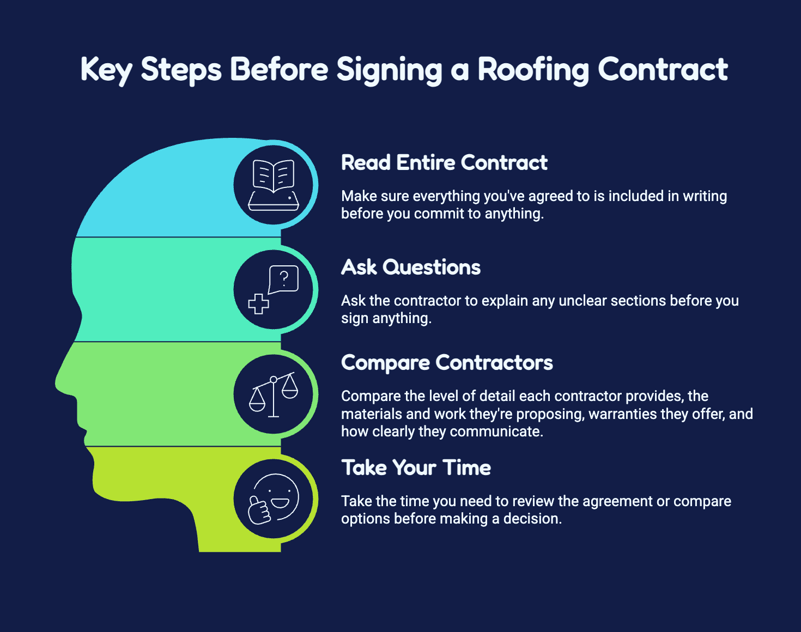
What Should You Do If You Think You've Signed a Bad Roofing Contract?
If you think you've signed a bad roofing contract, review the agreement carefully, ask your contractor for clarification, and understand your legal rights before deciding what to do next. If you've reviewed a contract you already signed and noticed missing information, vague language, or terms that don't match what was promised, there are steps you may be able to take to protect yourself even after you’ve signed.
To learn what your options are after signing, read our guide, Can You Cancel a Roofing Contract After Signing It? We'll explain when homeowners may have the legal right to cancel, Illinois' three-day right to cancel, how insurance claims can affect your contract, and what to do if you believe you were pressured into signing a contract.
If you're still comparing your options and you'd like a professional assessment of your roof, we offer no-commitment roof consultations meant to give you a clear understanding of your roof's condition, your options, and the work your home actually needs.