Why Does My Roof Look Wavy or Uneven?
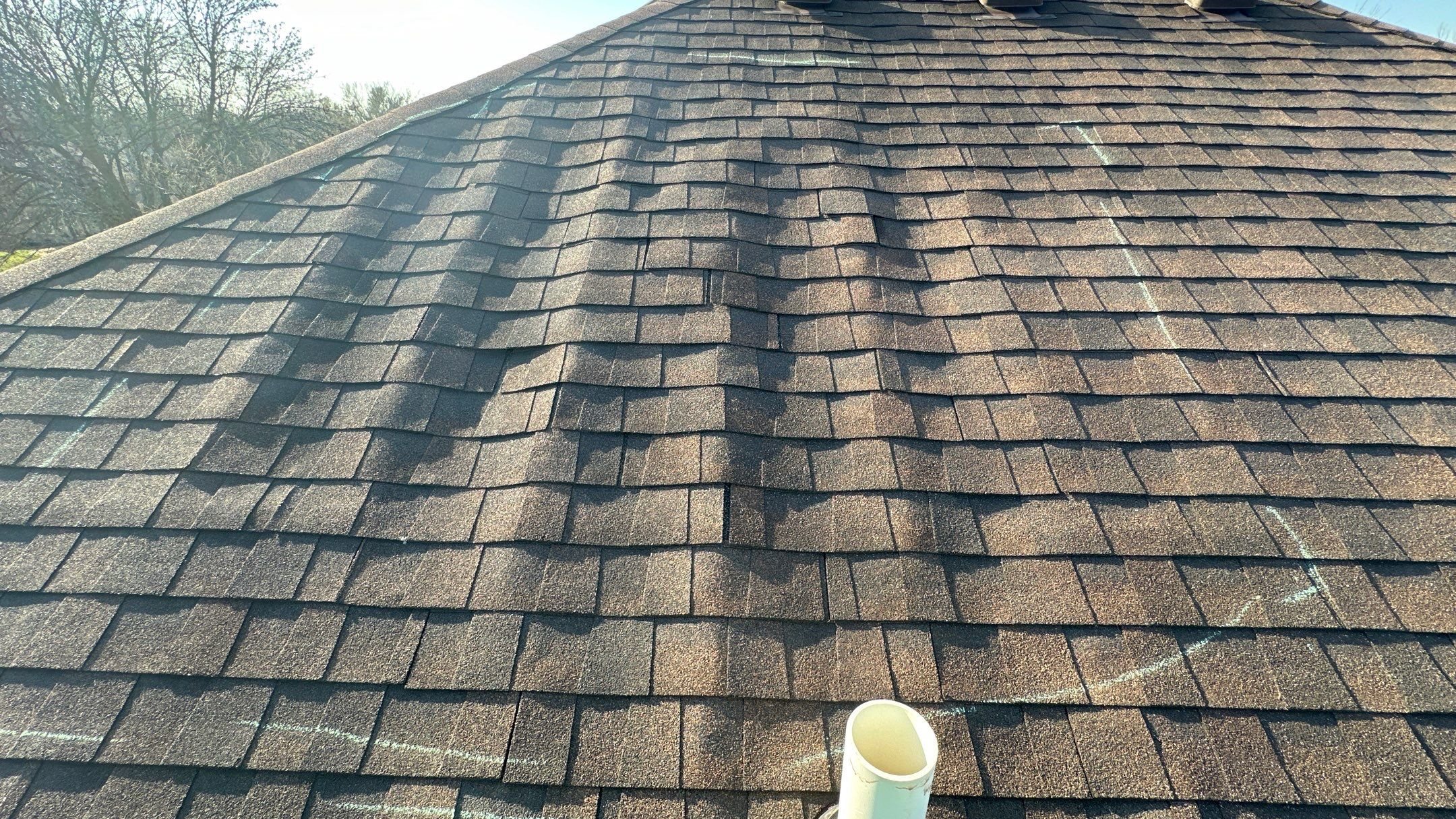
Have you ever looked up at a roof, or even your own, and noticed that some of the shingles appear to ripple, bulge, or sit higher than the others?
A wavy-looking roof doesn't always mean there's a serious problem, but it can sometimes point to issues with the roofing materials, installation, or the wood underneath. Either way, it's reasonable to wonder whether something is wrong beneath the shingles and if you should be concerned about leaks or other damage.
At Happy Roofing, we've helped hundreds of homeowners throughout the greater Naperville area identify roofing problems, understand what's causing them, and explore their options for addressing them.
In this article, we'll explain what can cause a roof to look wavy or uneven, how to tell when it's worth investigating, and whether fixing the problem requires repairs or a full roof replacement.
Key Takeaways
-
Minor unevenness on a newly installed roof may improve after several warm, sunny days, but persistent or worsening waves deserve attention.
-
Wavy shingles can have several underlying causes. Uneven roof decking, wrinkled underlayment, moisture buildup, poor attic ventilation, and installation mistakes can all contribute to an uneven appearance.
-
Minor or localized problems may require little or no repair, while widespread decking damage or other underlying issues could make replacement the better option.
-
New or worsening waves, lifting shingles, visible sagging, or signs of water damage warrant a professional inspection. Avoid climbing onto the roof yourself, especially if weakened decking or structural damage may be present.
Table of Contents
- Is It Normal for a Roof to Look Wavy or Uneven?
- What Causes Roof Shingles to Look Wavy?
- How Can You Tell if a Wavy Roof Is a Serious Problem?
- Does a Wavy Roof Need to Be Repaired or Replaced?
- What Should You Do if Your Roof Looks Wavy?
Is It Normal for a Roof to Look Wavy or Uneven?
Some minor unevenness can be normal, particularly on a newly installed roof, but noticeable waves, raised sections, or areas that appear to sag shouldn't be ignored.
Asphalt shingles are flexible roofing materials that follow the surface underneath them. If the roof decking isn't perfectly even, or the underlayment beneath the shingles has wrinkles, those imperfections may show through on the finished roof.
Certain architectural asphalt shingles also have a layered design that creates a textured appearance. Depending on the sunlight and viewing angle, this can make a roof look less uniform without indicating an actual problem.
However, there's a difference between a roof that looks slightly uneven and shingles that are visibly lifting, buckling, or forming ridges. It's important to understand what's causing the appearance and whether it has changed over time.
Why Do New Roofs Sometimes Look Wavy?
Asphalt shingles have adhesive strips that use warmth from the sun to bond the shingles together after installation. When a roof is freshly installed, especially in colder weather, this sealing process can take longer, and the shingles may also be less flexible, causing some to sit unevenly.
Newly installed asphalt shingles may look slightly uneven at first, especially in colder weather. Under warm, sunny conditions, minor unevenness can improve within a few days as the shingles become more flexible and settle into place.
However, noticeable waves or ripples shouldn't automatically be considered normal settling, especially if they persist after a few days or after warmer weather arrives.
If your new roof has noticeable ripples or raised areas that last past a reasonable settling period, contact the contractor who installed it and ask them to evaluate the cause rather than assuming it will correct itself.
What Causes Roof Shingles to Look Wavy?
The most common causes of wavy-looking shingles include uneven roof decking, wrinkled underlayment, moisture-related movement, and installation problems.
Because shingles follow the shape of the materials beneath them, a visible wave doesn't always mean the shingle itself is defective. Below we'll cover the most common reasons your roof may appear uneven.
Uneven or Warped Roof Decking
The roof decking is the layer of plywood or oriented strand board (OSB) attached to your roof's framing. It creates the solid surface that supports the roofing materials, serving as the roof’s foundation.
If the decking is warped, uneven, or has expanded at the joints between panels, the shingles installed over it can follow those irregularities. This can create visible ridges or waves, sometimes in straight lines that correspond to the edges of the decking panels.
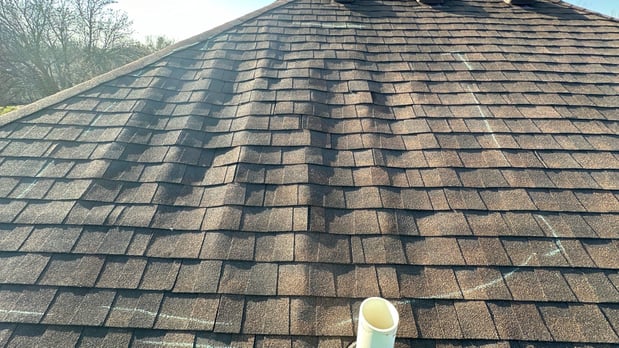
Decking can become uneven for several reasons, with the most common being moisture exposure, poor ventilation, improper installation, or deterioration over time. Significant sagging or deterioration requires a closer evaluation because it may indicate that the decking has weakened and can no longer properly support the roofing materials above it.
Below is an example of more severe deck warping we came across on a previous project of ours:
Wrinkled Roofing Underlayment
Underlayment is the protective layer installed between the roof decking and the shingles. If certain types of underlayment become wet, wrinkle during installation, or don't lie flat against the decking, those wrinkles may show through the shingles above.
Wrinkles in the underlayment typically originate during installation, but they can also develop or worsen as a roof ages. Moisture buildup in the attic, movement in the roof decking, or water intrusion from ice dams can contribute to shifting or buckling beneath the shingles.
This can create raised lines or ripples across the roof surface, even if the shingles themselves were installed correctly.
Wrinkled underlayment can create more than just a cosmetic problem. When the wrinkles prevent shingles from lying flat, they can interfere with proper sealing, making the shingles more vulnerable to wind damage and water intrusion. Over time, the added stress may also cause the affected shingles to wear out prematurely.
Because the severity depends on how much the underlayment has buckled and whether the shingles are still properly sealed, a roofing contractor should inspect the affected area to determine whether repairs are necessary.
Moisture and Poor Attic Ventilation
Excess moisture beneath your roof can cause wood decking to expand, shift, or deteriorate over time.
If warm, moist air from your home enters the attic and isn't adequately managed through proper attic ventilation, condensation can develop on colder surfaces, including the underside of the roof decking. Over time, repeated moisture exposure can contribute to changes in the wood that become visible through the shingles.
Poor attic ventilation is something we frequently see signs of during our roof inspections in Northern Illinois. While it doesn't always lead to visibly uneven shingles, prolonged moisture exposure can cause the decking to swell or warp, creating an uneven surface beneath the roofing materials.
If moisture is contributing to the problem, simply replacing the affected shingles won't address the underlying cause. The moisture issue needs to be identified and corrected to help prevent further damage.
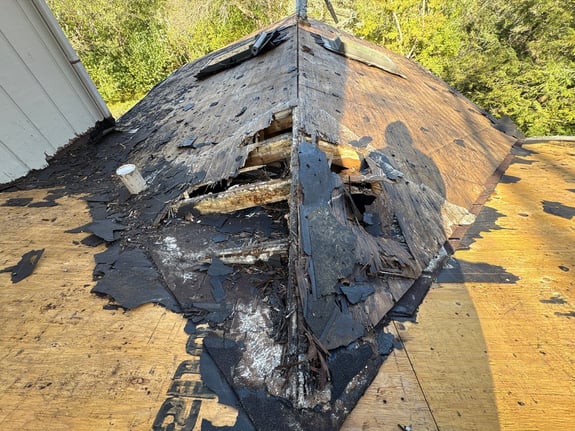
Here we've included a photo that shows how poor ventilation and moisture buildup can rot the roof decking over time:
Improper Shingle Installation
Installation mistakes can sometimes cause shingles to buckle, lift, or appear uneven.
Examples include:
- Improperly driven nails. Nails that aren't seated correctly may prevent shingles from lying flat. This can cause visible inconsistencies in the roof, as well as lead to moisture intrusion that can lead to more severe issues like deck warping.
- Uneven installation surfaces. Installing new shingles over wrinkles, debris, or damaged materials can create raised areas and lead to premature issues like leaks and accelerated wear.
- Installing shingles over an existing roof. If new shingles are installed over an uneven layer of old roofing (commonly referred to as a roof overlay), imperfections underneath may remain visible.
Not every uneven shingle indicates poor workmanship. However, if the appearance developed immediately after installation and doesn’t appear to get any better with time, it's worth having the installing contractor, or even a separate contractor, check over their work.
Aging or Damaged Shingles
As shingles age, they can become brittle, curl at the edges, or lose their ability to lie flat. Wind damage can also lift or crease individual shingles, creating an uneven appearance.
This often looks different from the broad waves caused by decking or underlayment problems. Instead of long ridges across the roof, you may notice individual shingle corners curling upward, tabs lifting, or isolated sections of shingles that no longer sit properly.
If you're noticing these changes alongside missing shingles, granule loss, or leaks, it may be a sign that the roofing materials are deteriorating. This could simply be due to the age of the roof, but accelerated wear could also indicate underlying issues like poor ventilation, which can trap excessive heat beneath the roof and contribute to premature shingle aging.
How Can You Tell if a Wavy Roof Is a Serious Problem?
A wavy roof deserves closer attention when the unevenness is getting worse, many shingles are visibly lifting or missing, the roofline appears to sag, or you're noticing signs of water damage.
Some roof irregularities can be primarily cosmetic, while others can indicate moisture damage, installation problems, or structural concerns.
From the ground, look for these warning signs:
- Waves that are becoming more noticeable. Changes over time may indicate movement or deterioration beneath the shingles rather than a long-standing cosmetic irregularity.
- Shingles that are lifting or separating. Raised edges or gaps can make roofing materials more vulnerable to wind damage and water intrusion.
- Large dips or sagging sections. A roofline that visibly bends or sags may indicate a problem with the decking or structural framing.
- Water stains on ceilings or in the attic. Signs of moisture inside the home suggest that the issue may be more than a cosmetic concern.
- Uneven areas appearing after a recent roof replacement. New waves may be related to installation conditions or materials beneath the shingles and should be checked by the installing contractor if they don’t improve over time.
It's important to remember that you generally can't determine the exact cause of a wavy roof just by looking at it from your driveway. A roofing inspection can help identify whether the problem involves the shingles, underlayment, or decking.
Does a Wavy Roof Need to Be Repaired or Replaced?
A wavy roof doesn't automatically need to be replaced. The appropriate solution depends on what's causing the unevenness, how widespread the issue is, and whether the roofing system is still performing properly.
In some cases, no immediate repairs may be necessary. For example, minor unevenness on a newly installed roof may improve as the shingles settle into place after several warm, sunny days.
However, if the unevenness is caused by problems beneath the shingles, repairs may be more involved. Wrinkled underlayment may require removing the affected shingles to correct the issue, while warped or deteriorated roof decking may need to be replaced before new roofing materials can be installed.
If the damage is limited to a small area, a targeted repair may be enough. But if the problem affects large sections of a roof, a full replacement may be the more practical and cost-effective option.
Ultimately, the right solution depends on what's causing the unevenness, not just how the roof looks from the outside. Addressing the underlying problem is what helps prevent the same issue from returning and needlessly spending money on temporary solutions.
What if Your Roof Was Just Replaced?
If your new roof looks noticeably wavy, contact the contractor who installed it before hiring someone else to make repairs.
Take clear photos from the ground, note when you first noticed the unevenness, and ask the contractor to inspect the affected areas. They should be able to explain whether the appearance is related to normal shingle settling, the materials, or an installation issue that needs correction.
What Should You Do if Your Roof Looks Wavy?
If you've noticed waves or uneven shingles on your roof, the next step is to determine whether they're a temporary appearance issue or a sign of damage that needs attention.
A roofing contractor can examine the affected areas, identify what's causing the unevenness, and determine whether repairs are necessary. Avoid climbing onto the roof to investigate the problem yourself, especially since the unevenness could indicate weakened decking or other structural concerns that make walking on the roof unsafe.
If you've noticed waves or raised sections on your roof and aren't sure what's causing them, schedule a no-commitment roof consultation with our team. We'll inspect your roofing system, explain what we find, and help you understand your options, whether you decide to partner with us or not.