Why Does My Roof Keep Losing Shingles?
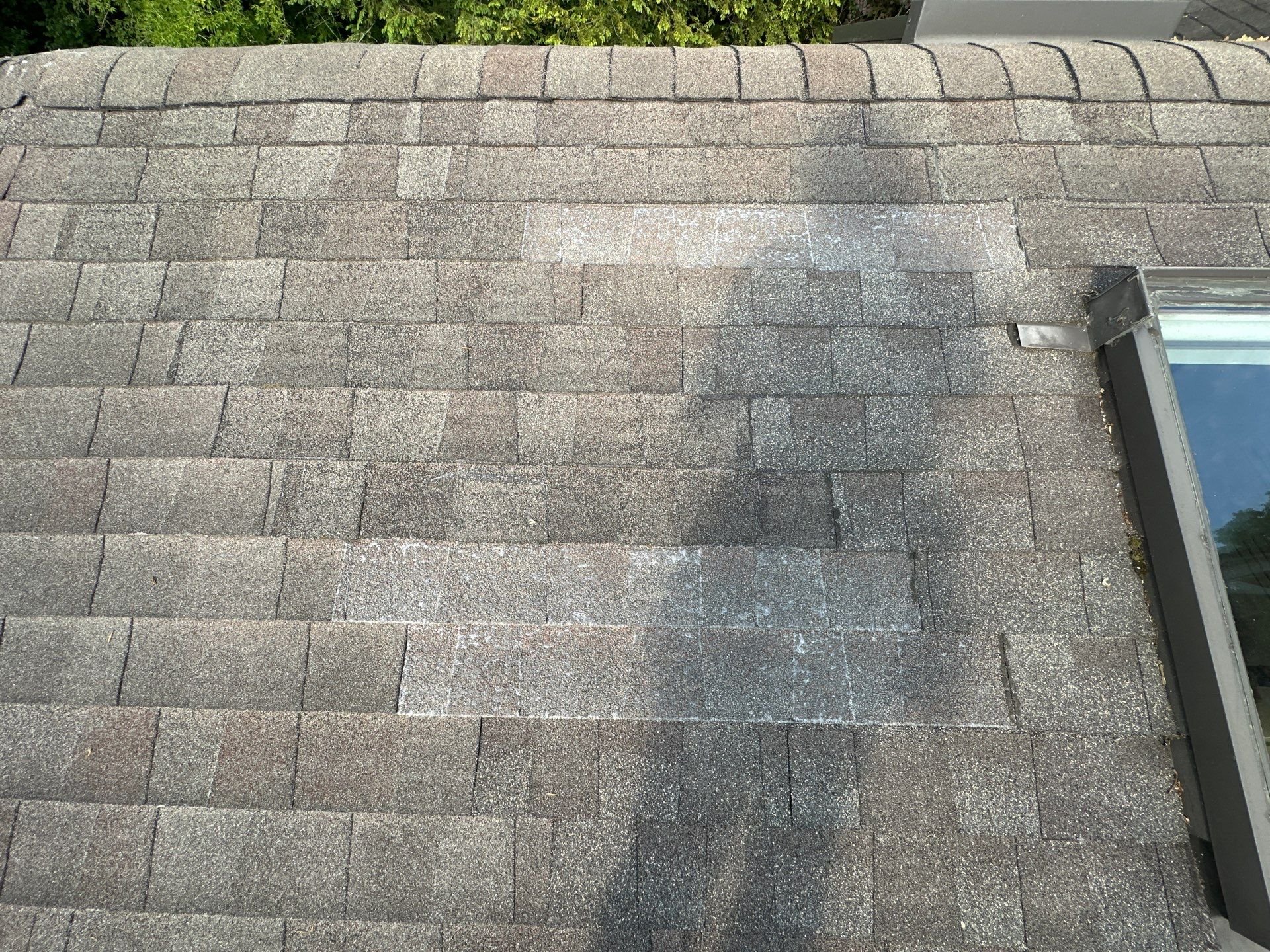
If you've noticed that your roof keeps losing shingles after storms or windy weather, it's usually a sign that there's an underlying issue affecting the performance of your roofing system.
While a few missing shingles may not seem like a major problem at first, repeated shingle loss can leave your roof vulnerable to leaks and moisture intrusion, and could lead to more extensive damage over time.
At Happy Roofing, we've inspected hundreds of roofs throughout the greater Chicagoland area, and recurring shingle loss is a relatively common concern homeowners call us about, especially after storms.
In this article, you'll learn:
- What causes roof shingles to keep falling off
- When missing shingles become a concern
- Whether repairs or replacement make more sense
- How to help prevent shingle loss
By the end, you'll have a better understanding of why shingles repeatedly come loose and what steps may help protect your roof moving forward.
Key Takeaways
- Missing shingles are often a symptom of a larger roofing issue. Common causes include storm damage, improper installation, aging materials, poor attic ventilation, and underlying roof deterioration.
- Recurring shingle loss should not be ignored. While a single missing shingle may not be an emergency, repeated shingle loss can expose the roof to water intrusion and may indicate broader roofing problems that require professional evaluation.
- Repairs aren't always the best long-term solution. Whether a roof should be repaired or replaced depends on factors such as roof age, extent of damage, shingle availability, surrounding material condition, and how often repairs are needed.
- Prevention starts with proper installation and maintenance. Quality workmanship, adequate attic ventilation, routine inspections, and addressing minor issues early can help reduce the risk of future shingle loss.
- Focus on identifying the root cause, not just replacing shingles. Repeatedly patching missing shingles may only provide temporary relief if underlying issues like ventilation problems, installation defects, or roof deterioration remain unresolved. A thorough inspection can help identify the source of the problem and lead to a longer-lasting solution.
Table of Contents
- What Causes Roof Shingles to Fall Off?
- Can Missing Shingles Be Repaired?
- Can You Prevent Shingles From Blowing Off?
- What to Do If Your Roof Is Missing Shingles
What Causes Roof Shingles to Fall Off?
Roof shingles usually lift and fall off because of storm damage, aging materials, improper installation, ventilation problems, or underlying roof deterioration.
In many cases, the missing shingles themselves are not the root problem. They're often a symptom of a larger issue affecting how well the roof system is performing overall.
Some of the most common causes include:
- Storm and wind damage: Strong winds like those that we get in the Chicagoland area can loosen or completely remove shingles, especially during severe storms. Older shingles or cheaper shingles with low-quality adhesive are often more vulnerable because they can be more prone to becoming brittle and breaking down over time.
- Improper installation: Incorrect shingle nailing patterns (like nails that miss the dedicated shingle nail zone), poor sealing, or installation shortcuts can make shingles much more likely to prematurely loosen or blow off during windy conditions.
- Aging roofing materials: As shingles age, they naturally lose flexibility, adhesive strength, and granules (the protective coating that gives asphalt shingles their color), making them less resistant to wind and weather exposure.
- Poor attic ventilation: Excess heat and trapped moisture in the attic can prematurely age roofing materials and reduce the lifespan of shingles significantly. Poor ventilation is one of the most common causes of lifting shingles that we've seen in recent years.
- Underlying roof deterioration: Damaged roof decking (the wooden foundation of your roof) or long-term moisture issues beneath the shingles can weaken sections of the roofing system and affect how securely shingles remain attached.
Because several different problems can cause shingles to repeatedly come loose, it's important to diagnose and identify the underlying issue instead of simply replacing missing shingles every time it happens.
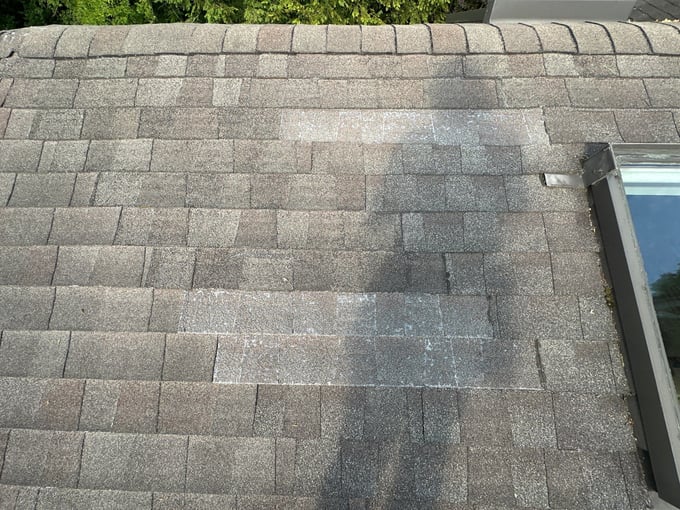
Below is an example of an aging roof with pretty heavy shingle wear:
Should You Be Concerned About Missing Roof Shingles?
Missing shingles should be taken seriously anytime they expose the roof to potential water intrusion or become a recurring problem after storms. While missing shingles should be addressed quickly, they're typically not an immediate emergency if they're not accompanied by any structural damage to materials like the roof decking.
A single missing shingle after a major windstorm may not always indicate widespread roof failure; however, repeated shingle loss or visible roof deterioration often signals a larger issue that deserves closer attention.
Some signs it may be time for a professional roof inspection include:
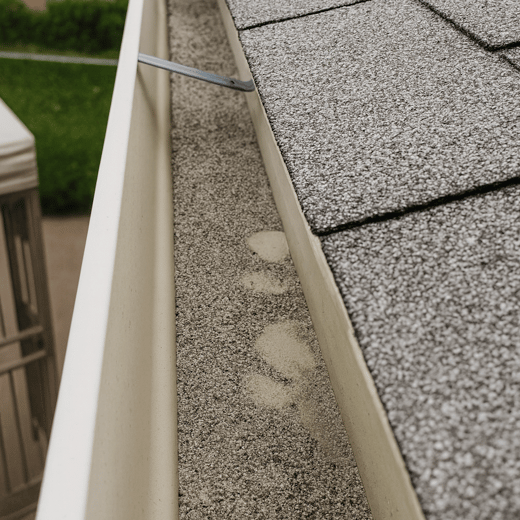
- Granules are heavily shedding from the shingles. This can look like piles of sand-like particles accumulating in gutters or downspouts.
- Shingles around the perimeter of the home
- You notice exposed underlayment or roof decking from the missing shingles
- Sections of the roof appear curled, cracked, warped, or brittle
- Water stains or leaks are appearing inside the home
The longer any missing shingles are left unaddressed, the greater the risk of moisture intrusion and more expensive repairs later. One missing shingle won't degrade your entire roofing system, but it's a sign that an inspection should be scheduled to assess the health of your roof.
Below is what excessive granule loss can look like when the granules collect in the gutter system:
Can Missing Shingles Be Repaired, or Do You Need a Roof Replacement?
The best way to remedy missing shingles depends on the underlying cause and the extent of the damage. In some cases, missing shingles can be repaired successfully. In others, recurring shingle loss may indicate that a larger roof replacement should be considered.
The right solution often depends on:
- The age of the roof: Older roofs (generally after the 15-year mark) are generally more vulnerable to recurring shingle loss because shingles naturally weaken, become brittle, and lose adhesive strength over time.
- The extent of the damage: A few missing shingles in one isolated area may be repairable, while widespread damage across multiple sections of the roof can indicate larger system deterioration, or require so many different isolated repairs that an entire replacement may be the more cost-effective long-term solution.
- Whether shingles are still available for matching: Some older shingle styles or colors may no longer be manufactured, making repairs more difficult or costly to blend in visually with the existing roof. If no close match is found and aesthetics are important, it may be better to replace the roof.
- The condition of the surrounding roofing materials: Even if only a small section is damaged, nearby shingles or underlying materials may also be worn, loose, or nearing failure, which can limit how effective a repair will be long-term.
For newer roofs with limited storm damage, replacing a few shingles may be all that's needed. However, if shingles continue blowing off repeatedly, the roof is older, or the surrounding materials are deteriorating, repairs may only provide a temporary solution.
A professional inspection can help determine whether the issue is isolated or part of a larger roofing problem that may need repeated repairs over time. The table below can serve as a quick reference to help get an idea of which option may be best for your situation, but it's no substitute for a professional evaluation:
| Situation | Repair May Make Sense | Replacement May Be Better |
|---|---|---|
| Roof age | The roof is newer and still has many years of expected life remaining. | The roof is older, typically around 15-20+ years, and showing widespread wear. |
| Extent of damage | Damage is isolated to a small area with only a few missing shingles. | Multiple sections of the roof are losing shingles or showing signs of deterioration. |
| Shingle availability | Matching shingles are still available, and repairs can blend in reasonably well. | Matching shingles are discontinued, making repairs difficult or visually inconsistent. |
| Condition of surrounding materials | Nearby shingles and roofing components are still in good condition. | Surrounding shingles are brittle, curling, loose, or nearing failure. |
| Frequency of repairs | This is the first isolated repair issue. | Shingles continue blowing off or repairs are becoming more frequent over time. |
| Long-term cost considerations | A repair can reasonably extend the roof's lifespan without major additional issues expected soon. | Repeated repairs may eventually cost more than replacing the roof entirely. |
How Can You Prevent Roof Shingles From Blowing Off Again?
Preventing future shingle loss often comes down to proper installation, ventilation, routine maintenance, and identifying roofing issues before they worsen.
While no roof is completely immune to severe storm damage, several factors can help improve long-term roof performance:
- Working with a reputable contractor to ensure proper shingle installation and nailing practices
- Making sure the roof has adequate ventilation, with enough airflow to prevent moisture and heat buildup
- Using quality roofing materials suitable for local weather conditions
- Routine roof inspections after major storms, or periodically once the roof passes the 10-15 year mark
- Addressing small roofing issues before they spread
What Should You Do if Your Roof Is Missing Shingles?
If your roof keeps losing shingles, the most important step is identifying the underlying cause instead of repeatedly patching the same issue.
While replacing a few missing shingles may solve the problem temporarily, recurring shingle loss often points to larger concerns involving installation quality, ventilation, aging materials, or roof deterioration, and often requires a more thorough evaluation of the roof. A professional roof inspection can help determine whether your roof simply needs targeted repairs or if a larger roofing issue should be addressed before more damage occurs.
If you'd like help evaluating recurring shingle loss or understanding the condition of your roof, we offer no-commitment roof inspections designed to give homeowners honest recommendations and clear next steps based on the condition of their roofing system, without the obligation to move forward with us.