Why Are Shingle Granules Collecting in My Gutters?
.jpg?width=1200&height=900&name=Copy%20of%20Untitled%20Design%20(2).jpg)
If you’ve recently cleaned your gutters and noticed what looks like coarse sand collecting at the bottom, you may be wondering whether it’s normal or a sign that something is wrong with your roof.
Asphalt shingles are covered with protective granules that naturally shed over time, especially as the roof ages. However, excessive granule loss can sometimes indicate that your roof is deteriorating faster than it should or has been damaged by weather.
At Happy Roofing, granule loss is something we regularly see during roof inspections throughout Naperville and the surrounding area. In many cases, it’s simply part of the aging process. In others, it can be one of the first warning signs that a roof may need repairs or even replacement.
In this article, you’ll learn:
- Why granules can end up in your gutters or downspouts
- When granule loss can indicate a larger roofing problem
- What steps you should take if you’re noticing excessive granule loss
By the end, you’ll have a better understanding of whether the granules you’re seeing are simply part of your roof’s natural aging process or a sign that it’s time to take a closer look at its condition.
Key Takeaways
- Finding some granules in your gutters is normal. Asphalt shingles naturally shed small amounts of granules over time due to weather exposure and aging.
- Excessive granule loss can be a warning sign. Large accumulations of granules, bald spots on shingles, visible asphalt, or granule loss after a hailstorm may indicate underlying roof damage or deterioration.
- Roof age, storms, ventilation, and wind are common causes of accelerated granule loss. These factors can weaken shingles and shorten the lifespan of your roofing system.
- Granule loss alone doesn't necessarily mean you need a new roof. The overall condition of the roof should be considered before determining whether repair or replacement is necessary.
- When in doubt, have your roof inspected. A professional evaluation can help determine whether the granule loss is normal aging or a sign that further action is needed to protect your home.
Table of Contents
- What Are Roof Granules?
- Is It Normal to Find Granules In Your Gutters?
- What Causes Excessive Granule Loss?
- Does Granule Loss Mean You Need a Roof Replacement?
- What to Do If You Notice Granules In Your Gutters
What Are Roof Granules?
Roof granules are the small, sand-like particles embedded into the surface of asphalt shingles. While they may seem insignificant, they play a critical role in protecting your roof from sunlight, weather, and everyday wear and tear.
If you’ve ever looked closely at an asphalt shingle, you’ve likely noticed its textured surface. That texture comes from thousands of mineral granules that are bonded to the shingle during manufacturing. These granules act as a protective outer layer, shielding the asphalt beneath.
Shingle granules are meant to serve several important purposes:
- Protect the asphalt layer from UV rays
- Reduce weather-related wear
- Help shingles withstand years of exposure to the elements
- Provide the shingle color
- Improve fire resistance
Without this protective coating, the asphalt beneath would deteriorate much quicker, shortening the lifespan of the roof and making it more vulnerable to damage.
Is It Normal to Find Granules in Your Gutters?
Finding some granules in your gutters or downspouts is completely normal for an asphalt shingle roof as they shed over time.
Asphalt shingles naturally lose small amounts of granules throughout their lifespan as they are exposed to sunlight, rain, wind, snow, and changing temperatures. In many cases, homeowners won’t even notice this gradual loss until they clean their gutters or see granules collecting near the bottom of a downspout.
However, while some granule loss is expected, excessive amounts can sometimes indicate that a roof is aging or has sustained storm damage.
Here are some common reasons homeowners may notice granule loss:
- Installing a new roof: Newly installed shingles often shed a small amount of excess granules that didn’t fully adhere during manufacturing.
- Heavy rainstorms: Large volumes of water can wash some loose granules from the roof surface into gutters and downspouts.
- Strong wind events: Wind can loosen granules over time, especially on older roofing systems.
- Normal weather exposure: Sunlight, rain, snow, and temperature fluctuations naturally wear shingles over time, causing minor granule loss.
In each of these situations, a small amount of granule accumulation is generally considered normal. Minor shedding alone is not usually a sign that a roof needs repair or replacement. The key is understanding when granule loss moves beyond normal wear and begins to indicate a larger roofing issue.
When Is Roof Granule Loss Considered a Problem?
Roof granule loss becomes a concern when it goes beyond the gradual shedding that’s expected throughout a roof’s lifespan and begins affecting the shingle’s ability to protect the roof beneath it.
As granules wear away, the underlying asphalt becomes increasingly exposed to sunlight, weather, and physical damage. Over time, this can accelerate the aging process and make shingles more vulnerable to cracking, curling, leaks, and other roofing issues.
While a small amount of granule loss is normal, excessive granule loss can sometimes indicate that a roof has been damaged by severe weather, is deteriorating prematurely, or is nearing the end of its useful life.
Roof granule loss may indicate a larger roofing issue when you notice:
- Large amounts of granules collecting in gutters or downspouts: While some accumulation is normal, excessive buildup can indicate accelerated shingle wear or storm-related damage.
- Bald spots on shingles: Areas where the protective granules have worn away entirely leave the underlying asphalt exposed to sunlight and weather.
- Visible asphalt showing through the shingles: If portions of the shingle appear dark, shiny, or smooth compared to surrounding areas, the protective surface may be deteriorating.
- Granule loss following a hailstorm: Hail impacts can dislodge granules and shorten the lifespan of shingles, even when the damage isn’t immediately visible from the ground. If the impact was large enough to knock granules off, it may be worth getting an assessment to make sure your shingles weren’t cracked.
- A roof approaching the end of its lifespan: As older shingles deteriorate, granule loss often becomes more noticeable and may be accompanied by curling, cracking, or other signs of aging.
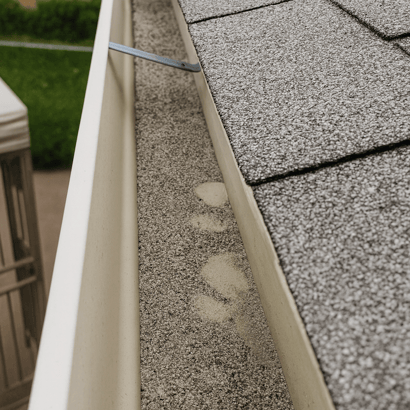
Below is an example of what we'd consider excessive granule loss, with a significant amount collecting in the gutters:
What Causes Excessive Granule Loss?
In many cases, excessive granule loss is the result of weather-related damage, age, poor ventilation, or other factors that place additional stress on the roofing system.
While all asphalt shingles gradually lose granules as they age, certain conditions can accelerate the process and cause the protective surface of the shingle to wear away prematurely. We’ll explain the most common causes of excessive granule loss below.
Poor Attic Ventilation
Many homeowners don’t realize that their attic plays an important role in the health and longevity of their roof. When a roof lacks proper ventilation, excessive heat and moisture can become trapped beneath the roofing system.
During the summer, attic temperatures can climb well above the outdoor temperature, essentially baking the shingles from below. Over time, this prolonged heat exposure can cause shingles to age prematurely, making them more brittle and increasing the likelihood of granule loss.
In addition to excessive granule loss, signs of poor attic ventilation may include unusually high attic temperatures, uneven snowmelt during the winter, excessive moisture, condensation, or mold growth in the attic, and shingles that are curling, lifting, or appear to be aging faster than expected.
To learn more about why proper ventilation is so important when it comes to the health of your roof, read our article How Roof Ventilation Affects Shingle Lifespan, Energy Costs, and Warranty Coverage.
Roof Age
As shingles get older, the adhesive bond holding the granules weakens. Years of weather exposure gradually wear away the protective surface, causing more granules to wash into gutters over time.
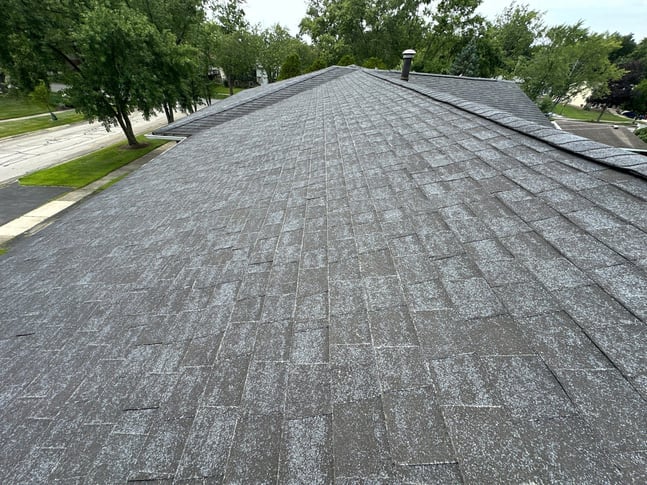
If your roof is approaching 15-20 years old and you’re also noticing curling shingles, widespread discoloration, frequent repairs, or bald spots where the asphalt is visible, granule loss may simply be a sign that the roof is reaching the end of its useful life.
Here is an example of a weathered roof with widespread granule loss:
Hail Damage
Hail impacts can knock protective granules loose when it strikes a roof, even if the shingles don’t appear damaged from the ground. In more significant storms, hail impacts can bruise or crack shingles, leaving them more prone to water intrusion.
A shingle bruise is when the force of the impact damages the asphalt layer beneath the granules, creating a soft spot that can weaken the shingle and accelerate deterioration over time. Because of the strong spring storms we often see around the Naperville area, this is something we commonly see during roof inspections in the stormy season.
Because this type of damage isn’t always obvious, homeowners may not realize their roof has been affected until larger issues like leaks present themselves. If your home was recently exposed to quarter-sized hail or larger, it may be worth having your roof evaluated to determine whether any damage occurred that isn’t visible from the ground.
In the image below, you can see where hail impacted this roof and exposed some of the asphalt beneath the granules:

Wind Damage
Strong winds can loosen shingles and accelerate wear, especially on older roofing systems that are already nearing the end of their lifespan. If shingles flex and lift during wind events, loose granules can be dislodged from the surface and eventually wash into gutters and downspouts.
In more severe cases, wind can crease, crack, or partially lift shingles, exposing them to additional weather-related deterioration and increasing the likelihood of future granule loss. It’s a good idea to walk around the perimeter of your home after strong wind storms to check for any signs of loose or missing shingles.
Does Granule Loss Mean You Need a New Roof?
Excessive granule loss doesn’t automatically mean your roof needs to be replaced. In many cases, granule loss is simply one factor among many that should be considered when evaluating the overall condition of a roof.
The table below can help you determine whether granule loss is likely part of normal aging or whether it may be time to consider a roof inspection.
| Situation | Recommended Action |
|---|---|
| Small amounts of granules found during routine gutter cleaning | Typically normal and worth monitoring over time |
| Slight granule loss on a newly installed roof with no visible damage | Usually not a cause for concern |
| Many granules in downspouts after a recent storm, but shingles otherwise appear intact | Consider a professional inspection to rule out hidden damage |
| Moderate granule accumulation on a roof over 15 years old | Monitor the roof’s condition and watch for additional signs of aging |
| Granule loss accompanied by curling or cracking shingles | Roof may be nearing the end of its lifespan and should be evaluated |
| Bald spots where the asphalt beneath the granules is visible | A professional inspection is recommended |
| Granule loss combined with recurring leaks or water intrusion | Repair or replacement is necessary to prevent further interior water damage |
Ultimately, granule loss should be viewed as one piece of the puzzle rather than a definitive sign that a roof has failed. The age of the roof, the condition of the shingles, the presence of leaks, and other signs of deterioration are often more important factors when determining whether replacement is necessary.
What Should You Do If You Notice Granules in Your Gutters?
A small amount of granule loss is normal for most asphalt shingle roofs. However, if you’re seeing excessive granule buildup or it’s accompanied by other signs of roof deterioration, it’s worth getting a professional evaluation of the overall condition of your roof. Factors such as the age of your roof, the amount of granule loss, the presence of storm damage, and the overall condition of your shingles all play an important role in determining whether action is needed.
A thorough roof inspection can tell you if the granule loss you’re seeing is simply the result of normal aging or a sign that additional action may be needed to protect your roof and home.
We offer no-commitment roof consultations to help homeowners better understand the condition of their roof and the options available to them. Whether your roof still has years of life remaining or it’s time to begin planning for repairs or replacement, our goal is to provide honest recommendations so you can make an informed decision without the obligation to move forward with us.



.jpg?width=700&name=Copy%20of%20Untitled%20Design%20(3).jpg)