Why Does Snow Melt Faster on Some Parts of My Roof Than Others?
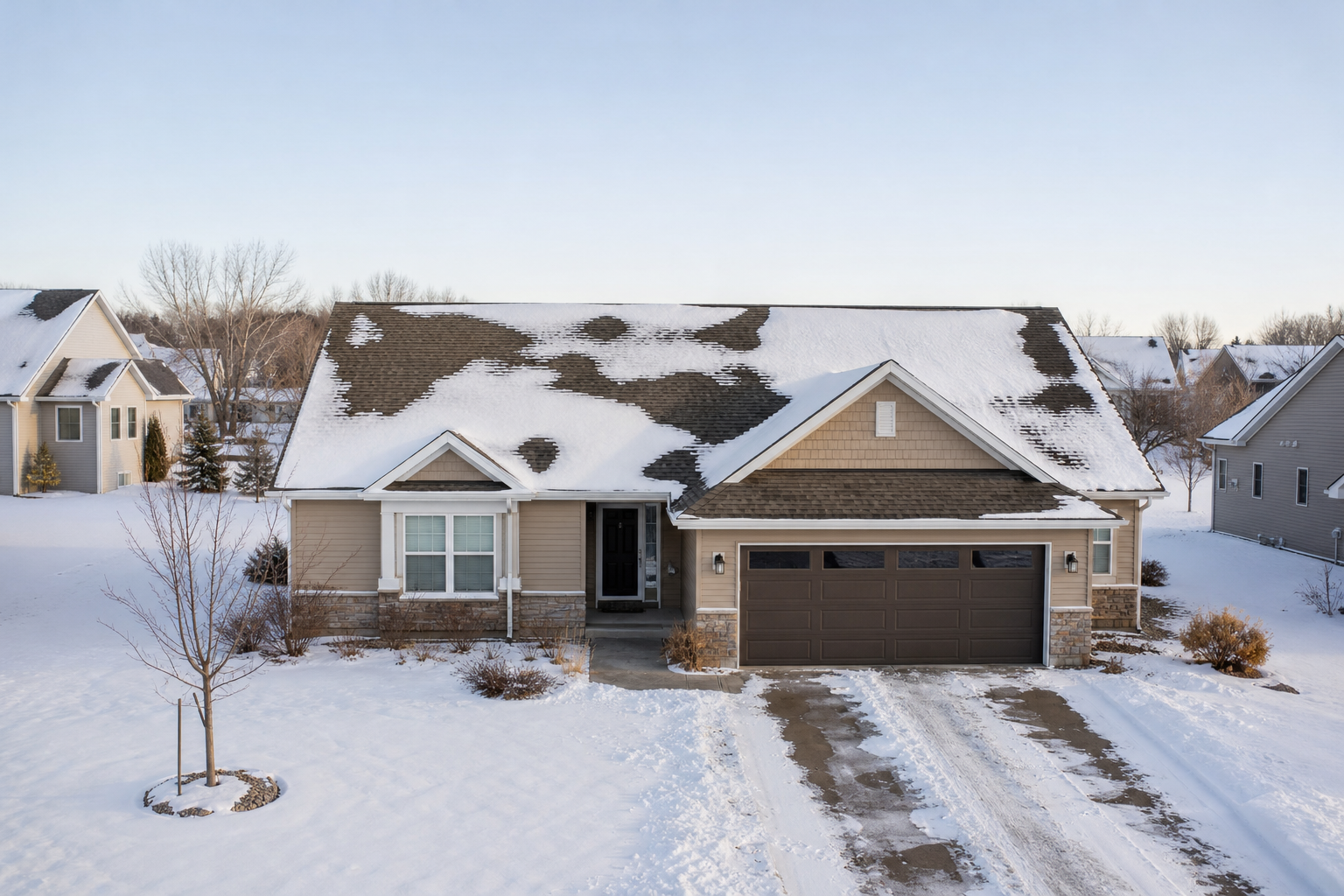
After a snowfall, you might notice something unusual about your roof. One section may be showing the bare shingles, while another is still covered in several inches of snow.
When you notice this type of uneven snow melt on your roof, it's reasonable to wonder whether something is wrong with your roof, especially if neighboring houses seem to have snow melting more evenly across their roofs.
At Happy Roofing, we've inspected hundreds of roofs throughout the greater Naperville area, where snow, freezing temperatures, and changing winter weather can make homeowners question what they're seeing on their roofs.
In this article, we'll explain what can cause snow to melt unevenly on roofs, which melting patterns are normal, what they might reveal about your roof, and when it's worth having a professional take a closer look.
Key Takeaways
-
Snow often melts unevenly because different areas of your roof receive varying amounts of sunlight, wind exposure, and snow accumulation.
-
Uneven snow melting isn't always a cause for concern. It's often a normal result of winter weather or differences in your roof's design.
-
Isolated patches or larger sections of snow that consistently melt faster than surrounding areas, regardless of sunlight exposure, may indicate problems with attic insulation, air sealing, or ventilation.
-
Heat escaping into your attic can cause snow to melt and refreeze near the colder roof edges, potentially creating ice dams that can lead to roof leaks and water damage.
-
If you notice recurring unusual melting patterns, thick ice buildup, or signs of moisture inside your home, consider scheduling a roof inspection to identify the cause before making repairs.
Table of Contents
- Why Does Snow Melt Unevenly on Your Roof?
- What Are the Most Common Reasons Snow Melts Unevenly Across a Roof?
- When Can Uneven Snow Melting Mean You Have Poor Attic Insulation or Ventilation?
- What Can Happen if Snow Continues to Melt Unevenly on Your Roof?
- What Should You Do if Snow Keeps Melting Unevenly on Your Roof?
Why Does Snow Melt Unevenly on Your Roof?
Snow melts unevenly on your roof because different areas receive different amounts of sunlight, heat buildup, and airflow, causing some sections to warm up faster than others.
Even when snow falls evenly across your home, the conditions affecting each section of your roof aren't necessarily the same across the entirety of your home.
For example, the south-facing side of your roof may receive several hours of direct sunlight, while the north-facing side remains shaded throughout the day. As a result, one side may naturally lose its snow much sooner than the other.
Your roof's slope, nearby trees, and the direction of the wind can also affect how much snow accumulates and how quickly it disappears, especially in the wooded neighborhoods like those commonly found around Naperville.
Is Uneven Snow Melting on Your Roof a Cause for Concern?
Natural causes of uneven snow melt, like those caused by differing levels of sun exposure, are typically less extreme and are usually nothing to worry about. However, some melting patterns are much more noticeable, lead to ice dams (where melting snow works its way down the roof and refreezes at the edges, trapping more water), and can indicate an underlying issue caused by heat coming from inside your home.
If warm air from the living space escapes into your attic, it can raise the temperature of the roof decking, which is the wood beneath your shingles. That warmth can cause snow to melt from underneath in those areas, even when outdoor temperatures remain below freezing.
Understanding what's causing the snow to melt unevenly can help you determine whether it's a normal part of winter or a sign that something in your home needs attention.
What Are the Most Common Reasons Snow Melts Unevenly Across a Roof?
The most common causes of uneven roof snow melting are sunlight, differences in snow accumulation, heat escaping from your home, and variations in your roof's design.
Each can create a different melting pattern, and some homes may experience several of these conditions at once. Understanding how these variables affect snow melting on your roof can help you determine whether what you're seeing is normal or worth having a professional investigate.
Sunlight and Roof Orientation
Snow often melts faster on roof sections that receive more direct sunlight throughout the day. In Northern Illinois, south-facing roof slopes generally receive more winter sunlight than north-facing slopes.
You might notice that the front of your roof is nearly clear while the back remains covered in snow. This can be completely normal, especially during sunny afternoons when the air temperature is still relatively cold.
Trees, neighboring buildings, and other structures can also shade certain sections of your roof, allowing snow to remain there longer.
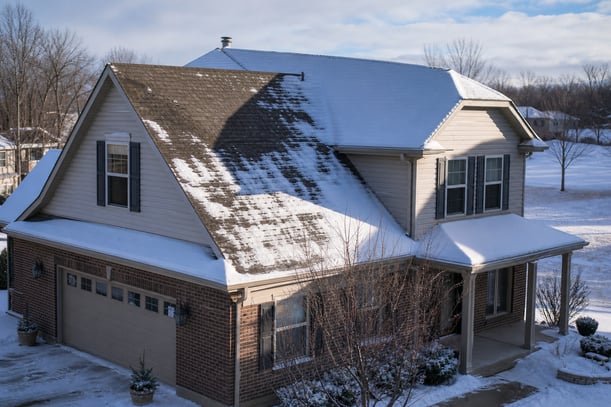
If the melting pattern follows where sunlight reaches your roof and you're not experiencing any ice dams, there's usually no reason to assume something is wrong with the roofing system. The photo below demonstrates how the different angles of a roof impact how sunlight hits specific areas, and how it can affect the rate of snow melt:
Wind and Differences in Snow Accumulation
Wind can cause snow to collect unevenly across your roof, making some areas appear to melt faster even when they're simply holding less snow.
During a snowstorm, wind can blow light snow away from exposed roof sections and cause it to accumulate in more sheltered areas. Roof valleys, dormers, and changes in roof height can create places where snow collects more heavily.
A section of roof that received only an inch of snow may become visible much sooner than a nearby section holding four inches. If the difference is simply due to wind causing snow to accumulate unevenly, it doesn't necessarily indicate a problem with heat escaping from your home.
If you notice deeper snow collecting in roof valleys or around dormers while more exposed sections have little snow remaining after a windy storm, the uneven coverage may be caused by wind redistributing the snow rather than heat escaping from your home.
Differences in Roof Design
Your roof's shape and construction can also affect how snow accumulates, receives sunlight, and responds to heat from the home. A roof with several slopes, dormers, valleys, or different attic spaces may show more variation than a simple roof with two large slopes.
For example, a section above a heated living area may behave differently from a section above an unheated garage. However, that difference alone doesn't prove there's an insulation or ventilation problem.
Different sections of your roof may have different amounts of insulation, ventilation, or exposure to outdoor conditions depending on how your home was built.
If the uneven melting follows the layout of your roof, such as snow remaining longer over an unheated garage or collecting where two roof slopes meet, the pattern may simply reflect differences in your home's design rather than an underlying problem.
Heat Escaping Into Your Attic
Heat escaping from your living space into the attic can warm the roof from underneath and cause snow to melt in certain areas before the rest of the roof.
During winter, your heating system keeps the rooms inside your home warm. Ideally, proper attic insulation and air sealing help prevent that warmth from escaping into an unheated attic. However, insufficient or uneven insulation can allow more heat to pass into the attic. Gaps around attic access openings, recessed lights, plumbing penetrations, and other openings can also allow warm indoor air to escape.
Poor attic ventilation may contribute to the problem as well. If the attic isn't getting enough airflow, heat and moisture can build up instead of being carried away by outside air. These conditions can cause certain sections of your roof to become warmer than others, melting the snow above them even when outdoor temperatures remain below freezing.
If you notice the same isolated patches of snow (or larger sections regardless of sun exposure) melting faster after multiple snowfalls, especially during freezing weather, it may be worth having your attic's insulation, air sealing, and ventilation evaluated to determine whether heat loss is contributing to the pattern.
When Can Uneven Snow Melting Mean You Have Poor Attic Insulation or Ventilation?
Uneven snow melting can be a sign of poor attic insulation, air leaks, or ventilation problems when isolated patches or larger sections of your roof consistently lose snow faster than surrounding areas, regardless of how much sunlight they receive.
These three components of your attic work together, but they serve different purposes.
- Attic insulation slows the transfer of heat from your living space into the attic.
- Air sealing closes gaps that allow warm indoor air from the living areas to escape into the attic.
- Attic ventilation helps outside air move through properly placed intake and exhaust vents, carrying excess heat and moisture away from the attic space.
If insulation is missing or insufficient in one area, more heat may pass into the attic and warm the roof above it. If gaps around ceiling openings allow warm air to escape, those areas may create concentrated warm spots. And if a vented attic doesn't have adequate airflow, heat and moisture may not be managed as intended.
A proper assessment should consider the insulation, air sealing, and ventilation together before recommending any improvements.
What Snow Melting Patterns Should You Pay Attention To?
Melting patterns deserve a closer look when they repeatedly appear in the same isolated areas during freezing weather, especially if you also notice ice buildup or moisture problems.
One unusually sunny afternoon causing the snow to melt isn't enough to diagnose an issue. Instead, pay attention to whether the same patterns develop after multiple snowfalls.
Here are a few examples of what you might notice:
| What You Notice | What It Could Mean |
|---|---|
| Snow melts faster on specific sides of your roof. | That section may simply receive more direct sunlight throughout the day. |
| One roof slope retains less snow than another after a windy storm. | Wind may have blown snow away or caused it to accumulate unevenly in other areas of the roof. |
| The same isolated patch melts while the surrounding roof stays covered. | Heat may be reaching that section of the roof from below, and could indicate poor attic ventilation or insulation. |
| Snow disappears above a particular room or attic opening. | Heat loss through insulation gaps or air leaks that allow hot air into the attic may be contributing. |
| Snow melts higher on the roof while thick ice remains near the gutters. | Meltwater may be refreezing at the colder roof edge, potentially creating an ice dam. |
Rather than assuming you need a roof repair if you notice unevenly melting snow, try to identify whether the pattern is consistent and whether there are other signs of a problem. Having an idea of what’s happening and where it typically occurs can help a roofing professional assess the concern if you need to schedule an inspection.
What Can Happen if Snow Continues to Melt Unevenly on Your Roof?
If uneven snow melting is caused by heat escaping into your attic, it can contribute to ice dams and potentially roof leaks if the underlying issue isn't addressed.
The biggest concern is when heat escaping from your home repeatedly warms sections of your roof during freezing weather. Heat escaping into your attic warms part of the roof enough to melt the snow above it, even though outdoor temperatures remain below freezing.
That melted snow runs down toward the roof's overhang, which typically stays colder because it extends beyond the heated portion of your home. When the water reaches that colder section, it can refreeze.
Over time, repeated melting and refreezing can create a ridge of ice near the roof edge, known as an ice dam.
As the ice builds up, it can prevent additional meltwater from draining off your roof. Water may then collect behind the ice and potentially work its way beneath roofing materials, leading to leaks and interior water damage.
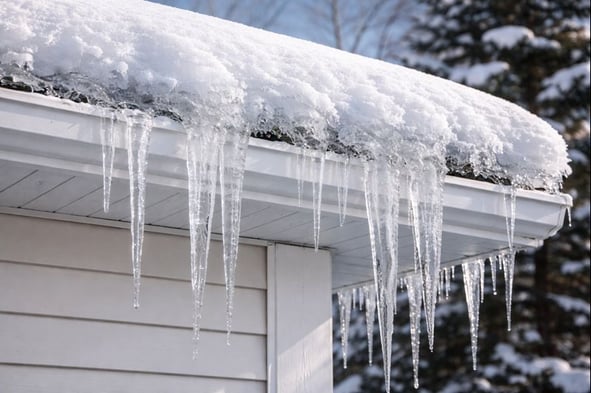
Below is an example of what ice dams can look like after they've had time to grow:
Does Melting Snow Always Lead to Ice Dams?
Not every uneven snow melting pattern will lead to an ice dam because they require specific conditions to form.
If one side of your roof loses snow faster because it receives more sunlight, that alone doesn't mean your home has a heat loss problem or that roof damage is likely. Ice dams depend on several conditions, including roof temperatures, freezing weather, snow accumulation, and how meltwater drains.
The concern becomes greater when unusual melting patterns continue throughout the winter and are accompanied by warning signs such as thick ice building up along the roof edges, recurring icicles in the same locations, or water stains appearing inside your home.
If you're noticing these signs, it's worth having the situation investigated before repeated freezing and thawing cause further problems.
For a closer look at how ice dams form, the damage they can cause, and ways to prevent them, read our article, “How Do Ice Dams Cause Roof Damage?”
What Should You Do if Snow Keeps Melting Unevenly on Your Roof?
If snow repeatedly melts in unusual patterns on your roof, start by documenting what you see and checking whether there are other signs of attic heat loss, ice buildup, or moisture problems.
In many cases, uneven snow melting is simply the result of sunlight, wind, or differences in roof design. However, when the same isolated areas consistently melt during freezing weather, especially alongside ice dams or moisture problems, it's worth understanding what's happening beneath the roof.
It’s important to identify the cause before making your next decision, because adding ventilation, installing more insulation, or replacing roofing materials won't necessarily solve the problem if the recommendation doesn't address what's actually happening.
If you've noticed unusual snow melting patterns or recurring winter roofing problems on your roof, schedule a no-commitment roof consultation with our team. We'll evaluate the entire roofing system, explain what we find, and help you understand what your options are, whether you decide to partner with us or not.