Can You Replace Your Roof in Sections Instead of the Whole Thing?
.jpg?width=1200&height=900&name=Title%20Cover%20Template%20(11).jpg)
Discovering that you need a new roof can be overwhelming, especially if that cost wasn't part of your budget. As one way to help keep costs more manageable, some homeowners may wonder whether you can replace your roof in sections, rather than all at once.
At Happy Roofing, we've helped hundreds of homeowners throughout Naperville and the surrounding communities with roof repairs and replacements. While replacing a roof in phases is technically possible, it's usually not the best long-term solution for most situations.
In this article, you'll learn why replacing your roof all at once is usually the better long-term investment, when a phased roof replacement may make sense, and what alternatives may better fit your budget if paying for a full roof replacement isn't financially realistic right now.
- Replacing your entire roof at once is usually the better long-term investment. While replacing a roof in phases is possible, doing the project all at once typically provides better protection, lower long-term costs, stronger warranty coverage, and a more consistent appearance.
- Replacing only part of your roof should only be considered in certain situations. Phased replacement is generally appropriate only when roof sections are structurally independent, such as detached garages, additions, or roof systems with different installation dates.
- Isolated roof damage doesn't always mean you should replace only one section. A professional inspection should consider your roof's age, the extent of the damage, and the overall condition of the roofing system before recommending a repair or replacement.
- If a full roof replacement isn't affordable, you have other options. Depending on your situation, a roof repair, financing, or an insurance claim may be a better alternative than replacing your roof in phases.
Table of Contents:
- Can You Replace Your Roof in Sections?
- Why It's Recommended to Replace the Entire Roof at Once
- Options to Help Make Roof Replacement Costs More Manageable
- Finding the Right Solution for Your Home
Can You Split a Roof Replacement Into Parts?
While you technically can replace parts of your roof in certain situations, for most homes, replacing the entire roof at once is the better long-term solution both cost and durability-wise.
While replacing one section at a time can help split the cost into more manageable figures, it can lead to higher overall expenses and additional complications in the long run. Your roof works as one complete system, and replacing only part of it can create challenges with matching materials, maintaining warranties, and protecting your home from future leaks.
There are some situations where it may be okay to replace one section of your roof at a time. For example, replacing part of your roof may make sense if:
- You have a detached garage: Since it's a completely separate structure, its roof can typically be replaced independently from the main house without affecting the rest of your roofing system.
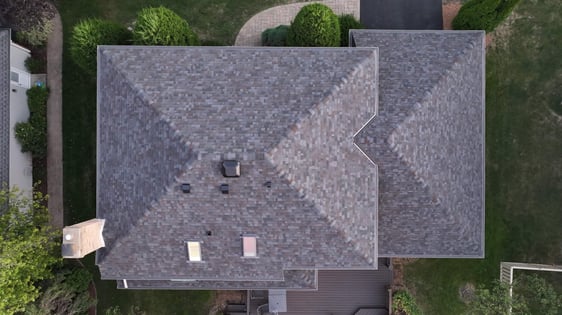
- Your home has structurally separate roof systems: Some additions, porches, or wings have their own independent roof structures that don't connect to the main roof. Like detached garages, these roof areas are separate from other sections and can be replaced without affecting the entire roof as a whole.
- Only one independent roof section has reached the end of its lifespan: In some cases, one section of your roof may wear out before another. For example, a roof section with greater sun exposure may deteriorate faster, or an addition or porch may have been reroofed more recently than the rest of the home. If those sections are structurally independent, replacing only the affected portion may be a practical option.
Below is an example of a roof with certain sections that are separated from the rest of the roof:
Why Is It Recommended to Replace Your Entire Roof at Once?
Replacing your entire roof at once is recommended because it protects your home more effectively, can reduce long-term costs of replacement, and helps ensure your roofing system performs as intended.
Although replacing only part of your roof may lower your upfront cost, your roof is designed to work as one complete system. Components like the shingles, underlayment, and flashing all contribute to how well your roof performs. To learn more about the components that make up a roofing system and how they work together, read our article: What is a Roofing System? (And Why Every Component Matters).
Installing new materials alongside older ones can create challenges that affect everything from appearance to weather protection. While there are exceptions, replacing the entire roof at once is usually the best long-term investment for most homeowners.
Some of the biggest benefits of a full roof replacement include:
- Better long-term value: Although replacing your entire roof costs more upfront, it often costs less over time. Completing the project all at once helps you avoid paying for additional labor, equipment, dumpsters, permits, and other project costs multiple times during the course of the entire replacement.
- More reliable protection: Your roof is made up of components that work together to keep water out of your home. Replacing the entire system at once helps ensure every layer, from the underlayment to the flashing and shingles, is installed together and functioning as designed.
- A more consistent appearance: New shingles naturally stand out against older ones. Although replacing the remaining sections within a year or two may reduce noticeable differences, older shingles will continue to fade and weather over time, making it increasingly difficult to achieve a uniform look.
- Stronger warranty protection: Many manufacturer warranties are designed around complete roofing systems installed according to their specifications. Replacing only part of a roof at a time may limit warranty coverage or create questions about which materials are covered if a problem arises.
- Fewer future disruptions: Replacing your roof once means you only have to go through the construction process one time instead of scheduling multiple projects over several years.
What If My Roof Has Isolated Damage?
If the damage is limited to one area of your roof, you may not need a full roof replacement, and a targeted roof repair may safely address the problem.
It's important to distinguish between isolated damage and an isolated roof section. Just because only one area of your roof is leaking or has missing shingles doesn't necessarily mean only that section should be replaced.
A roofing contractor should evaluate factors such as:
- The age of your roof: If the roof is nearing the end of its expected lifespan (which is typically between 15-30 years for asphalt shingle roofs), making isolated repairs or simply replacing a small section may only delay the need for a full replacement in the near future.
- The extent of the damage: A few missing shingles in one location require a different approach than widespread damage or deterioration across multiple areas of the roof. If your roof has widespread damage like multiple missing shingles across its entirety, a full replacement may be the most cost-appropriate solution.
- The condition of the rest of the roofing system: The condition of the roofing system overall should all be considered before deciding on the best course of action. While the damage may be isolated to one area, the rest of the roof may have widespread wear, aging shingles, deteriorating flashing, or ventilation issues that make a full roof replacement the better investment.
A thorough roof inspection can help determine whether a repair will adequately protect your home or if replacing the entire roof is the more practical long-term investment.
What Are Your Options If You Can't Afford to Replace Your Entire Roof?
If a full roof replacement isn't financially realistic right now, replacing your roof in phases isn't your only option. Depending on your roof's condition, there may be other solutions that better protect your home while fitting your budget.
Every homeowner's situation is different. The best path forward depends on the condition of your roof, the urgency of the damage, and your financial situation. Before deciding to split your roof replacement into multiple projects, consider these alternatives.
- Roof repairs: If the damage is isolated and your roof still has years of life remaining, a repair may safely extend its lifespan while giving you more time to budget for a replacement. However, repairs aren't always the right choice if the roof is nearing the end of its life or has widespread issues, as we covered above.
- Roof financing: Many roofing companies offer financing options that allow homeowners to replace the entire roof while spreading the cost over monthly payments rather than multiple projects. Depending on your situation, financing may end up being more cost-effective than completing multiple roof replacement projects over several years. While not every contractor offers this (we ourselves do not currently offer financing), homeowners may be able to explore financing through their bank, local credit union, or other third-party lenders.
- Insurance coverage: If your roof was damaged by hail, wind, or another covered event, your homeowners insurance may pay for part or all of the replacement. A professional roof inspection can help determine whether filing a claim is appropriate.
How Do I Know Which Solution Is Right for My Home?
For most homeowners, replacing the entire roof at once provides better long-term value, more reliable protection, stronger warranty coverage, and fewer complications down the road. If the upfront cost is your biggest concern, there are often better alternatives to consider before splitting the project into multiple phases.
Ultimately, the right decision depends on your roof's condition, your budget, and your long-term plans for your home. A professional inspection can help determine whether a repair, a full replacement, or one of the limited exceptions for a phased replacement is the best fit for your situation.
If you're still deciding whether your roof can be repaired or if it's time for a full replacement, our article, "Roof Repair vs. Replacement: What Naperville Homeowners Need to Know," explains the key factors that determine which option makes the most sense. You'll learn when a repair is enough, when replacement is the smarter long-term investment, and how to evaluate your roof's condition with confidence.
If you'd like personalized recommendations for your home, schedule a no-obligation roof inspection with our team. We'll evaluate your roof, explain your options honestly, and help you choose the solution that makes the most sense for your home and budget.


.jpg?width=700&name=Copy%20of%20Untitled%20Design%20(4).jpg)