Cedar Shake vs Asphalt Shingle Roofs: Which Is Right for Your Home?
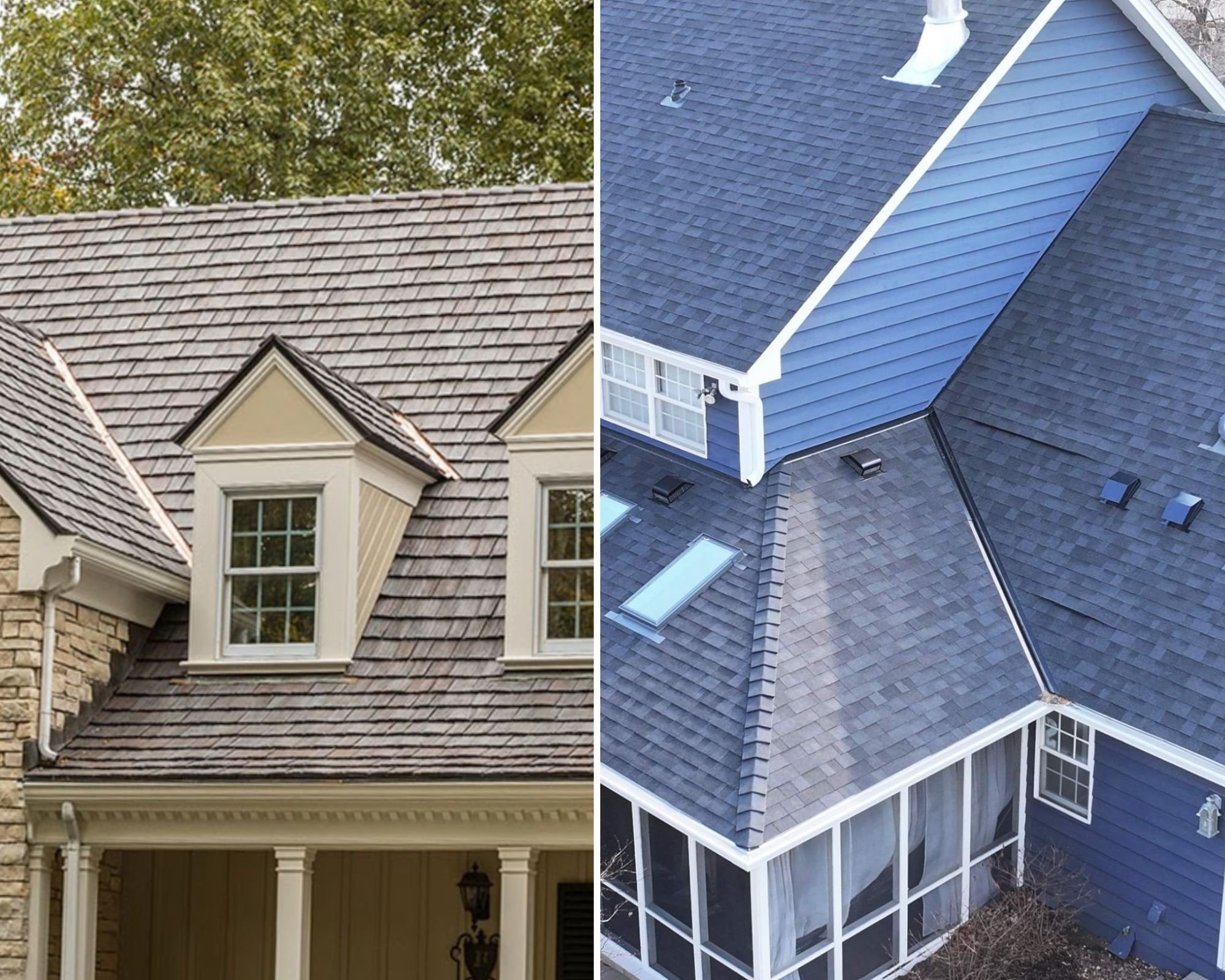
When choosing the right material for your new roof, the decision should be about more than curb appeal alone. For residential applications, two popular roofing options are cedar shake and asphalt shingles, both with very different strengths, weaknesses, and price points.
At Happy Roofing, we’ve replaced both cedar shake and asphalt shingle roofs across the greater Chicagoland area, and have seen firsthand how each material performs over time. We’re sharing what we’ve learned from years of inspections, installations, and hard-earned experience helping homeowners in our area.
In this article, you’ll learn:
- The differences between cedar shake and asphalt shingle roofs
- How each option compares in cost, maintenance, durability, and real-world performance
- Which type of roof makes the most sense for you, depending on your priorities and personal tastes
By the end, you’ll be equipped to confidently answer the question, “Should I replace my roof with cedar shake or asphalt shingles?” without sales pressure so that you can make the best decision for you and your home.
Table of Contents
- An Introduction to Cedar Shake
- An Introduction to Asphalt Shingles
- Comparing Cedar Shake to Asphalt Shingle Roofs
- Which Material Is Better for You?
- Choosing the Right Roofing Contractor
What Is a Cedar Shake Roof?
Cedar shakes are made from natural cedar wood, typically split from logs, which creates a distinctive, textured, and high-end appearance. Cedar shake roofs are known for their natural insulation properties, durability, and timeless aesthetic, but they also come with higher initial costs and maintenance requirements compared to many modern roofing materials.
Key Characteristics of Cedar Shakes
- Material: Made from natural cedar wood (commonly Western Red Cedar)
- Manufacturing style: Hand-split or taper-sawn, providing a rustic, natural, uneven texture
- Appearance: Much thicker, more dimensional (deeper shadow lines), and more natural-looking than standard shingles
- Installation: Installed in thicker, more heavily layered rows than asphalt shingles, with wider overlaps to manage water penetration and account for natural wood movement.
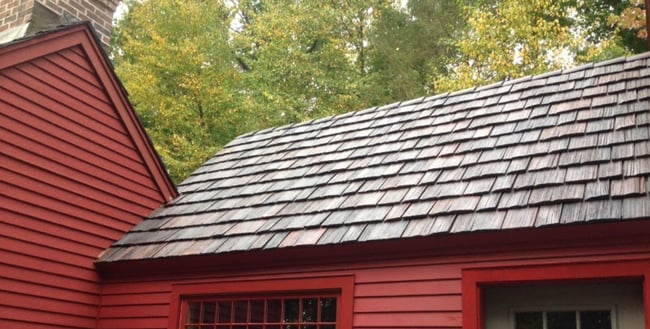
Below is an example of a cedar shake roof, sourced from Brava's website:
What is an Asphalt Shingle Roof?
Asphalt shingles are made from a fiberglass mat base coated with asphalt and mineral granules, designed to protect homes from weather while remaining cost-effective, durable, and easy to maintain. It is the most commonly used residential roofing material in North America due to its affordability, versatility, and proven performance.
Key Characteristics of Asphalt Shingles
- Material: A fiberglass base mat coated with asphalt and topped with protective mineral granules. The granules help shield the asphalt from UV damage while also giving the shingle its color.
- Manufacturing Style: Factory-produced in uniform shapes and thicknesses, allowing for consistent performance and predictable installation results.
- Appearance: Clean, consistent, and widely customizable, with a broad range of colors and profiles. Some architectural shingles offer added depth, though they remain more uniform than cedar shakes.
- Installation: Installed in overlapping rows, but with fewer layers and less material overlap than cedar shake, making asphalt shingles lighter, faster, and more forgiving to install.
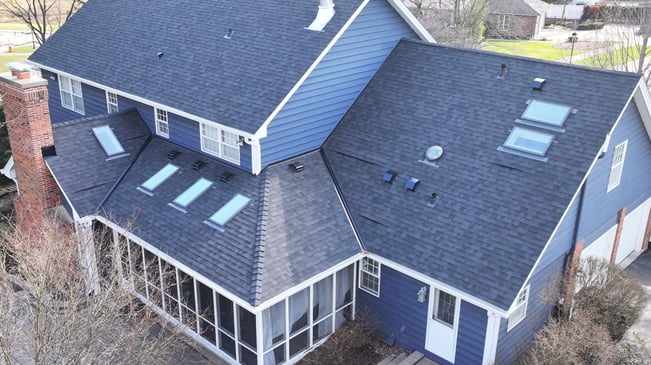
Below is a photo of an asphalt shingle roof from a project we recently completed:
What are the Differences Between Cedar Shake and Asphalt Shingle Roofs?
The main differences between cedar shake and asphalt shingle roofs come down to durability, maintenance, appearance, cost, and long-term performance. While cedar shake and asphalt shingle roofs can both protect your home effectively, they do so in very different ways, and those differences become more apparent over time, not on day one.
The right choice for you depends less on “which is better” and more on what your priorities are, and if you’re willing to invest in the long-term care of cedar shakes. Let’s break down the most important differences homeowners should understand before making a decision.
How Do Cedar Shake and Asphalt Shingles Compare on Durability and Lifespan?
Cedar shake roofs generally have a longer potential lifespan than asphalt shingles, but only when they are properly installed, regularly maintained, and used in the right climate. Asphalt shingle roofs tend to have a shorter overall lifespan, but they perform more consistently across different environments and require far less upkeep to reach their expected service life.
In the real world, roof longevity is influenced just as much by climate, installation quality, and ongoing maintenance as it is by the roofing material itself.
The Durability of Cedar Shake
In general, cedar shake roofs:
- Requires routine upkeep every 3-7 years, including cleaning and applying protective treatments (called staining) that repel moisture, slow UV damage, reduce cracking and rot, and provide built-in inspection opportunities to catch issues early.
- Can often last 30-40 years, and sometimes longer, depending on installation quality and maintenance.
- Can continue protecting the roof decking even when individual shakes show visible wear because cedar shake roofs are installed with multiple overlapping layers of wood and interwoven felt underlayment, forcing water to pass through several barriers before it can reach the roof deck.
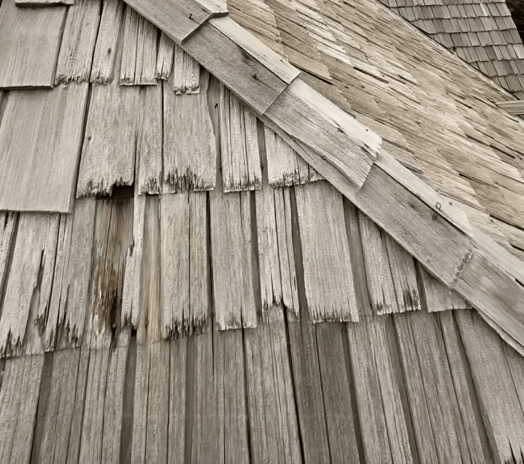
- In humid, wet, or heavily shaded environments, cedar shake can deteriorate faster because moisture tends to linger on the roof. This creates ideal conditions for moss and algae growth, reduces drying time, and increases the risk of rot and premature wood failure, especially when regular cleaning and treatments are skipped.
Below is a photo of what deteriorated cedar shake can look like:
The Durability of Asphalt
Asphalt shingle roofs, by comparison:
- Typically last 20-30 years, depending on the specific shingle type and performance tier. Higher-tier asphalt shingles offer more impact resistance, something that could help prolong their lifespan in areas that see occasional hailstorms like Northern Illinois.
- Are more consistent in performance across different climates because asphalt shingles are a manufactured, non-organic material designed to shed water quickly, resist moisture absorption, and perform predictably in both wet and dry conditions.
- Are considered low maintenance, typically requiring only periodic inspections, debris removal, and occasional minor repairs rather than routine treatments or surface upkeep.
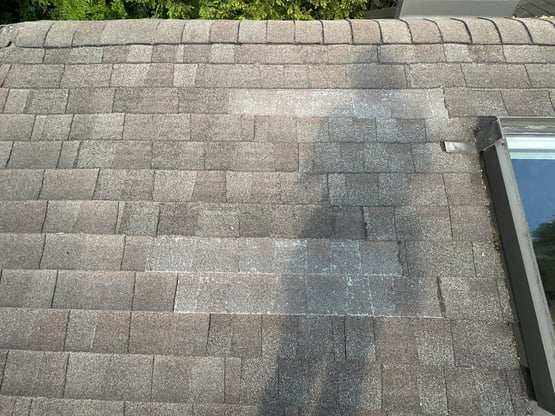
While asphalt shingles perform more consistently across climates, they do have limitations. In extreme heat, asphalt shingles can age faster as prolonged UV exposure causes the asphalt to dry out, leading to granule loss, brittleness, and cracking over time. In very cold climates, repeated freeze-thaw cycles can contribute to cracking or seal failure, especially on older or lower-quality shingles.
And because asphalt shingles rely more heavily on their exposed surface layer for protection, visible wear (like the excessive granule loss seen below) often signals that the roof is approaching the end of its usable lifespan rather than simply cosmetic aging.
How Do Cedar Shake and Asphalt Shingles Compare in Appearance?
Cedar shake roofs offer a more natural, textured, and high-end appearance, while asphalt shingle roofs provide a cleaner, more uniform look with greater visual consistency. The right choice for you depends on whether you value organic character or predictable, manufactured aesthetics.
The Appearance of Cedar Shake
Cedar shake roofs offer:
- A natural, textured, high-end appearance created by real wood, giving the roof depth and warmth that manufactured materials can’t fully replicate.
- Unique variation from shake to shake, since no two pieces of cedar are identical, resulting in a one-of-a-kind look rather than a uniform pattern. This makes cedar shake valuable for homeowners wanting a unique, high-end look.
- Strong architectural character, making cedar shake especially well-suited for historic homes, custom builds, and those who want their property to visually stand out.
Below is a closer look at a cedar shake roof, from Brava's website:
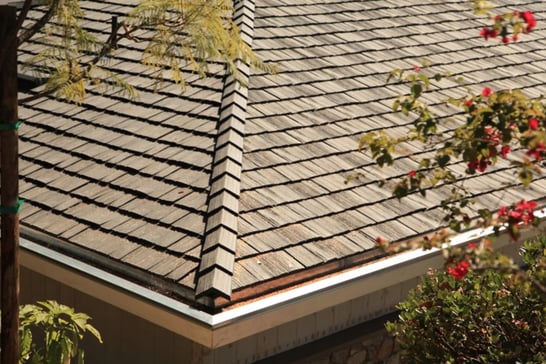
However, cedar’s appearance can change noticeably over time. As the wood weathers, its color gradually fades to more of a gray, surface wear becomes more visible, and natural inconsistencies become more pronounced. Some homeowners appreciate this aged, weathered character, but others find that the evolving look feels less refined than it did when the roof was first installed.
The Appearance of Asphalt Shingles
Asphalt shingle roofs provide:
- A clean, consistent appearance with uniform sizing and alignment, resulting in a polished look that remains visually controlled across the entire roof.
- Broad color and style options, allowing homeowners to match siding, trim, and neighborhood aesthetics without committing to a highly distinctive look
- Shingle options that add shadow lines and some depth while maintaining a consistent pattern, avoiding the irregularity found in natural materials like cedar shake.
Below is a closer look at asphalt shingles. The example below is from a project we completed using Malarkey shingles:
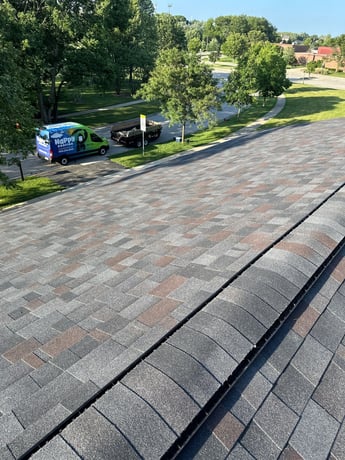
While asphalt shingles offer a clean and consistent appearance, their look is more static and manufactured. Over time, color fading can occur, granule loss may become visible, and architectural depth can flatten as the roof ages, but this wear may not look as natural as the “rustic” look of worn cedar shakes. For homeowners who value uniformity, this is often acceptable, but for those seeking natural-looking aesthetics (especially over time), asphalt may not be the best fit.
How Do Cedar Shake and Asphalt Shingle Roofs Compare in Cost and Long-Term Value?
Cedar shake roofs come with a significantly higher upfront cost and ongoing maintenance expenses, while asphalt shingle roofs offer a lower initial investment with more predictable long-term costs. The better value depends on whether you prioritize premium aesthetics and longevity potential or budget control and less upkeep.
The Cost of Cedar Shake
Cedar shake roofs typically involve:
- A higher upfront investment due to material cost, specialized labor, and more complex installation requirements (thicker materials, more overlap, and each shake is installed individually). Cedar shake roofs typically cost about 2 to 4 times more upfront than asphalt shingle roofs, depending on the type of asphalt shingle being used and the complexity of the installation.
- Ongoing maintenance expenses every few years for cleaning, treatments, and inspections, which help repel moisture, slow wood deterioration, and identify issues early, but also add recurring costs that must be factored into the roof’s true lifetime investment, not just the upfront price.
- Higher repair complexity and variability, since individual shake repairs often require specialized labor and careful material matching, making repairs more time-intensive and less predictable than asphalt shingle fixes. Compared to asphalt shingle roof repairs, cedar shake repairs could cost 2-3x more.
From a long-term value perspective, cedar shake can make sense for homeowners who:
- Plan to stay in the home long-term, and are looking for a long-lasting roofing material.
- Value architectural distinction and premium curb appeal.
- Are prepared for ongoing maintenance (time and cost) as part of ownership.
However, that value is highly conditional. When maintenance is skipped or environmental conditions are unfavorable, the cost-to-lifespan ratio can shift quickly, potentially reducing the return on the initial investment.
The Cost of Asphalt Shingles
Asphalt shingle roofs typically offer:
- A lower upfront cost when compared to cedar shakes, making them more accessible for most homeowners and easier to budget for when compared to the expense of cedar shake roof installations. With the variety of shingle options available, you don’t have to sacrifice much durability (especially with the highest, or Class 4, impact-rated shingles).
- Faster, less labor-intensive installation, since asphalt shingles are lightweight, uniform, and installed with less overlapping (and no interweaved underlayment) compared to cedar shakes. This helps reduce labor costs on projects.
- Fewer ongoing maintenance costs, with most long-term expenses tied to periodic inspections (many are free, and we recommend roof inspections for asphalt shingle roofs every 5 years), storm-related repairs, or isolated shingle replacement rather than routine treatments or surface upkeep. Some asphalt roofs in humid and shaded areas are still prone to organic growth like moss and algae growth, but can be soft-washed to prevent long-term damage.
- More predictable repair and replacement costs, because asphalt shingles are widely available, standardized, and familiar to most roofing contractors. This often makes isolated repairs quicker, less expensive, and easier to match to the existing materials compared to cedar shakes.
From a long-term value standpoint, asphalt shingles appeal to homeowners who:
- Want a cost-effective shingle without needing to sacrifice much quality.
- Prefer lower lifetime maintenance obligations and time commitments to keep their roof looking and performing well.
- Are planning to sell the home in the near future, rather than keep the home long-term.
While asphalt shingles may not last as long as a well-maintained cedar shake roof, their lower total cost of ownership often makes them the more economical choice over time. Additionally, their level of variety allows homeowners to pick anything from economic shingles to top-tier, highly durable options.
Are Cedar Shake or Asphalt Shingles Better for Me?
Neither cedar shake nor asphalt shingles are universally “better,” and the right choice depends on your priorities, environment, budget, and how you plan to own your home. One material rewards long-term ownership and hands-on maintenance with premium aesthetics, while the other prioritizes predictability, affordability, and lower ongoing responsibility.
If you’re deciding between the two, we’ve included the table below to outline the key differences to help you quickly determine which option aligns best with your situation:
| Consideration | Cedar Shake Roof | Asphalt Shingle Roof |
|---|---|---|
| Upfront Cost | High upfront investment (often 2–4× asphalt) | Lower upfront cost, easier to budget |
| Lifespan Potential | 30-40+ years with proper maintenance | 20-30 years, depending on shingle type |
| Maintenance Commitment | Regular cleaning and treatments every 3-7 years | Minimal maintenance beyond periodic inspections (every 5 years) and repairs |
| Climate Sensitivity | Best in drier, well-ventilated environments | Performs consistently across most climates |
| Appearance | Natural, textured, high-end, one-of-a-kind | Clean, uniform, controlled aesthetic |
| How It Ages | Develops a weathered, rustic character | Fades and wears more uniformly |
| Repair Complexity | More specialized and difficulty can vary | Simpler, more predictable repairs |
| Best For Homeowners Who… | Value a premium, natural look, and plan to stay in their home long-term | Want affordability, a variety of quality options, and low maintenance requirements |
Choosing the Right Roofing Contractor for You
The decision between cedar shake and asphalt shingle roofs ultimately comes down to what you, as a homeowner, value the most from a roof replacement. Do you want longevity and are you willing to maintain the roof to achieve that? Or do you prefer a good overall balance of cost and durability?
There is no universally “best” roofing material. There is only the roof that best fits your home, style, and goals. What often matters more than material choice is installation quality. Even the best roofing material can underperform if it’s installed incorrectly, the roof is poorly ventilated, or steps are skipped. This is why working with a reputable, experienced roofing contractor is just as important as choosing cedar or asphalt in the first place.
To help you determine whether you’re working with a reputable roofing company, read our next article: Questions Every Homeowner Should Ask Before Hiring a Roofing Company. It’ll help you feel better prepared to talk to contractors about your next roofing project.
If you’re looking for an assessment of your roof, we offer non-commitment consultations designed to give you clear, honest guidance on your options, whether you ultimately decide to work with us or not.