Is It Normal for My Attic to Feel Hot in the Summer?
.jpg?width=1200&height=900&name=Title%20Cover%20Template%20(4).jpg)
If you’ve ever been in your attic during the summer, you’ve probably noticed just how hot it can get. That naturally leads many homeowners to wonder: Is this normal, or is it a sign that something is wrong with my roof?
It’s a fair question. While attics naturally get hotter than the living space below, excessive heat or trapped moisture can sometimes point to issues with your roof, attic ventilation, or insulation. Knowing the difference can help you avoid unnecessary repairs while catching legitimate problems before they become more expensive.
At Happy Roofing, we’ve performed hundreds of roof inspections throughout Naperville and the surrounding communities. Those inspections have given us firsthand insight into the many factors that can affect attic temperatures and how to recognize when they’re cause for concern.
In this article, you’ll learn what’s considered normal for an attic during the summer, what causes attics to become excessively hot, how heat and moisture can affect your home, and what steps you can take to improve your attic’s performance. By the end, you’ll be able to tell the difference between normal summer attic conditions and signs that something may need attention.
Key Takeaways
- A hot attic in the summer is normal, often reaching 30-50°F hotter than the outside temperature, but excessive heat or moisture can signal underlying problems.
- Poor attic ventilation is a common cause of heat and moisture buildup, but insulation issues, improperly vented bathroom or kitchen exhaust fans, and roofing problems can also contribute.
- Warning signs that your attic may need attention include high energy bills, uneven indoor temperatures, condensation or musty odors, and signs of premature roof deterioration.
- The right solution depends on identifying the root cause, and your ventilation, insulation, and roofing system should be evaluated together.
- A professional attic and roof inspection can determine whether your attic is performing properly and identify any ventilation, insulation, or roofing issues before they lead to more significant damage or unnecessary repairs.
Table of Contents
- Why Attic Spaces Get So Hot in the Summer
- When a Hot Attic Becomes a Problem
- What Causes Excessive Attic Heat and Moisture
- How to Reduce Heat and Moisture in the Attic
- When You Should Have Your Attic Inspected
- What to Do If You're Concerned About Your Attic
Why Does Your Attic Get So Hot During the Summer?
Your attic gets hot because it’s the space directly beneath your roof, where heat from the sun naturally builds throughout the day.
As your roof absorbs sunlight, much of that heat transfers into the attic below. Because attics aren’t typically air-conditioned like the rest of your home, they naturally become much warmer than your living space, especially during hot summer afternoons.
That doesn’t necessarily mean anything is wrong. In fact, it’s expected for an attic to be significantly hotter than the rest of your home during the summer, often by 30 to 50 degrees or more on sunny days. The exact temperature will vary based on factors like the outdoor temperature, the amount of direct sunlight your roof receives, the color of your shingles, and your home’s construction.
A properly designed attic uses a combination of insulation and balanced ventilation to help manage heat, reduce moisture buildup, and protect your roofing system.
When Does a Hot Attic Become a Problem?
A hot attic becomes a problem when excess heat and moisture begin affecting your home’s overall comfort, energy efficiency, or the performance of your roofing system.
While it’s normal for attics to become much hotter than the outside air during the summer, excessive heat that’s unable to escape can place unnecessary stress on both your home and your roof. In many cases, homeowners notice the effects long before they ever step foot into the attic.
Here are a few common signs that excessive attic heat or moisture may warrant a closer look:
- Your home struggles to maintain a comfortable temperature: When excessive heat builds up in the attic, it can make your cooling system work harder, leaving parts of your home feeling warmer than they should.
- You notice moisture, condensation, or musty odors: Excess moisture can be just as problematic as excessive heat and may indicate poor attic ventilation.
- Your energy bills are increasing: A hotter attic forces your cooling system to work harder to maintain comfortable indoor temperatures.
- Your roof appears to be aging prematurely: Curling shingles, deteriorating roofing materials, or even a warped roofline may sometimes be associated with prolonged heat or attic ventilation issues.
Experiencing one or more of these signs doesn’t automatically mean there’s a problem with your attic, but it could mean it’s worth taking a closer look to identify the problem before it worsens or begins impacting other areas of your home.
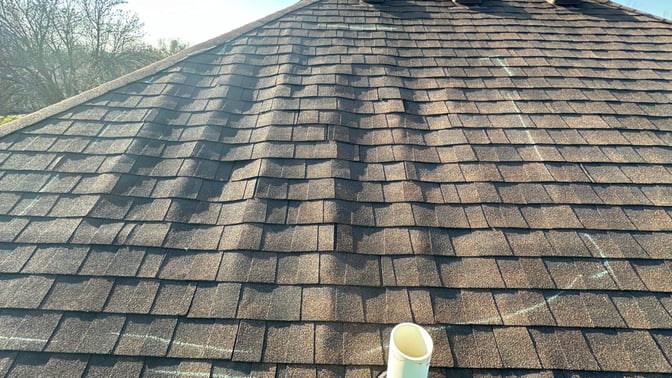
This photo shows a more extreme case of roof deck warping caused by excess moisture and heat buildup in the attic:
What Causes Excessive Heat and Moisture in an Attic?
Poor ventilation is one of the most common causes of excessive attic heat and moisture, but it’s not the only one.
If your attic is consistently hotter than expected or you’re noticing signs of moisture buildup, there are several factors that could be contributing to the problem. Below are some of the most common factors that can contribute to excessive attic heat and moisture.
Inadequate Attic Ventilation
Proper attic ventilation relies on a balanced system of intake and exhaust vents working together. Intake vents, which are typically located along the soffits, allow cooler outside air to enter the attic, while exhaust vents near the peak of the roof allow hot, humid air to escape. When that airflow is interrupted, whether because there aren’t enough vents, the vents are blocked, or the system is unbalanced, heat and moisture can become trapped in the attic.
Over time, that buildup can make your home more difficult to cool, increase energy costs, and contribute to moisture-related issues that affect your roofing system, such as warped roof decking (the wooden panels that form the foundation beneath your shingles), mold growth, and premature deterioration of roofing materials. To learn more about how roof ventilation impacts your roof and home, read our article How Roof Ventilation Affects Shingle Lifespan, Energy Costs, and Warranty Coverage.
Improperly Routed Exhaust Fans
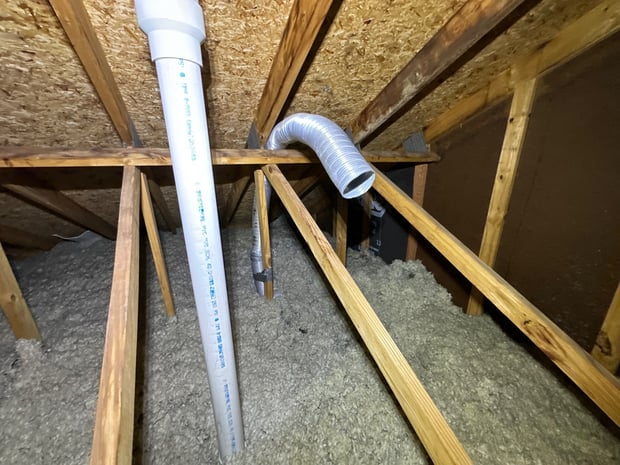
Bathroom exhaust fans, kitchen range hoods, and even some laundry vents should all discharge moist air to the outside of your home. Unfortunately, it’s not uncommon to find disconnected, damaged, or improperly routed ductwork that allows warm, humid air to vent directly into the attic instead.
Over time, that constant flow of warm, moist air can contribute to condensation, mold growth, damp insulation, and wood deterioration, even if your roof and attic ventilation are otherwise performing properly. Because these issues are often hidden beneath insulation or only visible during an attic inspection, many homeowners don’t realize there’s a problem until moisture damage has already begun.
Below is a photo of a disconnected exhaust vent duct we came across during one of our inspections:
Insufficient or Damaged Insulation
Insulation helps slow the transfer of heat between your attic and the living space below. If it’s damaged, compressed, damp, or insufficient for your home, your attic can place additional strain on your cooling system and make your home less comfortable.
Over time, insulation can settle, become damaged by moisture, or be disturbed by pests or previous work performed in the attic. Even if your attic ventilation is working properly, inadequate insulation can still contribute to higher energy bills, uneven temperatures throughout your home, and reduced indoor comfort.
Roofing Issues
Your roof plays an important role in protecting your attic from both heat and moisture. When roofing components begin to deteriorate or become damaged, they can allow moisture to enter the attic or disrupt the way your roofing system manages heat.
Problems such as damaged roof decking (the wooden panels beneath your shingles), deteriorated underlayment (the water-resistant barrier installed beneath your shingles), roof leaks, or storm damage can all contribute to excessive moisture, reduced ventilation performance, and conditions that make your attic more difficult to keep dry and energy efficient.
Because some of these issues aren’t always visible from inside your home, a professional roof inspection is often the best way to determine whether your roofing system is contributing to excessive attic heat or moisture.
How Do I Reduce Heat and Moisture in My Attic?
The best way to reduce heat and moisture in your attic is to identify the underlying cause before making any changes.
It’s easy to assume that adding more roof vents or insulation will solve the problem, but that’s not always the case. Every home is different, and the right solution depends on what’s contributing to the excessive heat or moisture in the first place.
Here are a few best practices that can help improve your attic’s overall performance:
- Don’t assume more ventilation is always better: A properly functioning attic relies on balanced intake and exhaust ventilation. Simply adding more vents without evaluating the existing system can sometimes create new airflow problems by disrupting the balance, instead of solving the original one.
- Improve ventilation based on your home’s needs: Every home has different ventilation requirements. After a professional evaluation, your contractor may recommend adding or modifying intake and exhaust ventilation to improve airflow and reduce excess heat and moisture, if it’s warranted for your home.
- Keep ventilation pathways clear: Intake vents and other ventilation openings should remain free of insulation, debris, or other obstructions that can restrict airflow. If your attic isn’t easily accessible, a reputable roofing contractor can help you verify that your ventilation system is working efficiently.
- Address moisture issues as soon as they’re discovered: Water stains, condensation, mold, or musty odors shouldn’t be ignored. Moisture can reduce the effectiveness of insulation and contribute to damage throughout your attic over time. Instead of just replacing materials that have become moisture-damaged, the cause of the moisture should also be addressed, whether it's due to an active roof leak or poor ventilation.
- Maintain your roofing system: Damaged shingles, flashing, underlayment, or other roofing components can contribute to attic heat and moisture issues if left unaddressed. If you notice missing or lifting shingles, water stains on your ceiling, or other visible damage, it’s worth having your roof inspected to identify the underlying cause before it leads to more significant problems.
When Should You Have Your Attic Inspected?
You should consider having your attic inspected if you’re noticing ongoing signs of excessive heat, moisture, or declining roof performance and you’re unsure what’s causing them.
While a hot attic is perfectly normal during the summer, persistent issues like high energy bills, uneven temperatures throughout your home, moisture buildup, or signs of roof damage can all indicate that something isn’t performing as it should. A professional inspection can help determine whether the issue is related to your attic ventilation, insulation, roofing system, or another underlying cause.
Here are a few situations where it’s worth scheduling an inspection:
- Your home is consistently difficult to keep cool: If your air conditioner seems to run constantly or certain rooms remain warmer than others, your attic may be contributing to the problem.
- You’ve noticed signs of moisture in the attic: Condensation, mold, mildew, or musty odors should always be investigated before they lead to more extensive damage.
- You’re planning to replace your roof: A roof replacement is one of the best opportunities to evaluate your attic ventilation and make improvements if they’re needed. Addressing ventilation concerns during the project is often more practical than revisiting them later.
- You’re buying or have recently purchased a home: If you don’t know the condition of your roof, attic ventilation, or insulation, an inspection can provide a better understanding of how your roofing system is performing and identify any issues that may need attention, so you can stay proactive.
A professional inspection is about understanding how your roofing system is performing so you can make informed decisions about your home and address any concerns before they become more costly.
What Should You Do If You’re Concerned About Heat or Moisture in Your Attic?
If you suspect your attic isn’t managing heat or moisture as it should, the best next step is to have it evaluated before making any major changes.
Having your attic evaluated provides a clearer picture of how your roofing system, ventilation, and insulation are working together, allowing you to make informed decisions based on your home’s actual needs.
If you’re experiencing ongoing attic heat, moisture concerns, high energy bills, or you’re simply unsure whether your attic is performing as it should, schedule a no-obligation roof consultation with us. We’ll evaluate your roofing system, identify any issues that may be affecting your attic’s performance, and explain your options so you can move forward with confidence, whether you ultimately choose to work with us or another reputable roofing company.



.jpg?width=700&name=Copy%20of%20Untitled%20Design%20(2).jpg)
.jpg?width=700&name=Copy%20of%20Untitled%20Design%20(3).jpg)