What Questions Should I Ask After Receiving a Roofing Quote?
Comparing multiple roofing quotes can quickly become overwhelming, and the differences in pricing can add to the confusion. Unless you know what to look for, it can be hard to tell exactly where your money's going or if you can trust a certain contractor.
At Happy Roofing, we've provided quotes for hundreds of homeowners across the greater Chicagoland area, and we've seen how confusing the process can be when an estimate doesn't clearly explain what your project actually includes.
In this article, you'll learn:
- Which questions to ask after receiving a roofing estimate
- What those questions reveal about the quote and the contractor as a whole
- How to compare quotes beyond the final price.
By the end, you'll know what to look for in a thorough roofing quote, how to spot vague estimates, and feel more confident choosing the roofing company that's the right fit for your home.
Key Takeaways
- Ask for a detailed breakdown of what’s included and what each item costs. Key items to review are flashing, underlayment, ice and water shield, ventilation, decking replacement, cleanup procedures, and warranty coverage.
- Understand how unexpected repairs will be handled. Damaged roof decking is often discovered only after tear-off, so homeowners should know the contractor’s pricing, communication process, and expectations for additional work.
- Evaluate the contractor, not just the roof system. Ask who will install the roof, how projects are supervised, what warranties are offered, and what support is available if issues arise after installation.
- Don’t compare roofing quotes by price alone. Different roofing estimates can include very different materials, warranties, ventilation work, flashing replacement, cleanup services, and labor standards.
Table of Contents
- Why It's Important to Ask Questions Before Working With a Contractor
- What Questions to Ask Your Roofer After Receiving a Quote
- How to Compare Roofing Quotes
Why Is It Important to Ask Questions About Your Roofing Quote Before Starting Work?
Most roofing quotes are not structured the same way, and asking the right questions about project scope, materials, warranties, and installation details can help you better understand what's included, compare estimates more accurately, and avoid surprises later.
Two roofing quotes can look similar on paper while including very different materials, labor standards, ventilation recommendations, warranties, and preparation work. A reputable roofing contractor should be willing to explain exactly what's included, what could change during the project, and why their specific recommendations are being made.
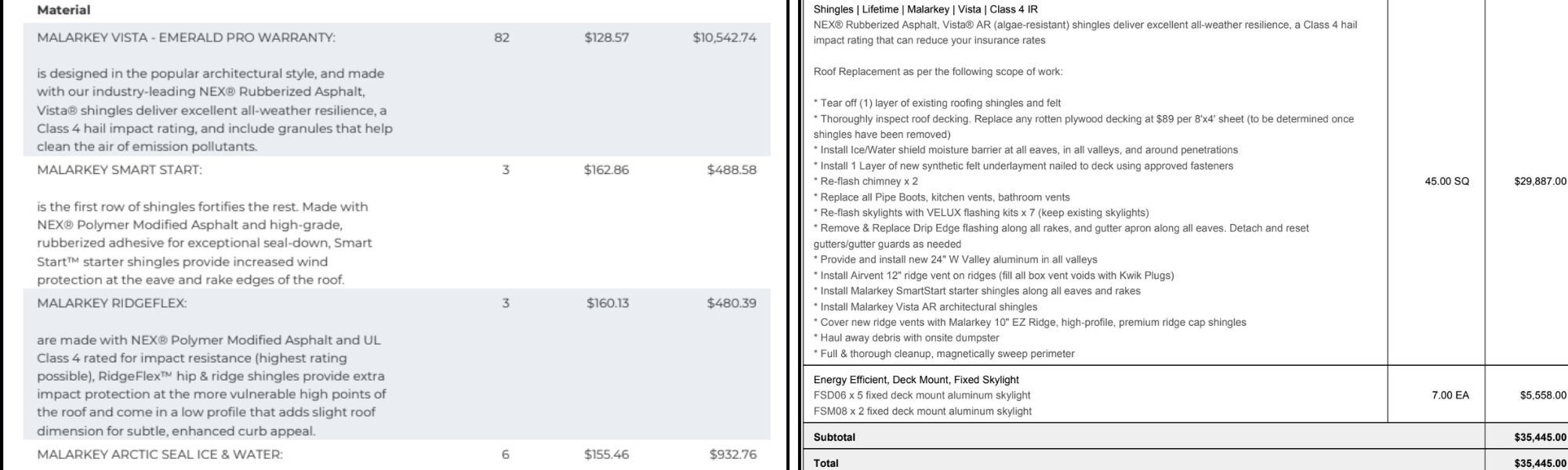
The example below compares one of our detailed roofing quotes (on the left), which includes clear line items and explanations for each part of the project, with a more generic estimate (on the right) that provides little insight into how the project cost is being allocated.
What Questions Should I Ask After Getting My Roofing Quote?
The best questions to ask after receiving a roofing quote are the ones that help you understand exactly what's included, what could change during the project, and how thoroughly the contractor evaluated your home before creating the estimate.
Asking the right questions can help you compare roofing estimates more accurately, identify vague scopes of work, and feel more confident about the company you ultimately choose.
Below are some of the most important questions homeowners should ask before signing a roofing contract.
What Exactly Is Included in This Roof Replacement Quote?
One of the most important questions to ask after receiving a roofing quote is exactly what is included in the scope of work.
Many roofing estimates can look similar at first glance while covering very different materials, installation methods, warranties, and system components. In some cases, lower-priced quotes leave out critical parts of the roofing system entirely.
If your quote doesn't include an itemized list of what work is being done, as well as materials used, it's important to go beyond the final number and understand what your roof replacement actually includes.
Some of the most important items to review are:
- Flashing: Flashing helps prevent water intrusion around chimneys, walls, valleys, and roof penetrations. Some contractors replace flashing only where necessary to prevent leaks, while others recommend replacing all existing flashing. Whether you'd like all of your flashing to be replaced or are looking to save costs, it's important to understand exactly what you're agreeing to before the work begins.
- Underlayment: Underlayment acts as a protective barrier between your shingles and roof decking, which is the wooden foundation beneath your roofing system. It helps provide secondary protection against water intrusion if shingles become damaged or compromised. During a full roof replacement, the underlayment should always be replaced along with the shingles to ensure the entire roofing system is properly protected.
- Ice and water shield: In climates like the Chicagoland area, ice and water shield helps protect vulnerable areas of the roof from leaks caused by ice dams, heavy rain, and wind-driven water. This material has a waterproof, self-sealing membrane designed to provide extra protection in areas where water is more likely to back up or penetrate the roofing system. It's commonly installed along roof edges, in valleys, around penetrations, and other high-risk leak areas.
- Ventilation: Proper ventilation helps regulate attic temperature and moisture, and is one of the most important factors to consider if your goal is a long-lasting roof. If ventilation isn't addressed properly during a roof replacement, it can contribute to premature roof aging, mold growth, and even higher energy costs. Not all roofs have a poor ventilation setup, but your contractor should be evaluating how well air flows throughout your attic or roof system before every roof replacement.
- Decking: The condition of the roof decking can be difficult to verify before the existing shingles and underlayment are removed. While it's not always possible to provide an exact quote on how many pieces or decking will need to be replaced, your contractor should set the expectation that some worn or damaged sheets of decking may need to be replaced. Your estimate should include something like a price per sheet of decking material to outline how much this replacement could cost.
- Cleanup: Ask how cleanup will be handled, including nail removal, debris disposal, and property protection during the project. Ideally, your quote will have this as a line item for you to clearly see what costs are involved in this process.
- Warranties: Roofing warranties can vary significantly between contractors and manufacturers. It's important to understand both the material warranty and the workmanship warranty being offered. While warranty info isn't typically included directly in quotes as a line item, the information should be made available to you along with your quote to review.
If parts of the scope feel vague or unclear, that's not necessarily a sign of a bad contractor, but it is a sign that you should ask more questions before moving forward. The more transparent a roofing company is about what's included, the easier it becomes to compare quotes fairly and avoid surprises later.
In the video below, we walk through a recent roof replacement and how it works with your siding to protect your home from water intrusion. Not all roofing contractors approach flashing replacement this way, and some may not include it in their quotes at all.
Did You Inspect My Attic or Ventilation System?
A thorough roofing contractor should evaluate more than just the shingles on your roof. They should also assess how your attic and ventilation system are functioning before recommending a roof replacement.
Many roofing problems actually begin underneath the shingles. Poor attic ventilation can trap heat and moisture inside the home, which may contribute to premature shingle aging, mold growth, higher energy bills, and reduced roof lifespan over time.
The challenge is that ventilation issues are often invisible from the ground until damage has occurred.
A roof can look fine externally while still having airflow problems inside the attic. That's why it's important to ask whether the contractor inspected your attic space, evaluated intake and exhaust ventilation, and looked for signs of moisture buildup or improper airflow.
Some important questions to ask include:
- Did you inspect the attic itself or only the exterior roof?
- Are there signs of trapped heat or moisture?
- Is my current ventilation system sufficient for the size of the roof?
- Will ventilation improvements be included in the quote if needed?
Not every roof replacement requires major ventilation changes. However, if ventilation issues are present and ignored during the replacement process, the new roof may still experience preventable problems later. To learn more about why a ventilation assessment is important when planning a long-lasting roof replacement, read our article Can You Trust a Roofing Estimate Without an Attic Inspection?
What Happens if Damaged Roof Decking Is Found?
If damaged roof decking is discovered during the tear-off process, those sections will typically need to be replaced before the new roofing system can be installed properly. This is one of the most common reasons roofing costs can change after a project begins.
Moisture intrusion, long-term leaks, improper ventilation, and aging materials can all cause sections of decking to become soft, rotted, or structurally compromised over time. If new shingles are installed over damaged decking, it can affect both the performance and lifespan of the new roof.
We briefly mentioned decking in an earlier section, but not every contractor makes it clear. That's why it's important to ask upfront:
- How is damaged decking handled if it's discovered?
- Is there a price per sheet listed in the quote?
- How will we communicate if additional decking replacement is needed?
In most cases, contractors cannot guarantee exactly how much decking replacement will be required before the tear-off begins. However, they should clearly explain the possibility of additional repairs and outline how those costs would be handled if they arise.
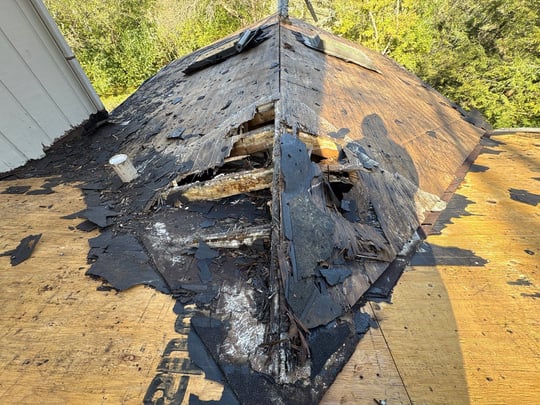
Below is an example from a past project of ours showing damaged roof decking that needed to be replaced:
Why Is Your Roofing Quote Higher or Lower Than the Others?
Roofing quotes can vary significantly in price because not every contractor is quoting the same scope of work, materials, labor standards, or level of service. A lower quote doesn't necessarily mean lower-quality work, just like a higher quote doesn't automatically mean better value. The key is understanding whether each estimate includes the same scope of work, materials, and level of service.
While it may feel more natural to compare the final numbers first, roofing estimates are rarely apples-to-apples. The difference in pricing often comes down to what is or is not included.
Some of the biggest factors that can affect pricing include:
- Materials used: Different manufacturers, shingle lines, and other products can vary in quality and cost.
- Scope of work: One contractor may include ventilation improvements, flashing replacement, or high-quality materials, while another may have included cheaper materials and may not have included any ventilation updates.
- Labor quality and installation practices: Experienced crews, proper installation procedures, and project supervision often cost more to maintain, but they also reduce the risk of problems and help the entire project run smoothly.
- Crew structure: Some companies use dedicated in-house crews, while others rely heavily on varying subcontractors. Neither approach is automatically bad, but accountability and consistency can vary between companies, especially if the company doesn't have an ongoing working relationship with the subcontractors used.
A trustworthy roofing contractor should be able to clearly explain what's included in their estimate, why certain recommendations were made, and where differences may exist compared to competing quotes.
Who Will Actually Install My Roof?
The company providing your roofing quote is not always the same group of people who will physically install your roof, which is why it's important to ask who will actually be managing and completing the work.
Some roofing companies use in-house crews, while others rely partially or entirely on subcontractors. Neither approach is automatically better or worse, but homeowners should understand how the project will be supervised, who is responsible for workmanship, and who they'll communicate with throughout the installation.
This question matters because consistency, accountability, and communication can vary significantly between companies.
Some helpful questions to ask include:
- Will the work be completed by employees or subcontractors?
- Who will supervise the project onsite?
- Will the same crew handle the project from start to finish?
- Who should I contact if issues or questions come up during installation?
A clear answer to these questions can help you better understand how organized the company is, what level of oversight to expect, and how potential problems will be handled if they arise during installation. To learn more about the differences between subcontractors and in-house crews, read our article Roofing Subcontractors vs. In-House Crews: What Homeowners Need to Know Before Hiring.
What Happens if There's a Problem After the Roof Is Installed?
A roofing company should be able to clearly explain what happens if issues come up after the project is completed, including who you contact, what's covered under any warranties, and how service requests are handled.
Even with a properly installed roof, problems can occasionally happen. Material defects, installation errors, or unexpected system issues may not become noticeable until weeks or months after the project is finished.
It's important to understand not just the roof being installed, but also the level of accountability the company provides after the work is done. Some important questions to ask include:
- What workmanship warranty is included?
- What manufacturer warranties apply to the materials?
- Who should I contact if a problem comes up later?
- How quickly are warranty or repair requests typically addressed?
- Will the same crew that installed the roof handle future service needs?
A trustworthy roofing company should be transparent about what is and is not covered, instead of making broad promises without clear expectations.
How Can You Feel More Confident Comparing Roofing Quotes?
By asking the right questions about the scope of work, ventilation, decking, warranties, crew structure, and project expectations, you can better understand what's actually included in each estimate and avoid making a decision based only on price.
A trustworthy roofing contractor should be willing to explain their recommendations clearly, answer questions directly, and help you understand where your money is going before any work begins.
If you're still comparing roofing quotes or trying to better understand what your project may involve, another helpful next step is learning what the actual roofing process looks like from start to finish. You can read our article, What It’s Like to Work With Happy Roofing? - What to Expect When You Partner With Us, to better understand how we approach inspections, communication, installation, and long-term customer support.
And if you'd like a thorough assessment or second opinion on your roof, we offer no-commitment roof consultations meant to help you better understand your options, identify potential issues, and give you our honest recommendations with no obligation to move forward with us.




.jpg?width=700&name=Title%20Cover%20Template%20(2).jpg)