How Can a Poorly Installed Roof Fail Early?
.jpg?width=1920&height=1440&name=76e674c4-a79b-462f-914b-3972b3bea62b%20(1).jpg)
When you’re planning to invest thousands of dollars in a new roof, you’d understandably expect it to last for decades, not start leaking, losing shingles, or showing signs of premature wear just a few years later.
A roof’s lifespan depends on more than the quality of the materials. How those materials are installed can have just as much impact on how long the roof lasts. Many installation mistakes aren't obvious from the ground, and some don't reveal themselves until your roof has already been through several seasons of rain, wind, snow, and Illinois freeze-thaw cycles.
At Happy Roofing, we've inspected and replaced hundreds of roofs throughout the greater Naperville area, including roofs that developed problems much earlier than homeowners expected. What we’ve seen in our experience is that the materials themselves are only part of the equation, and how those materials are installed can have a major impact on how well a roof performs and how long it lasts.
In this article, you'll learn how poor installation can cause a roof to fail early, which installation mistakes create the biggest problems, and what you can look for to make sure you’re working with a quality roof installer.
By the end, you'll have a better understanding of why installation matters just as much as the materials on your roof and what to consider before trusting someone with your roofing project.
Key Takeaways
- Installation quality matters just as much as material quality. Even high-quality roofing materials can develop problems early if they aren’t installed correctly.
- Small installation mistakes can create bigger problems over time. Improper nailing, flashing, underlayment, damaged decking, and poor ventilation can contribute to leaks, shingle loss, moisture damage, and premature deterioration.
- Poor workmanship isn’t always obvious right away. Installation issues may not become noticeable until the roof has gone through years of wind, rain, snow, and temperature changes.
- Roof problems don’t automatically mean poor installation. Storm damage, aging, material defects, ventilation, and other conditions can create similar symptoms, so the cause should be professionally evaluated before deciding on a solution.
- Choosing a roofing contractor you trust is one of the best ways to protect your investment. Homeowners shouldn’t have to supervise every installation detail, which makes a contractor’s installation practices, warranties, accountability, and willingness to stand behind their work especially important.
Table of Contents
- How Does Installation Quality Impact the Life of a Roof?
- What Are the Signs of a Poorly Installed Roof?
- What Should You Do If You Think Your Roof Was Installed Poorly?
- How Can You Reduce the Risk of Poor Roof Installation?
How Does Installation Quality Impact the Life of a Roof?
Installation quality impacts how long a roof lasts because proper workmanship helps the roofing system withstand years of wind, moisture, temperature changes, and everyday wear without developing problems prematurely.
A roof is a complete system made up of shingles, underlayment, flashing, decking, ventilation components, and other components that all need to be installed correctly and work together to perform well. When something is installed incorrectly, what may seem like a relatively small mistake can create a weak point in that system that leads to leaks or other premature failures.
While high-quality materials can give you a more durable or longer-lasting roofing system, they still need to be installed correctly to deliver the performance and lifespan you’re expecting. A proper roof installation involves a lot of individual details, and problems with any one of them can affect how the roof performs over time. Understanding where these issues can occur can also help you know what to look for when evaluating the quality of a roofing contractor’s installation practices.
How Can Improper Shingle Nailing Affect a Roof’s Lifespan?
Improperly placed or driven nails can weaken shingles, reduce their wind resistance, and eventually contribute to premature leaks or shingle loss.
Shingle manufacturers provide specific instructions for where nails should be placed, how many should be used, and how deeply they should be driven.
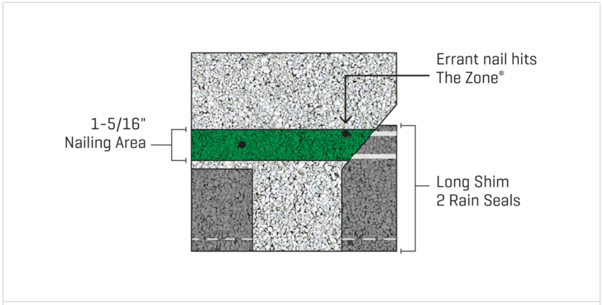
For example, the Malarkey shingles we install have what the manufacturer calls “The Zone,” a designated nailing area that shows installers where the shingles should be fastened. Other manufacturers may use different names or markings for their designated fastening area, but the purpose is the same: giving installers a specific target for proper nail placement.
Below is a photo from Malarkey's website showing their dedicated nailing zone:
An improperly placed roofing nail can create problems when it's:
- Missing the proper nailing area: Shingles are installed in overlapping rows, with each new row covering part of the shingles below it. Nails need to be placed within the manufacturer’s designated nailing area so they properly secure the shingles as intended. If a nail is driven in the wrong area, it may miss the area needed to properly fasten the overlapping shingles, leaving them more vulnerable to lifting or coming loose in high winds.
- Driven too deep: If a nail is driven with too much force, the nail head can break through the shingle instead of holding it securely, weakening the attachment and making the shingle more vulnerable to pulling free.
- Not driven far enough: An underdriven nail sits above the shingle instead of flush against it. This can prevent the shingles above from lying flat and may eventually damage or puncture them, or cause them to lift.
- Driven at an angle: An angled nail may not hold the shingle flat against the roof and can damage the surrounding material.
You probably won't see most of these mistakes while standing in your yard. Instead, you may notice the signs a little later, such as shingles repeatedly coming loose, shingles lifting during high winds, or leaks.
Here is an example of an improperly driven nail; you can see half the nail head exposed under the next shingle, which could lead to leaks over time:
.jpg?width=604&height=453&name=76e674c4-a79b-462f-914b-3972b3bea62b%20(1).jpg)
How Can Poor Flashing Installation Lead to Premature Leaks?
Poorly installed flashing can allow water into some of the most vulnerable areas of your roof, including chimneys, walls, valleys, and roof penetrations. Flashing is thin metal installed around vulnerable areas of a roof to direct water away and help prevent it from getting underneath the roofing materials.
Flashing is used around:
- Chimneys
- Skylights
- Vents and other roof penetrations
- Roof to wall intersections
- Roof valleys
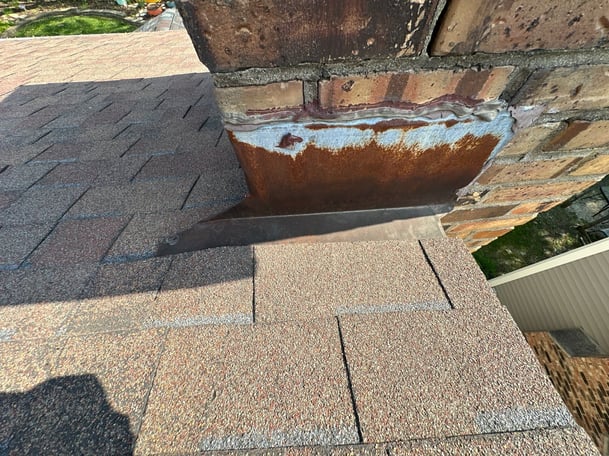
If flashing is improperly sized, positioned, overlapped, or sealed, water may eventually find its way underneath the roofing materials. As an example of what worn flashing can look like, we're including this photo of chimney flashing that we found to be rusted with dry and worn sealant:
Can You Reuse Flashing?
Flashing that is still in good condition can sometimes be reused, but we generally recommend replacing it during a roof replacement to reduce the risk of future problems.
Reusing compromised flashing can leave an old weak point inside an otherwise new roof. Existing flashing can look fine from the outside while being bent, corroded, weakened, or poorly configured for the new roofing system. When flashing fails, homeowners may notice repeated leaks in the same area even after minor repairs have been attempted.
How Can Poor Underlayment and Water Protection Lead to Early Roof Problems?
Missing, damaged, or improperly installed underlayment and ice and water protection can leave your roof more vulnerable when water gets beneath the shingles.
Underlayment sits between the shingles and roof decking and provides another layer of protection against moisture. Ice and water shield is a waterproof membrane typically installed in particularly vulnerable areas, such as roof edges, valleys, and around certain penetrations.
That extra protection is especially important in northern Illinois, where snow, ice, wind-driven rain, and repeated freeze-thaw cycles can push water into places it normally wouldn't reach.
Problems can develop if a contractor:
- Leaves vulnerable areas unprotected: Missing ice and water protection in critical areas can increase the risk of moisture reaching the decking.
- Damages the underlayment during installation: Tears or poorly fastened sections can weaken the secondary water barrier.
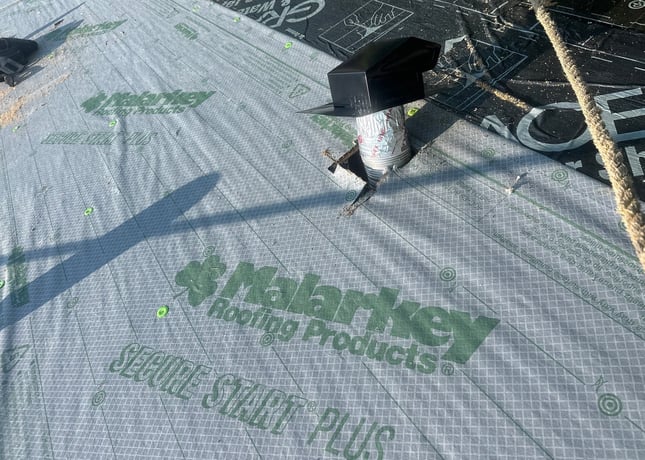
- Uses improper fastening methods: How the underlayment is secured affects how well it stays in place and performs. Underlayment should be secured with cap nails rather than standard roofing nails or staples because the wider plastic cap spreads the holding force over a larger area, helping prevent the underlayment from tearing or pulling loose.
- Installs materials incorrectly around penetrations: Areas where vents, pipes, or other components pass through the roof create natural opportunities for water to get in. The underlayment and water protection need to be properly integrated with the flashing around these areas so water is directed over the roofing system rather than underneath it.
Below is an example of how underlayment should be secured using cap nails to protect against tears and water intrusion:
Can Reusing Damaged Decking Cause It to Fail Early?
Installing a roofing system over damaged, soft, warped, or poorly secured decking can compromise the foundation the new roof depends on.
Roof decking is the wood surface underneath your roofing materials, and you can think of it as the foundation for the entire roofing system. If that surface is rotted, sagging, warped, or otherwise compromised, covering it with new materials doesn't solve the underlying problem.
Damaged decking can contribute to:
- Poor nail retention: Fasteners need solid wood to properly hold shingles and roofing components in place. If the decking is soft, deteriorated, or damaged, nails may not hold securely, making shingles more vulnerable to loosening or lifting over time.
- Uneven roofing surfaces: Warped or sagging decking can cause the materials above it to follow the same uneven shape. This can prevent shingles from lying flat and create areas where water may not shed from the roof as intended.
- Moisture problems: Existing rot or moisture damage doesn’t disappear when new roofing materials are installed over it. If the source of the moisture isn’t addressed, the decking can continue to deteriorate beneath the new roof and eventually require more extensive repairs.
- Structural weakness: Severely deteriorated decking may no longer provide a strong, stable surface for the roofing system. Left unaddressed, the damage can progress beyond the shingles and require sections of the roof deck itself to be replaced.
This doesn't mean every piece of roof decking has to be replaced during every roof replacement. Decking that's still structurally sound can safely remain in many cases. What matters is that the contractor evaluates the condition of the decking once the old roofing materials are removed and addresses damaged areas instead of simply covering them back up with new materials.
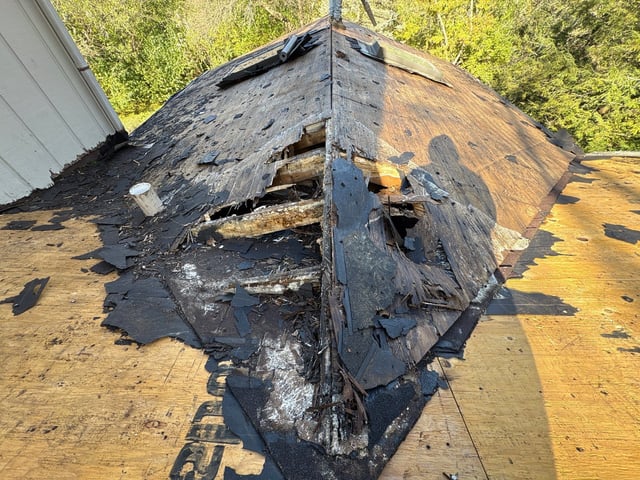
Here is an example of a more severe case of rotted roof decking:
Can Poor Ventilation Contribute to Roof Deterioration?
If ventilation isn't properly assessed and addressed during installation, trapped heat and moisture can prematurely damage shingles, decking, insulation, and other parts of the roofing system.
Roof ventilation allows fresh air to enter the attic while hot, moist air escapes. Without good airflow, excessive heat can build beneath the roof during warmer months. During colder months, moisture can accumulate in the attic and condense against cold surfaces.
Over time, the conditions caused by poor ventilation can contribute to:
- Premature shingle deterioration: When excessive heat becomes trapped in the attic, the underside of the roof can remain hotter for longer periods of time. That added heat can contribute to shingles aging, curling, blistering, or losing granules sooner than expected.
- Decking damage: Poor ventilation can allow warm, moisture-filled air to collect in the attic. Over time, that moisture can be absorbed by the roof decking, causing the wood to swell, warp, soften, or eventually rot.
- Mold and mildew: When moisture becomes trapped in a poorly ventilated attic, it can create the damp conditions mold and mildew need to grow. This can affect the decking, insulation, and other materials inside the attic.
- Ice dam problems: During winter, excess attic heat can warm the roof and cause snow to melt even when outdoor temperatures are below freezing. That water can run toward the colder roof edge and refreeze, creating an ice dam that prevents additional water from draining properly.
- Warranty concerns: Many roofing manufacturers have ventilation requirements that must be followed to maintain certain warranty coverage. If the attic doesn’t have adequate ventilation, any applicable warranties may be voided.
A contractor can install the shingles correctly but still leave the homeowner with a roofing system that's under unnecessary stress if the ventilation wasn't evaluated. Your contractor should be taking the entire system into consideration before providing you with recommended options or any quotes.
What Are the Signs of a Poorly Installed Roof?
Common signs of poor roof installation include recurring leaks, frequent shingle loss, nail pops, lifted shingles, uneven roof surfaces, and problems developing much earlier than expected.
One symptom alone doesn't prove your roof was installed incorrectly.
Storm damage, material defects, ventilation problems, aging, insulation issues, and other conditions can produce very similar symptoms to those caused by poor installation.
Still, some warning signs deserve further investigation regardless of the cause:
- Repeated shingle loss: Losing shingles regularly, particularly during moderate winds, may indicate fastening problems.
- Recurring leaks: A leak that keeps returning around a chimney, wall, valley, or penetration may point to flashing or water-management problems.
- Nail pops: Nails pushing upward through shingles may indicate poor ventilation, fastening, or decking issues.
- Lifting or poorly sealed shingles: Shingles that don't lie flat may be affected by installation, decking, weather, or other underlying conditions.
- Sagging or uneven areas: Visible dips or waves on a relatively new roof can sometimes indicate decking problems underneath the shingles.
- Premature deterioration: Curling, granule loss, cracking, or other significant wear on a relatively young roof deserves investigation.
Several roofing problems can look similar from the outside, and assuming poor installation is the cause before inspecting the entire system could lead you toward the wrong solution. However, if you notice something unusual or a change in how your roof looks or performs, it’s worth having it inspected to determine what’s actually causing the problem and what your options are moving forward.
Will a Workmanship Warranty Cover Poor Roof Installation?
A workmanship warranty is designed to cover problems caused by mistakes made during the installation of your roof, but the level of coverage depends on the contractor and the terms of their warranty.
This is different from a manufacturer’s warranty, which primarily protects you against defects in the roofing materials themselves. If shingles were improperly nailed, flashing was installed incorrectly, or another installation mistake causes a problem, that would typically fall under the contractor’s workmanship warranty.
Before hiring a roofer, ask how long their workmanship warranty lasts, what types of installation problems it covers, and whether labor and materials needed to correct those problems are included. A warranty is only valuable if you understand and trust what the contractor is promising to stand behind.
What Should You Do If You Think Your Roof Was Installed Poorly?
If you’ve already completed a roof replacement and suspect installation problems, have the roof professionally inspected before assuming workmanship is to blame for the concerns.
Start by gathering any documentation from the original project, including:
- Your roofing contract, including the scope of the project and what was done
- Manufacturer and workmanship warranty information
- Installation photos, if available
If the contractor who installed your roof is still operating, consider allowing them to inspect the issue, particularly if the roof is still covered by their workmanship warranty. If you're uncomfortable with their explanation or want another perspective, getting an independent inspection from another qualified roofing contractor can help determine the cause of any issues.
The right solution depends on the cause and extent of the damage. Installation mistakes can happen, even with reputable contractors, but trust is built by what happens next. A contractor who stands behind their work should take responsibility, explain what went wrong, and correct the problem rather than leaving you to deal with the consequences.
How Can You Reduce the Risk of Poor Roof Installation?
The best way to reduce the risk of poor roof installation is to work with a roofing company you trust to install your roof correctly and stand behind their work if something goes wrong.
As a homeowner, you shouldn’t be expected to know whether every nail is placed correctly, flashing is properly installed, or each component meets the manufacturer’s requirements. That responsibility falls on the roofing contractor you hire.
What you can do is take the time to understand how a company operates before trusting them with your home. Ask about their installation practices, who will be working on your roof, how the project is supervised, what warranties they provide, and what happens if there’s a problem after the work is complete.
A trustworthy contractor should be willing to answer those questions clearly. They should be able to explain not only what they plan to install, but how they’ll install it and what they do to make sure the work is done correctly.
If you’re researching roofing companies and aren’t sure what questions will help you separate one contractor from another, read our next article, Questions Every Homeowner Should Ask Before Hiring a Roofing Company. In it, we discuss the key questions to ask before signing a roofing contract so you can feel more confident about who you’re trusting with your roof.
If you’d rather get a professional evaluation of your roof, we offer no-commitment roof consultations where we’ll assess your entire roofing system and give you our honest recommendations without the obligation to move forward with us.